
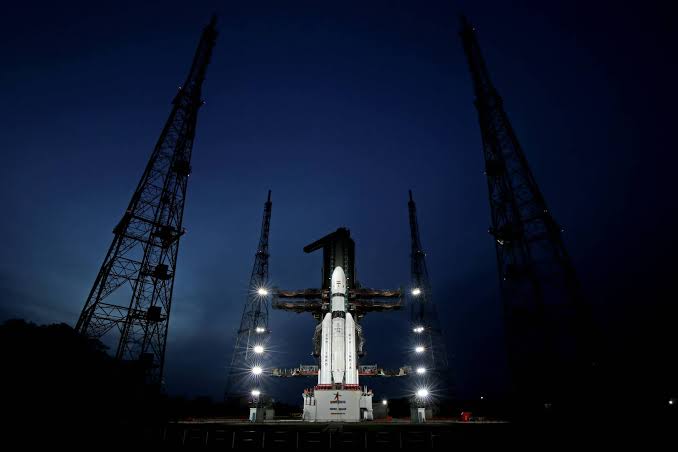
India’s national space agency, ISRO, on Sunday successfully launched its heaviest communication satellite to date CMS-03 aboard the heavy-lift launch vehicle LVM3-M5 from the Satish Dhawan Space Centre, Sriharikota. The mission marks a significant step in India’s drive for self-reliance in strategic satellite communications.
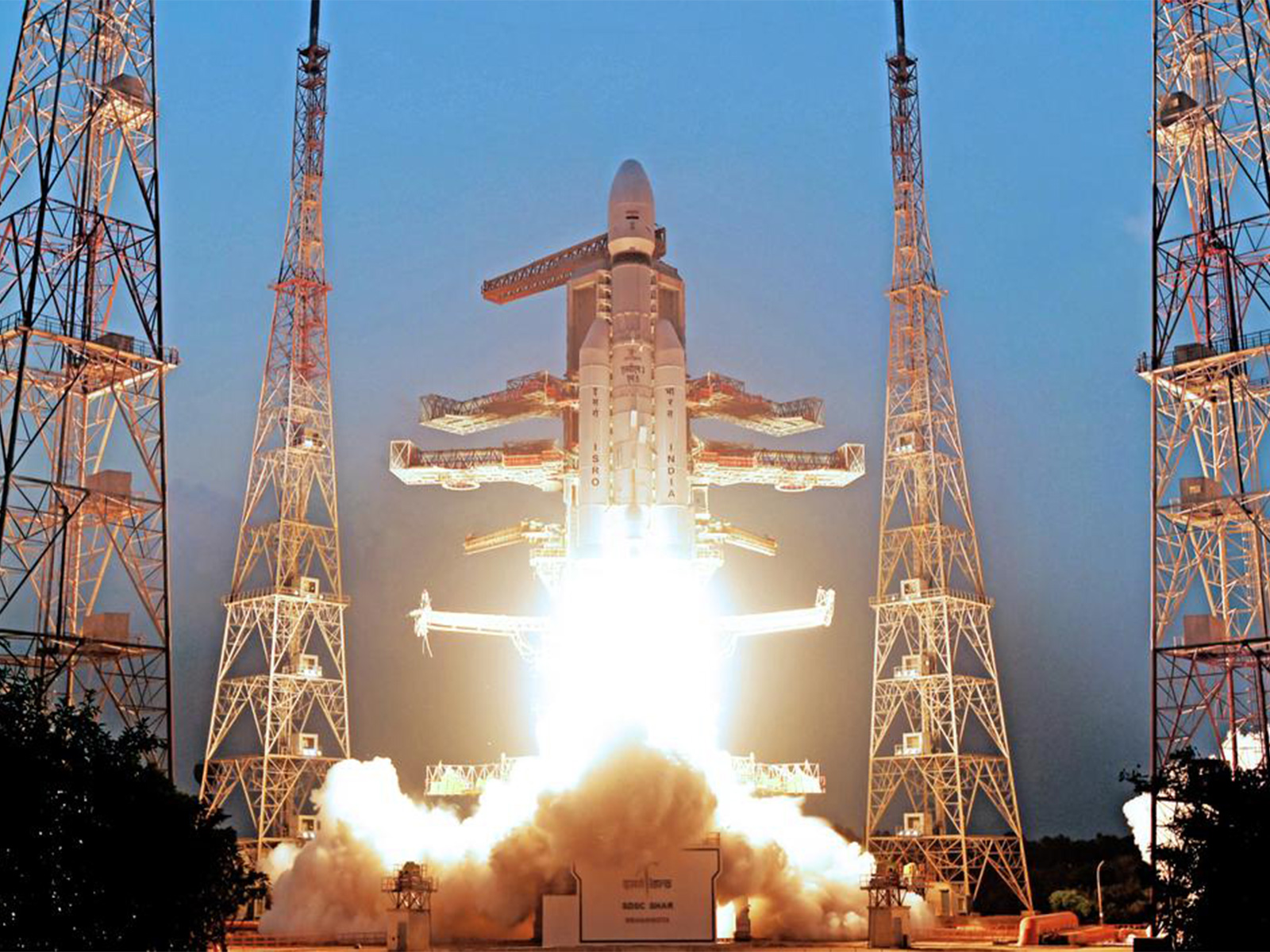

Weighing approximately 4,410 kg, CMS-03 becomes the heaviest communication satellite to be placed into a geosynchronous transfer orbit (GTO) from Indian soil. The rocket, standing 43.5 metres tall and affectionately dubbed “Bahubali”, marked its fifth operational flight with this mission.
What CMS-03 will achieve
Designated also as GSAT-7R, the satellite features multi-band payloads covering C, extended-C, Ku bands and more enabling high-capacity voice, data and video transmissions between naval ships, submarines, aircraft and land-based command centres.
Its primary role is to serve as the backbone of the Indian Navy’s communication grid across the Indian Ocean Region (IOR), replacing the ageing GSAT-7 “Rukmini” satellite launched in 2013.
By offering wide-area coverage over sea lanes and remote coastal zones, CMS-03 enhances maritime domain awareness, secure command-and-control links and civilian use such as disaster response and tele-medicine in island/remote areas.
Why this matters for India
The successful launch underscores India’s growing capability to launch heavy satellites indigenously, thereby reducing dependence on foreign launch services.
For defence and strategic planners, CMS-03 strengthens network-centric operations at sea, enhances communication resilience, and fits into the broader goal of a “blue-water navy” and maritime security architecture.
Mission timeline and next steps
The countdown for the launch began around 24 hours prior to liftoff. Liftoff occurred at 17:26 IST from Sriharikota’s Second Launch Pad on 2 November 2025.
Looking ahead
With CMS-03 now in orbit, ISRO is expected to continue its heavy-lift launch efforts and further expand India’s space capability for both strategic and civilian communication needs. The mission also adds momentum to upcoming endeavours, including human spaceflight and advanced satellite programmes.