

One of the most significant achievements was the successful demonstration of autonomous docking and undocking through the SPADEX mission. With this feat, India became the fourth nation in the world to demonstrate satellite docking in space, marking a crucial step toward future space stations and in-orbit servicing missions.
The mission also showcased power transfer between satellites and successful circumnavigation, underlining ISRO’s advanced capabilities. The PSLV Orbital Experimental Module POEM-04 further strengthened innovation by carrying payloads from ISRO, startups and academic institutions, completing over 1,000 orbits and validating robotic arm operations and seed germination in microgravity.
Launch Vehicle Milestones and Heavy Payload Records
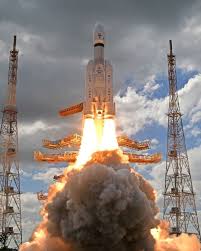
India achieved another landmark with the GSLV-F15/NVS-02 mission in January 2025, which marked the 100th launch from Sriharikota. The mission demonstrated exceptional launch precision by injecting the satellite into its intended orbit.
The LVM3-M5/CMS-03 mission and LVM3-M6/BlueBird Block-2 mission further pushed boundaries by launching the heaviest GTO and the heaviest satellite ever from Indian soil. These missions validated advanced electro-mechanical actuation systems and structural upgrades, significantly enhancing payload performance.
India–NASA Collaboration and Indigenous Technology
The GSLV-F16/NISAR mission marked a historic first as the maiden joint ISRO-NASA satellite launch. Featuring the world’s first dual-frequency Synthetic Aperture Radar satellite, NISAR integrates NASA’s L-band and ISRO’s S-band payloads and is now fully operational.
ISRO also advanced indigenous capability with the development of the VIKRAM3201 processor, India’s first 32-bit processor qualified for space applications. Additional processors such as KALPANA32 further strengthen self-reliance in avionics and spacecraft control systems.
Expanding Infrastructure and Reusable Launch Systems
The government approved the establishment of a Third Launch Pad at Sriharikota to support next-generation launch vehicles. Construction also began on a dedicated SSLV launch site at Kulasekarapattinam in Tamil Nadu.
Facilities for solid propellant mixing, cryogenic turbopump testing and titanium alloy tank production were commissioned across Andhra Pradesh, Kerala and Karnataka. ISRO also demonstrated advanced cryogenic engine restart capability and continues work on reusable space transportation technologies.
Industry Participation and Global Cooperation
ISRO transferred SSLV technology to Hindustan Aeronautics Limited and signed over 100 technology transfer agreements through NewSpace India Limited and IN-SPACe. Indian startups and industries are now actively building satellites, terminals and ground infrastructure.
International cooperation expanded significantly, with agreements signed with multiple countries for NavIC stations, human spaceflight collaboration, lunar missions and disaster management. India also played a leadership role in global disaster response through the International Charter on Space and Major Disasters.