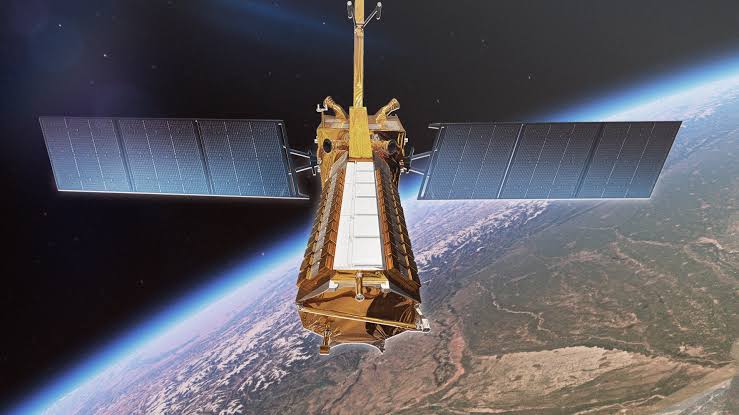
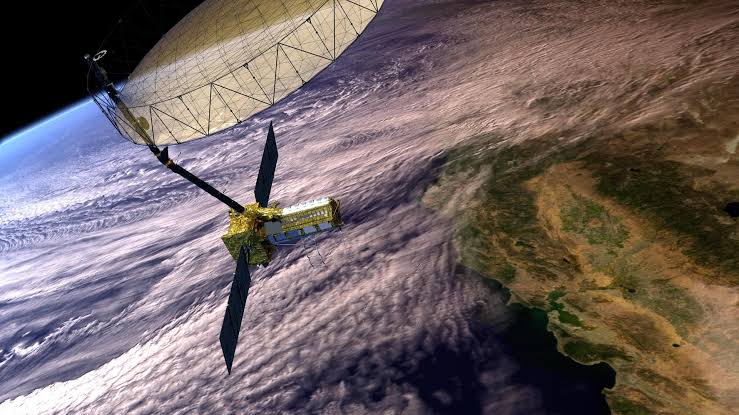
NISAR, jointly developed by ISRO and NASA, carries dual-frequency L-band and S-band radar systems designed to study some of the most crucial natural processes on Earth. With a mission life of five years, it will observe land and ice deformation, ecosystem changes, natural hazards, and ocean dynamics. The mission holds strong strategic value for India’s environmental monitoring, disaster preparedness, agriculture, and climate research efforts.
 Key Objectives of the NISAR Mission
NISAR is the world’s first radar imaging satellite capable of providing comprehensive global coverage with fully polarimetric and interferometric capabilities. Its cutting-edge technology allows scientists to capture minute changes on the Earth’s surface with extreme accuracy.
Among its primary scientific goals are the study of land subsidence, glacier and ice-sheet movement, forest biomass, agricultural patterns, and oceanic behaviour. These observations are expected to support long-term climate research and provide critical data for managing natural resources.
The mission is especially important for India, where radar-based monitoring can significantly improve cyclone prediction, flood mapping, drought assessment, and soil moisture analysis. Its findings will benefit multiple ministries, research bodies, and environmental agencies both in India and the United States.
Post-Launch Milestones Achieved in 2025
According to details presented in Parliament, NISAR has successfully completed all major post-launch milestones scheduled for 2025. After the satellite lifted off aboard GSLV-F16 at 17:40 IST on July 30, engineers commenced a series of deployment and testing procedures spread over several weeks.
The most complex among these was the deployment of the massive antenna reflector, a crucial part of the radar instrument. The deployment began on August 9 and concluded successfully on August 15 at 19:38 IST. The reflector’s precise unfolding was essential, as any misalignment could have affected the radar’s imaging accuracy.
Following hardware verification, the S-band radar payload began its first operational tests on August 19. Scientists from NASA and ISRO have since been conducting science-plan activities, calibrations, and system validations to ensure the mission meets its long-term performance standards.
Financials and Timeline
The NISAR mission underwent a development journey spanning a decade. Financial sanction for the project was granted on May 27, 2015. Since then, ISRO has invested ₹504.78 crore in the satellite’s development, while the launch aboard GSLV-F16 cost approximately ₹340 crore.
ISRO informed Parliament that the expenditure reflects the scale, complexity, and global scientific importance of the mission. With NISAR now operational, the agency expects ongoing collaboration with NASA to support data delivery, research applications, and public-domain access systems throughout the mission’s five-year lifespan.
ISRO’s Other Launches in 2025
The year 2025 has been significant for India’s space programme, with ISRO completing four major satellite launches:
- NVS-02 on January 29
- EOS-09 on May 18
- NISAR on July 30
- CMS-03 on November 2
These missions collectively strengthen India’s navigation, Earth observation, communication, and scientific capabilities. NISAR, however, stands out as one of the most technologically advanced and internationally significant missions undertaken by ISRO.