
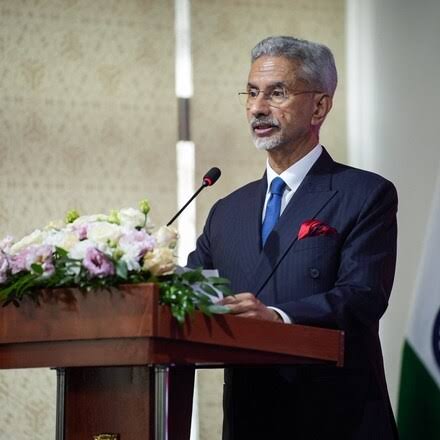
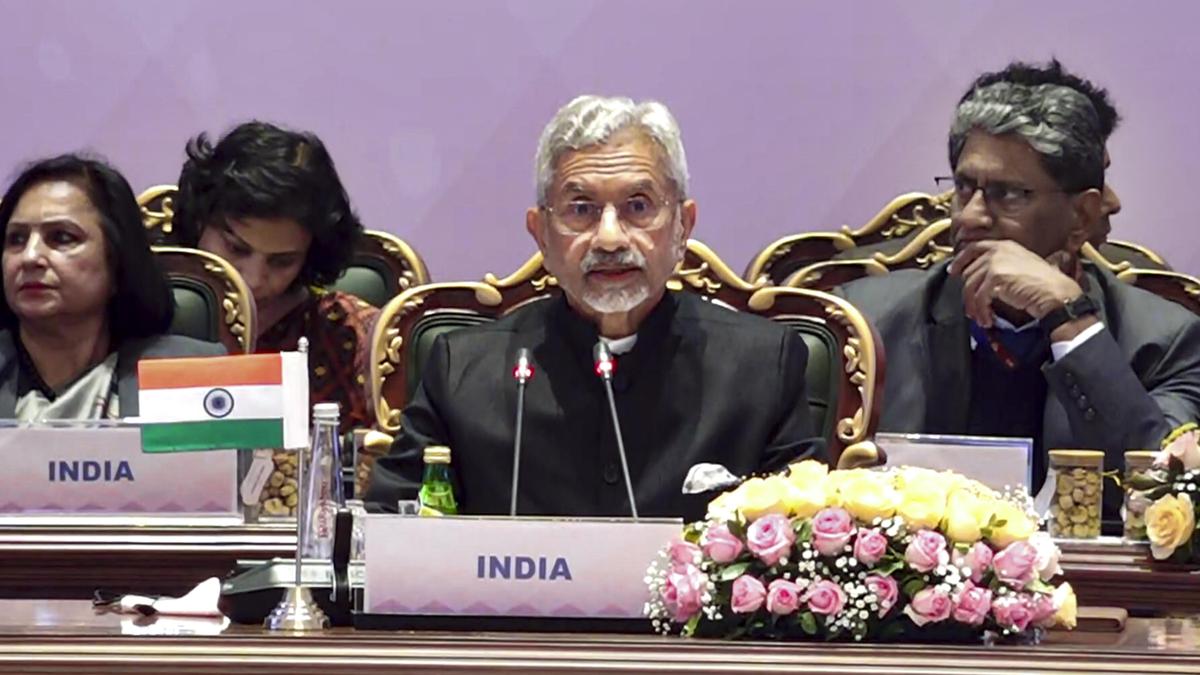

“Taking forward the comprehensive plan to end the Gaza conflict is today a widely shared priority,” Mr. Jaishankar said, noting that several countries have issued individual and collective declarations in support of peace initiatives. He stressed that these efforts form the broader context for discussions on the region’s political and security challenges.
The External Affairs Minister referred to peace-building attempts during the October 2025 Sharm-el-Sheikh Peace Summit, which later led to the adoption of United Nations Security Council Resolution 2803. The resolution backed the proposal for a transitional administration in Gaza and authorised the creation of an International Stabilisation Force to help end hostilities that have claimed tens of thousands of Palestinian lives.
Conflicts in Arab world impact India
Mr. Jaishankar said multiple conflicts across the Arab world “impact us all, and India as a proximate region”. He pointed out that instability in West Asia affects global energy markets, maritime security, and the safety of millions of Indian citizens living and working in the region.
Highlighting India’s concerns about Lebanon, he recalled that Indian troops are deployed there as part of the United Nations Interim Force in Lebanon (UNIFIL). He also stressed the need to advance Libya’s national dialogue process and closely watch developments in Syria, calling them critical to the region’s long-term well-being.
Yemen, shipping security and regional stability
The Yemen conflict also featured prominently in Mr. Jaishankar’s address. Without naming specific actors, he referred to the threats posed to international shipping as an “additional implication” of the prolonged crisis. Disruptions in key maritime routes, particularly in the Red Sea and Gulf of Aden, have raised global concerns over trade and energy supplies.
India has recently strengthened its diplomatic footprint in Yemen by opening a facility in Aden in October 2025. The office functions as an extension of the Consular and Liaisoning Office of the Indian Embassy in Saudi Arabia and is aimed at improving assistance to Indian nationals and monitoring ground developments.
India deepens engagement with Arab nations
The India-Arab Foreign Ministers meeting reflects New Delhi’s broader strategy of deepening political, security and economic ties with major Arab powers. India began 2026 with high-level engagements, including the visit of UAE President Sheikh Mohamed bin Zayed Al Nahyan to New Delhi on January 19.
This was followed by a security-focused dialogue between Indian and Saudi Arabian officials in Riyadh, underlining India’s emphasis on counter-terrorism cooperation and regional stability. According to the Ministry of External Affairs, such engagements aim to strengthen “forces of stability, peace and prosperity” across West Asia.
Wide representation from Arab world
The meeting was attended by Foreign Ministers and senior representatives from across the Arab world. Libya’s Government of National Unity was represented by Foreign Affairs Minister Eltaher S.M. Elbaour, while Oman’s delegation was led by Foreign Minister Sayyid Badr bin Hamad Al Busaidi.
Palestine’s Foreign Minister Varsen Aghabekian Shahin, Arab League Secretary General Ahmed Aboul Gheit, and senior officials from Saudi Arabia, the UAE, Egypt, Jordan, Iraq and several other nations also participated. Their presence underscored the importance attached to India-Arab cooperation at a time of heightened regional tensions.