
Strengthening Drug Regulation and Patient Safety
A key focus of the review was the need for a robust and vigilant drug regulatory framework. Shri Nadda stressed that end-to-end oversight, covering manufacturing, storage, transportation and last-mile distribution, is vital to ensure the quality, safety and efficacy of medicines.
He noted that regulatory supervision and patient satisfaction must be pursued as a continuous process rather than a one-time exercise. Emphasis was placed on adopting best regulatory practices and strengthening oversight of blood banks, hospital operations and patient safety standards.
Expanding Jan Aushadhi Kendras and AMRIT Pharmacies
The Union Health Minister called for rapid expansion of Jan Aushadhi Kendras and AMRIT Pharmacy stores in both States to further improve access to affordable, quality medicines. He highlighted that these initiatives play a critical role in reducing out-of-pocket expenditure for patients.
Reviewing the Free Drugs and Free Diagnostics Initiatives, Shri Nadda urged State authorities to address supply-chain inefficiencies and close monitoring gaps to ensure uninterrupted availability of essential medicines and diagnostics.
Diagnostics and Professional Hospital Management
Shri Nadda underscored that timely and accurate diagnostics form the backbone of effective healthcare delivery and must be seamlessly integrated across primary, secondary and tertiary levels. He observed that while clinical care depends heavily on doctors, hospital administration and regulatory compliance require professional management structures.
The meeting also discussed the need to strengthen institutional capacity in hospital governance, ensuring adherence to regulatory norms and improved patient experience.
Mission Mode Push for TB Mukt Bharat
Reaffirming the national commitment to TB Mukt Bharat, Shri Nadda called for district- and block-specific strategies to intensify screening, diagnostics, treatment adherence and nutritional support. He stressed that tuberculosis elimination efforts must be driven in mission mode with regular monitoring at the grassroots level.
The Union Minister highlighted the role of Public–Private Partnership models and Viability Gap Funding in accelerating TB elimination and strengthening health interventions, particularly in underserved regions.
Role of Legislators and Community Participation
To enhance accountability and coordination, Shri Nadda proposed sensitisation workshops for Members of Legislative Assemblies. He encouraged MLAs to actively engage with Chief Medical Officers and Block Medical Officers through structured review mechanisms.
Emphasising Jan Bhagidari, or people’s participation, he stated that community involvement is critical to improving health outcomes and building trust in public health systems.
Assurance of Support and Cooperative Federalism
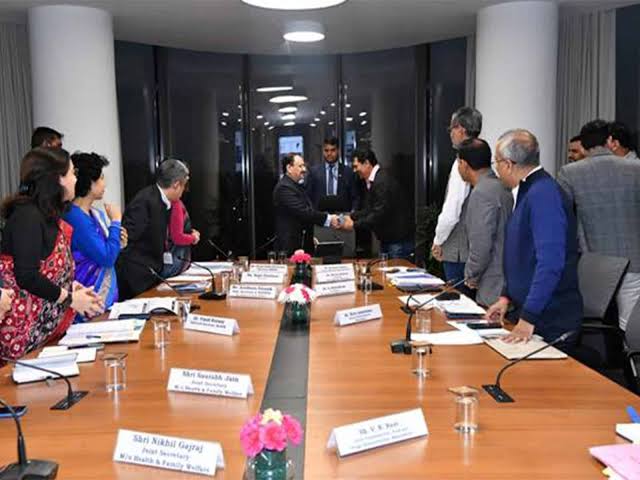
The Health Ministers of Rajasthan and Maharashtra assured the Union Health Minister of their full cooperation in implementing national health programmes. Shri Nadda reiterated the Centre’s continued support through National Health Mission interventions, expansion of medical education capacity, infrastructure development and technical assistance.
He added that similar consultative meetings with Health Ministers of other States would be held in the coming days as part of a mission-mode approach to health sector reforms, as reported by the Press Information Bureau.
Conclusion
The meeting concluded with a shared commitment to enhance drug regulation, strengthen diagnostics, professionalise hospital administration and accelerate progress towards a TB-free India. The discussions reflected the spirit of cooperative federalism in reinforcing India’s public health architecture.
Senior officials from the Union Ministry of Health and Family Welfare and both States participated, reaffirming a unified resolve to deliver efficient, equitable and affordable healthcare to citizens.