 What Is Kavach and Why It Matters
Kavach is an indigenously developed Automatic Train Protection system designed by Indian Railways through the Research Designs and Standards Organisation (RDSO). Certified to the globally recognised Safety Integrity Level-4 (SIL-4), Kavach provides real-time situational awareness to loco pilots while automatically intervening to prevent unsafe train movements.
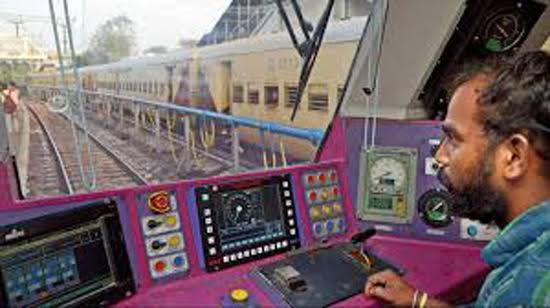
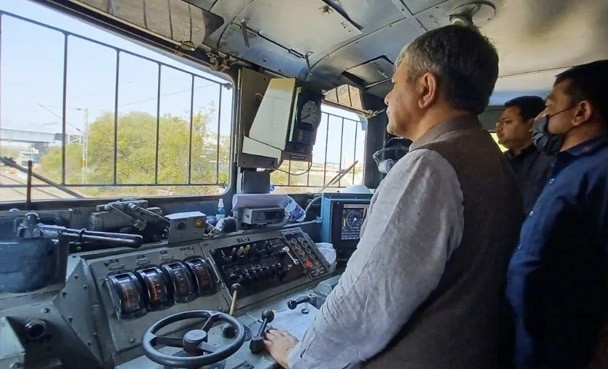
The system protects against Signal Passing at Danger (SPAD), overspeeding, and all forms of train collisions. Through in-cab displays, loco pilots receive continuous information on movement authority, speed limits, target distance, and signal aspects, enabling safer operations even beyond 120 kmph.
How Kavach Works on the Ground
Kavach operates through continuous communication between trackside equipment and locomotives using secure UHF radio links and RFID tags embedded along the track. Wayside systems collect live inputs from interlocking systems, including signal status, track occupancy, and route settings.
Using this data, the system calculates safe movement authority and transmits it to onboard units. If a train approaches a danger signal, exceeds permitted speed, or risks entering a conflicting route, Kavach automatically applies brakes, preventing accidents caused by human error or delayed reaction.
Rapid Expansion Across High-Density Routes
Implementation of Kavach has been prioritised on India’s High-Density Network and Highly Used Network routes, which carry nearly 96 percent of railway traffic. These include the New Delhi–Mumbai and New Delhi–Howrah corridors, where trains operate at higher speeds with reduced headway.
As of now, Kavach has been implemented on more than 2,200 route kilometres. Kavach Version 4.0 alone covers over 1,300 route kilometres across five railway zones, with additional sanctioned works underway. In January 2026, Indian Railways achieved a record by commissioning Kavach 4.0 on over 470 route kilometres within a single month.
AI and Digital Systems Strengthening Safety
Beyond Kavach, Indian Railways is deploying artificial intelligence and digital tools to create a predictive and preventive safety ecosystem. AI-enabled intrusion detection systems are being used in wildlife-sensitive zones to detect animal movement on tracks and issue real-time alerts.
Video surveillance systems with AI-based analytics have been installed at over 1,700 stations, supporting intrusion detection and proactive security management. Predictive maintenance systems using machine vision, wheel impact detectors, and automated inspection tools are reducing equipment failures and improving asset health.
Financial Commitment to Safety
The safety transformation is backed by sustained financial investment. Expenditure on railway safety has risen from ₹39,200 crore in 2013–14 to ₹1.17 lakh crore in 2025–26. This long-term funding commitment reflects a strategic focus on modernisation, resilience, and passenger protection.
Digital radio communication, optical fibre expansion, tunnel communication systems, fog safety devices, and electronic interlocking have further strengthened operational reliability across diverse terrains and climatic conditions.
Looking Ahead: Kavach 5.0 and Vande Bharat
The next phase of this journey will see the rollout of Kavach 5.0, designed specifically for high-frequency suburban sections. Announced in 2025, the new version aims to significantly reduce inter-train headway while maintaining uncompromised safety.
Upcoming Vande Bharat 4.0 trains are envisaged to integrate Kavach 5.0 as part of their advanced safety architecture, reinforcing India’s position as a global leader in indigenous railway technology.