
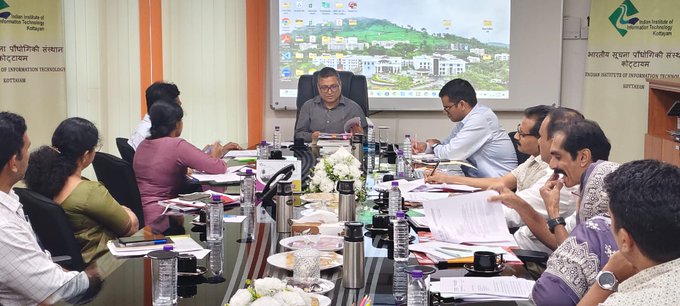
The Ministry of Minority Affairs has intensified its commitment to inclusive growth through a strategic review held in Kerala. On July 17, 2025, Secretary Dr. Chandra Shekhar Kumar met with state officials to assess the progress of key welfare schemes like PMJVK, PM VIKAS, and Waqf development.
Focused Review for Targeted Impact
The meeting aimed to ensure faster implementation of government schemes for minority communities. Discussions focused on:
- Pradhan Mantri Jan Vikas Karyakram (PMJVK)
- Pradhan Mantri Virasat Ka Samvardhan (PM VIKAS)
- Waqf development and UMEED Portal data updates
Officials from the Kerala State Waqf Board, district administration, and various implementing agencies participated in the in-depth review.


PMJVK is a flagship scheme under the Ministry of Minority Affairs. It focuses on creating socio-economic infrastructure in backward districts with significant minority populations. This includes construction of schools, colleges, hospitals, skill centers, and hostels.
Dr. Kumar emphasized the importance of speedy project completion and transparency. He reviewed infrastructure projects in districts like Malappuram, Wayanad, and Kasaragod. These areas have a high concentration of minorities and have shown visible progress under PMJVK.
The Secretary urged state officials to accelerate project timelines and remove procedural bottlenecks. He also stressed involving local communities in planning and monitoring.
PM VIKAS: Empowering Minority Artisans
Pradhan Mantri Virasat Ka Samvardhan (PM VIKAS) is designed to uplift minority artisans, craftsmen, and traditional trades. It supports skill development, marketing assistance, credit linkages, and infrastructure upgrades.
Kerala, known for its skilled artisans and handloom clusters, is a key beneficiary of PM VIKAS. Dr. Kumar discussed the importance of:
- Linking artisans with national e-commerce platforms
- Promoting GI-tagged products from Kerala
- Increasing digital training for young entrepreneurs
The Secretary encouraged state departments to identify more minority-led micro-enterprises and provide handholding through PM VIKAS.
Waqf Development: Transparency through Technology
Waqf properties are vital community assets. Dr. Kumar reviewed the current status of data uploading on the UMEED Portal under the Unified Waqf Management Efficiency, Empowerment and Development Act, 1995.
He emphasized that digital transparency will prevent misuse of Waqf lands and help generate revenue for community welfare. The portal aims to map all Waqf properties across India using GIS and online records.
The Secretary instructed officials to complete 100% digitization and ensure accurate record maintenance. Kerala has made notable progress, but more states need to follow suit to strengthen Waqf governance nationwide.
Data-Driven Governance
Another highlight of the review was the need for real-time data monitoring and feedback loops. Dr. Kumar advised state officials to utilize the dashboards available under the UMEED and PMJVK portals to track scheme-wise progress, delays, and fund utilization.
He stressed the importance of regular capacity-building workshops for implementing officers, especially at the district level, to improve execution quality and accountability.
Kerala: A Model for Minority Welfare
Kerala has long been regarded as a front-runner in education and health. Now, it is also emerging as a model state for inclusive development of minorities. The state’s active participation in PMJVK and PM VIKAS demonstrates its commitment to equitable growth.
During the meeting, Kerala officials shared best practices such as:
- Community-led monitoring groups
- Converging schemes from multiple departments
- Using technology for project geo-tagging
Dr. Kumar appreciated these efforts and urged other states to replicate Kerala’s approach to ensure every minority household benefits from central schemes.
Building a Future with Equal Opportunities
Empowering minority communities is not just about schemes and subsidies. It’s about dignity, participation, and opportunity. Dr. Chandra Shekhar Kumar’s visit to Kerala reinforced the Government of India’s vision of “Sabka Saath, Sabka Vikas, Sabka Vishwas”.
With technology, transparency, and teamwork, India is moving closer to a future where no citizen is left behind—regardless of religion, region, or social background.
Conclusion: Inclusive Growth in Action
The review in Kottayam was not just a formality. It was a timely reflection of the government’s commitment to make development accessible, measurable, and meaningful for all communities. As Kerala strengthens its role in this mission, the rest of the nation is watching—and learning.