 From Village Looms to Fashion Ramps
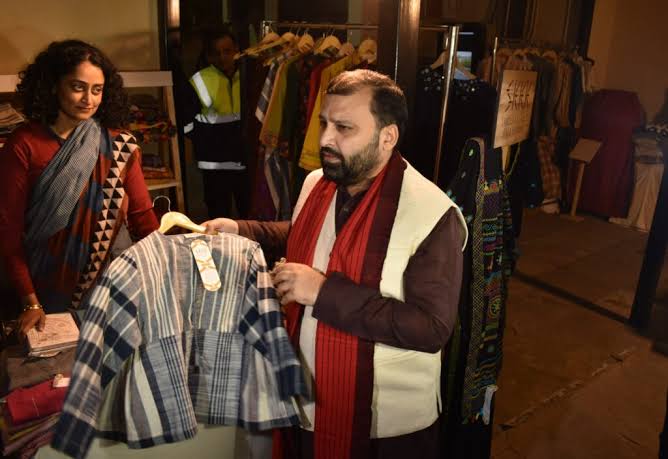
KVIC Chairman Shri Manoj Kumar, who graced the show as Chief Guest, applauded the artisans and designers for reimagining Khadi for contemporary wardrobes. He said the fabric’s “true strength” lies in its weavers and highlighted Khadi’s potential as a symbol of patriotism as well as a modern lifestyle statement.
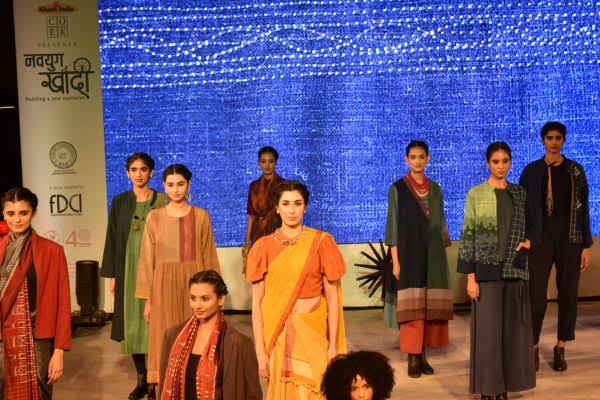
The ramp blended traditional weaves and regional craftlines from Odisha’s Ikat and Assam’s Eri silk to Gujarat’s Tangaliya, Karnataka silk and Bihar’s handloom into modern silhouettes. A standout moment came when artisans themselves walked the ramp alongside designers and KVIC officials, symbolising the garment’s journey “from village to glamour.”
Khadi Knowledge Portal Vol II and the Exhibition
The fashion show followed the inauguration of an exhibition and the launch of Khadi Knowledge Portal Volume II on November 28. The portal consolidates technical know-how, market insights and design resources for Khadi institutions and entrepreneurs, supporting quality improvement and market access.
Design, Sustainability and Youth Appeal
Design teams worked with Khadi institutions to produce sarees, garments, accessories and home textiles under one curated umbrella for the first time. Natural fibres, hand-spun textures and eco-friendly dyeing techniques dominated the collection, underlining Khadi’s sustainability credentials and its suitability for conscious fashion buyers.
Chairman Manoj Kumar emphasised Khadi’s appeal among youth, linking modern design sensibilities with employment generation and environmental sustainability. The “New Khadi” narrative aims to broaden Khadi’s market beyond traditional buyers and position it for national and international fashion circuits.
Institutional Support and Collaborative Curation
The event was jointly organised by KVIC, the Centre of Excellence for Khadi (CoEK), the National Institute of Fashion Technology (NIFT) and the Fashion Design Council of India (FDCI). Officials from KVIC, the Ministry of MSME and CoEK attended, signalling continued institutional backing for product development and market linkages.
Workshops scheduled through December 3 will offer hands-on sessions in hand-spinning, natural dyeing and sari draping, inviting visitors to experience the craft firsthand. Sales counters at the exhibition are expected to drive direct market access for Khadi institutions and artisans.
Regional Diversity, National Identity
Navyug Khadi pulled together regional crafts Bengal cotton and hilsa-inspired motifs, Telangana weaves, Kerala’s Malabar influences and Punjab’s robust textures illustrating Khadi’s pan-Indian canvas. Exhibitors included institutional clusters that produce yardage, apparel and handicraft items, showcasing a broad economic ecosystem of khadi-based livelihoods.
Organisers described the show as a strategic step toward enabling artisans to access design-led opportunities and upscale output for new markets, aligning with the government’s larger self-reliance and rural livelihoods agenda.
What Comes Next
The Navyug Khadi showcase will remain open until December 3, 2025, with exhibitions, sales and interactive workshops running daily from 11:00 a.m. to 5:30 p.m. For designers, buyers and craft enthusiasts, it offers a concentrated view of India’s textile diversity and the evolving Khadi narrative.