
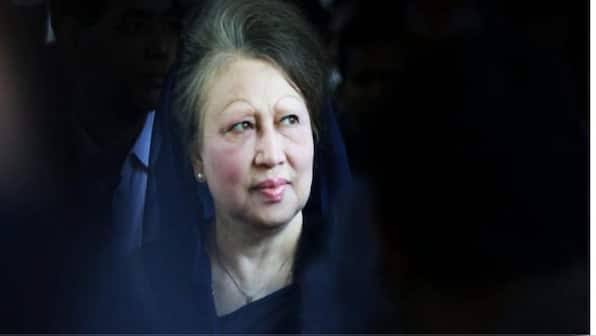
With her passing, Bangladesh bids farewell to one of its most influential and polarising leaders, a woman who shaped the nation’s democratic journey for more than three decades.
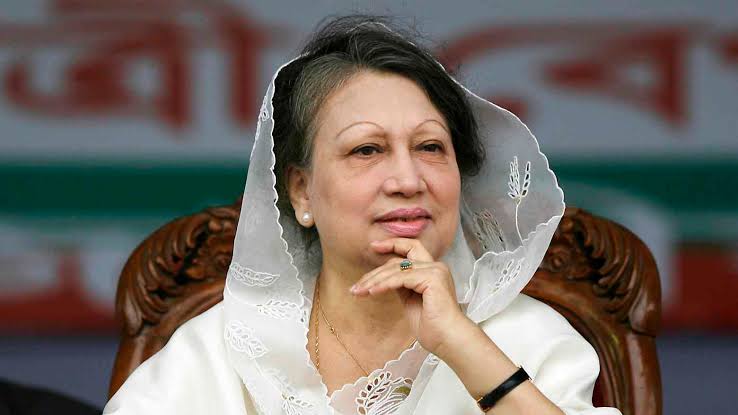

Khaleda Zia and Sheikh Hasina dominated Bangladeshi politics since the early 1990s, a rivalry famously dubbed the era of the “battling begums”. Both women led mass movements against military rule, served multiple terms as prime minister, and commanded deep loyalty as well as fierce opposition.
While Khaleda was often praised for her resistance to authoritarianism, critics accused her governments of tolerating corruption and political miscalculations. Still, few dispute her role in restoring parliamentary democracy after years of military control.
Early Life and Entry into Politics
Born on August 15, 1946, in Dinajpur, then part of British India’s East Bengal, Khaleda Zia lived a largely private life before tragedy thrust her into politics. She married army officer Ziaur Rahman at a young age, long before he emerged as a national leader.
The assassination of President Ziaur Rahman in May 1981 marked a turning point. With the Bangladesh Nationalist Party suddenly leaderless, senior party figures persuaded Khaleda to step into public life to preserve her husband’s political legacy.
Struggle Against Military Rule
Khaleda’s political ascent coincided with the military takeover by General Hussain Muhammad Ershad in 1982. As martial law gripped the country, she emerged as a key civilian face of resistance, enduring repeated arrests and house detentions.
Her decision to boycott the 1986 election under military rule, while rivals participated, strengthened her image as a leader unwilling to compromise on democratic principles.
Prime Ministerial Tenure
Khaleda Zia served as prime minister three times: from 1991 to 1996, briefly in 1996, and again from 2001 to 2006. Her first term marked Bangladesh’s return to parliamentary democracy and economic stabilisation.
Supporters credit her governments with expanding the garment industry, promoting girls’ education and encouraging private enterprise. By 2006, Bangladesh’s GDP growth approached 7 percent, earning praise from global financial institutions.
Controversies and Political Fallout
Her tenure was not without controversy. Allegations of corruption, particularly involving her elder son Tarique Rahman, and accusations of electoral manipulation weakened her standing. The 2004 grenade attack on an opposition rally and a major arms seizure that year raised questions about governance and security.
Political instability culminated in a military-backed caretaker government in 2007, sidelining both Khaleda and Hasina. Khaleda later faced corruption convictions in 2018, resulting in imprisonment and prolonged ill health.
Personal Loss and Final Years
Khaleda’s later years were marked by personal tragedy. Her younger son Arafat Rahman Koko died in 2015, while Tarique spent years in exile before returning to Dhaka in December 2025 after legal relief.
Despite deteriorating health, Khaleda refused to leave the country, a decision supporters say helped keep the BNP united during years of political pressure.
Legacy in South Asian Politics
Khaleda Zia’s legacy remains complex. She is remembered as Bangladesh’s first elected woman prime minister, a symbol of resilience in a conservative society, and a leader who paid a heavy personal price for politics.