
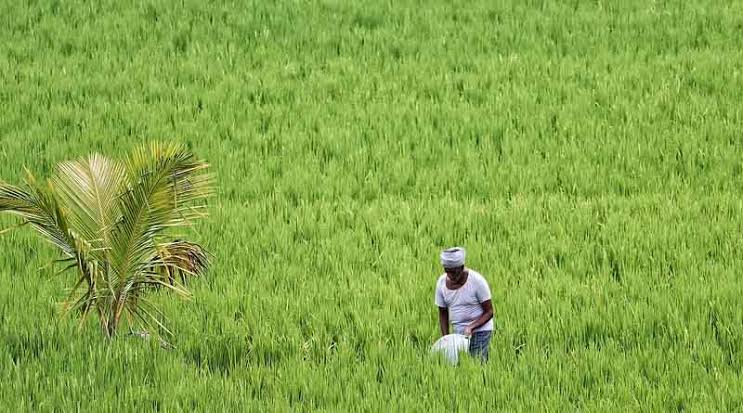
India’s agricultural momentum picks up as kharif crop sowing increases by 31.73 lakh hectares in 2025. The latest data from the Department of Agriculture & Farmers’ Welfare reflects strong progress in the ongoing kharif season, bringing optimism to the rural economy.
Steady Increase in Overall Coverage
As of July 25, 2025, the total area under kharif crops has reached 829.64 lakh hectares, a significant jump from 797.91 lakh hectares in the previous year. That’s a rise of 31.73 lakh hectares, indicating robust sowing activity across the country.
The normal area for kharif crops based on the last five years (2019–2024) stands at 1096.65 lakh hectares. This year’s progress brings us closer to this average, highlighting farmers’ renewed enthusiasm and better monsoon distribution.
Rice Leads the Revival
Rice sowing saw the highest increase—28.97 lakh hectares more than last year. In total, rice covers 245.13 lakh hectares, up from 216.16 lakh hectares in 2024.
Rice is a key staple for millions, and its higher sowing reflects strong water availability and better field preparation in key states like Uttar Pradesh, West Bengal, and Chhattisgarh.


Pulses sowing increased by 3.11 lakh hectares, reaching 93.05 lakh hectares. However, the performance varied by crop type:
- Moong rose by 4.24 lakh hectares
- Moth Bean rose by 3.08 lakh hectares
- Tur fell by -3.10 lakh hectares
- Urad dropped by -1.20 lakh hectares
This fluctuation reflects regional rainfall gaps and market price variations affecting sowing choices.
Coarse Cereals Witness Growth
Coarse cereals also gained ground, increasing by 5.75 lakh hectares. The most notable increase came from maize, which rose by 6.66 lakh hectares, pushing its total area to 85.58 lakh hectares.
Other cereals like jowar and bajra showed marginal increases, while ragi and small millets saw slight decreases.
Oilseeds: A Slight Dip in Numbers
Oilseeds saw a minor setback. The total sowing area declined by 3.83 lakh hectares to reach 166.89 lakh hectares.
The biggest drop came from soybean, which decreased by 4.68 lakh hectares. This was partially offset by gains in groundnut, sesamum, and castor seed.
Sugarcane and Cotton: Mixed Results
Sugarcane sowing rose slightly to 55.16 lakh hectares, a marginal increase of 0.29 lakh hectares. On the other hand, cotton acreage dropped by 2.37 lakh hectares, possibly due to erratic rainfall and pest risks.
Key Takeaways for Farmers and Policymakers
These trends offer crucial insights for agricultural stakeholders:
- Improved monsoon has supported higher rice and maize sowing.
- Pulses remain sensitive to price dynamics and water availability.
- Oilseed crop choices are adjusting based on input costs and yield expectations.
The overall surge in kharif crop sowing is a strong signal of recovery. It also hints at potential improvements in rural demand and food grain production for 2025-26.
Government Support Drives Growth
The Ministry of Agriculture continues to support farmers through timely seed distribution, weather forecasts, and real-time monitoring. Schemes like PM-KISAN and the National Food Security Mission have empowered farmers to take early and informed sowing decisions.
Conclusion
India’s kharif season in 2025 has begun on a strong note. With 31.73 lakh hectares more under cultivation compared to last year, hopes are high for a bountiful harvest and rural growth momentum.
For real-time updates, visit the official Ministry of Agriculture & Farmers’ Welfare website.