Four Priority Areas for Fisheries Investment
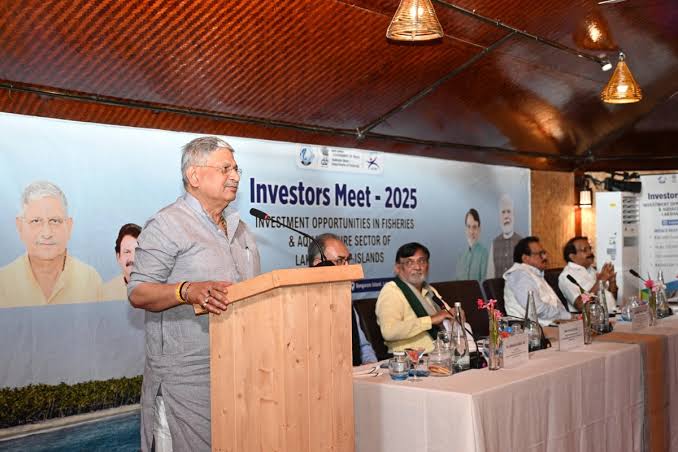
The Department of Fisheries identified four high-potential areas for investment: tuna and deep-sea fisheries, seaweed cultivation, ornamental fisheries, and offshore cage farming. These sectors align with Lakshadweep’s unique marine ecosystem and strategic location within India’s Exclusive Economic Zone.
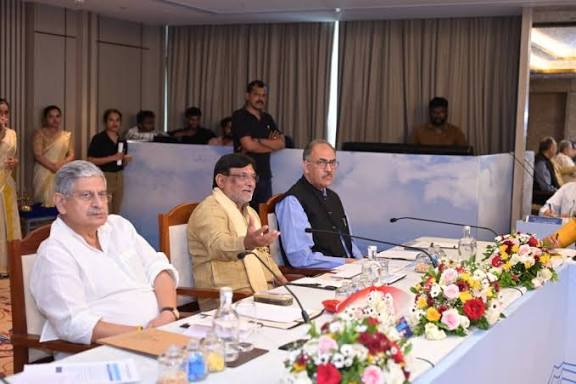
Nearly 22 investors and entrepreneurs working across fisheries value chains participated in the meet, reflecting growing confidence in Lakshadweep’s long-term economic prospects.
 Tuna and Deep-Sea Fisheries: A Global Opportunity
Lakshadweep holds nearly 20 percent of India’s Exclusive Economic Zone, supporting abundant stocks of tuna and other high-value species. Despite this, current tuna production remains at around 15,000 tonnes, far below the estimated potential of nearly one lakh tonnes.
The government highlighted opportunities across the value chain, including modern fishing practices, processing, canning, branding, certification, and exports. With traditional pole-and-line fishing methods already prevalent, Lakshadweep is well positioned for eco-labelling systems such as Marine Stewardship Council certification, opening access to premium international markets.
Seaweed Cultivation: Green Growth with Global Demand
With lagoon areas exceeding 4,200 square kilometres, Lakshadweep offers ideal conditions for large-scale seaweed farming. Rising global demand for seaweed-based products in food, pharmaceuticals, cosmetics, and bio-products presents a strong business case for investors.
The islands have been notified as a Seaweed Cluster under PMMSY, with initiatives such as seed banks and hatcheries already in place. The Lakshadweep Administration is also working on a leasing policy to encourage private participation in offshore seaweed farming.
Ornamental Fisheries and Offshore Cage Farming
Lakshadweep’s coral reefs host nearly 300 species of marine fish suitable for the ornamental trade. The government encouraged investments in hatcheries, broodstock banks, and integrated rearing units to promote sustainable exports while reducing pressure on wild populations.
Offshore cage farming also emerged as a promising sector, supported by successful pilot projects elsewhere in India. With an EEZ spanning nearly four lakh square kilometres, Lakshadweep offers immense scope for modern mariculture using advanced cage technologies.
Single-Window Clearance and ₹500 Crore Investment Outlook
To facilitate ease of doing business, the administration announced the development of a single-window system for project approvals. The Investors’ Meet has already generated proposals worth over ₹500 crore, signalling strong momentum for sustainable economic development.