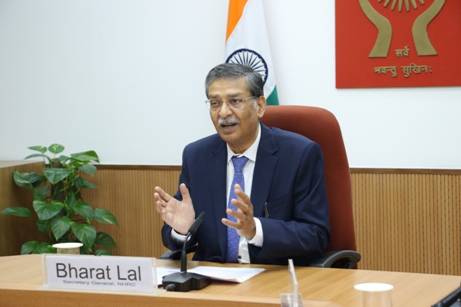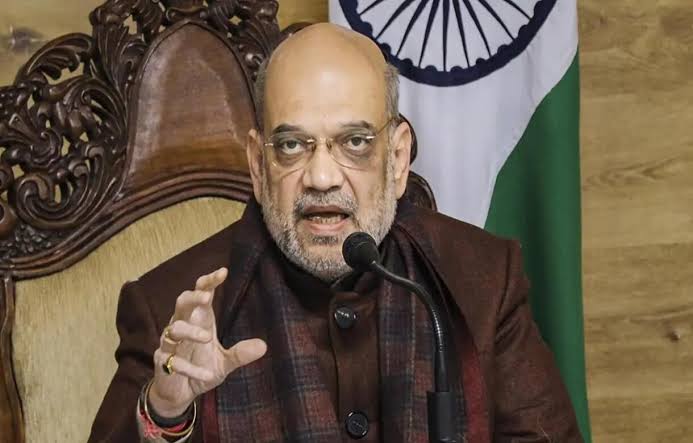
The ongoing debate over language policies in India has once again intensified, with Tamil Nadu Chief Minister M.K. Stalin and Union Home Minister Amit Shah engaging in a war of words. At the heart of the issue is the three-language formula under the National Education Policy (NEP) 2020, which has long been a point of contention in Tamil Nadu.
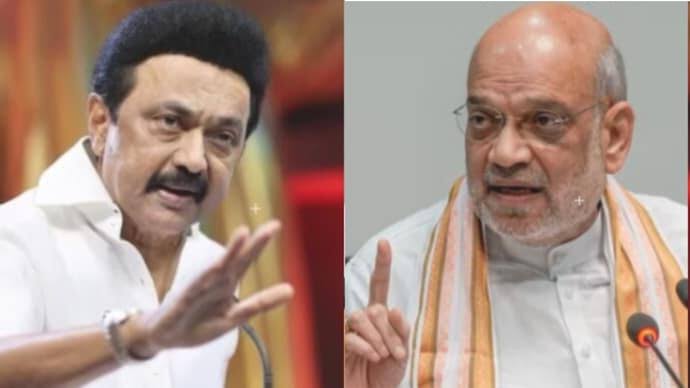 Speaking at the 56th Raising Day of the Central Industrial Security Force (CISF) in Ranipet, Tamil Nadu, Amit Shah highlighted the Modi government’s decision to allow CISF aspirants to take exams in regional languages, including Tamil, Bengali, and Kannada. He emphasized that, under previous governments, there was no provision for taking CAPF exams in one’s mother tongue. He then urged Stalin to take steps toward introducing medical and engineering courses in Tamil, reinforcing the importance of regional languages in education.
Shah also praised Tamil Nadu’s rich cultural and educational legacy, acknowledging its contributions to India’s cultural and administrative heritage. His speech came against the backdrop of an ongoing language dispute, with Tamil Nadu’s government standing firmly against what it calls the imposition of Hindi.
In response, CM Stalin launched a scathing attack on the Centre, accusing it of promoting “Hindi colonialism.” He argued that the NEP’s three-language formula was an attempt to force Hindi upon non-Hindi-speaking states, likening it to British colonial rule. Stalin pointed to Tamil Nadu’s long-standing resistance to such policies, recalling past movements that successfully pushed back against Hindi imposition. He dared the BJP to contest the 2026 Tamil Nadu Assembly elections with this issue as their main agenda, expressing confidence that the people of the state would reject any attempts at linguistic domination.
Stalin also criticized Union Education Minister Dharmendra Pradhan, accusing him of provoking an unnecessary conflict. He pointed out that while the Centre insists that the NEP offers flexibility, its implementation has largely favored Hindi, making it difficult for non-Hindi-speaking students. The CM further argued that naming government schemes, institutions, and awards predominantly in Hindi creates barriers for a majority of Indians who do not speak the language.
At the core of the debate is the NEP 2020’s three-language formula, which aims to promote multilingualism while allowing states to choose the languages they offer. The policy encourages using the mother tongue or regional language as the medium of instruction at least until Class 5, preferably until Class 8 and beyond. While English remains an option, the policy does not impose any particular language. However, Tamil Nadu’s government and many of its people remain deeply skeptical, fearing that the policy is a step toward making Hindi dominant across India.
The language debate is not new to Tamil Nadu, which has a long history of opposing Hindi imposition. The Dravidian movement, which gained momentum in the mid-20th century, successfully resisted earlier attempts to make Hindi a compulsory language in the state. This resistance continues today, with the ruling DMK party positioning itself as the protector of Tamil identity and linguistic rights.
As the debate rages on, it remains to be seen how the Centre will respond to Tamil Nadu’s firm opposition. With elections approaching, language politics could play a crucial role in shaping public sentiment. For now, the battle lines are drawn, and both sides seem determined to stand their ground.