
As per the 2011 Census, there are 2.68 crore persons with disabilities in India, of which 19% experience hearing disabilities. In 2023, the World Health Organization (WHO) estimated that approximately 63 million people in India suffer from significant hearing impairments.
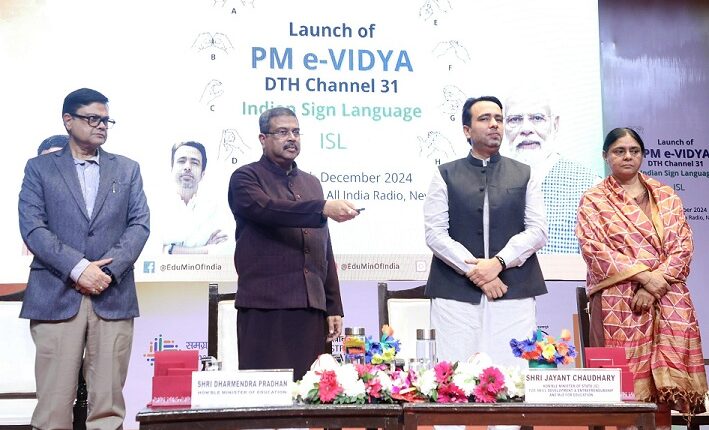

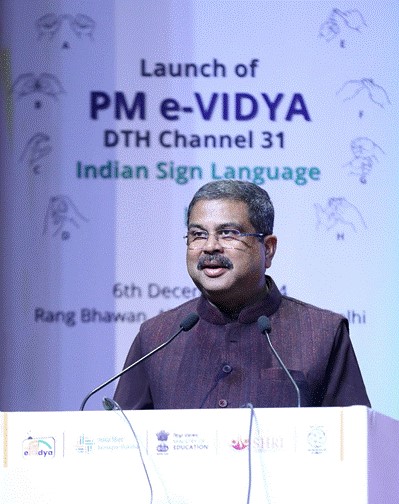
Incorporating Indian Sign Language (ISL) into the Education System
Indian Sign Language (ISL) is a structured language used as the primary mode of communication by the hearing-impaired community. In 2020, the Indian Sign Language Research and Training Centre (ISLRTC) signed an MoU with the National Council of Educational Research and Training (NCERT) to translate textbooks from classes I–XII into ISL. This initiative, expected to be completed by 2026, is part of the government’s broader efforts to incorporate ISL into the education system and foster greater inclusion of hearing-impaired students.
PM e-Vidya: A Comprehensive Digital Education Initiative
Launched as part of the Atmanirbhar Bharat Abhiyaan by the Ministry of Education on May 17, 2020, PM e-Vidya aims to offer multi-mode access to education through digital, online, and on-air platforms, especially to mitigate learning losses resulting from the COVID-19 pandemic. This initiative supports the NEP 2020’s vision of providing equitable and quality education to all students, including those in rural and remote areas.
Key Components of PM e-Vidya:
- DIKSHA (Digital Infrastructure for School Education): A national platform providing high-quality e-content, including QR-coded textbooks, with over 5.58 crore learning sessions and 3.17 lakh pieces of e-content.
- PM e-Vidya DTH TV Channels: Initially started with 12 channels, now expanded to 200 channels, delivering supplementary education in multiple languages for students from classes 1-12 across various states and UTs.
- SWAYAM (Study Webs of Active-Learning for Young Aspiring Minds): A national platform offering online courses for higher education and school courses, with over 10,000 courses and 4.1 lakh students enrolled.
- Radio, Community Radio, and CBSE Podcast – Shiksha Vani: These platforms broadcast educational content, especially for areas with limited internet access.
- Digitally Accessible Information System (DAISY): Designed for visually and hearing-impaired students, DAISY provides audiobooks, sign language videos, and talking books.
- Virtual Labs & Skilling e-labs: These virtual labs and simulated learning environments enhance students’ critical thinking and creativity, accessible via DIKSHA.
- e-Content for Teachers: Offers interactive videos, audiobooks, and digital events for teachers.
PM e-Vidya’s Impact and UNESCO Recognition
The PM e-Vidya initiative has made significant strides in bridging the digital divide, making quality education accessible to all learners, especially during the pandemic. In 2022, UNESCO recognized the initiative for its exceptional use of ICT in education during the COVID-19 crisis. The Central Institute of Educational Technology (CIET) received the UNESCO King Hamad Bin Isa Al-Khalifa Prize for the Use of ICT in Education, acknowledging the innovative approach in expanding educational opportunities.