Seoul, South Korea — June 3, 2025
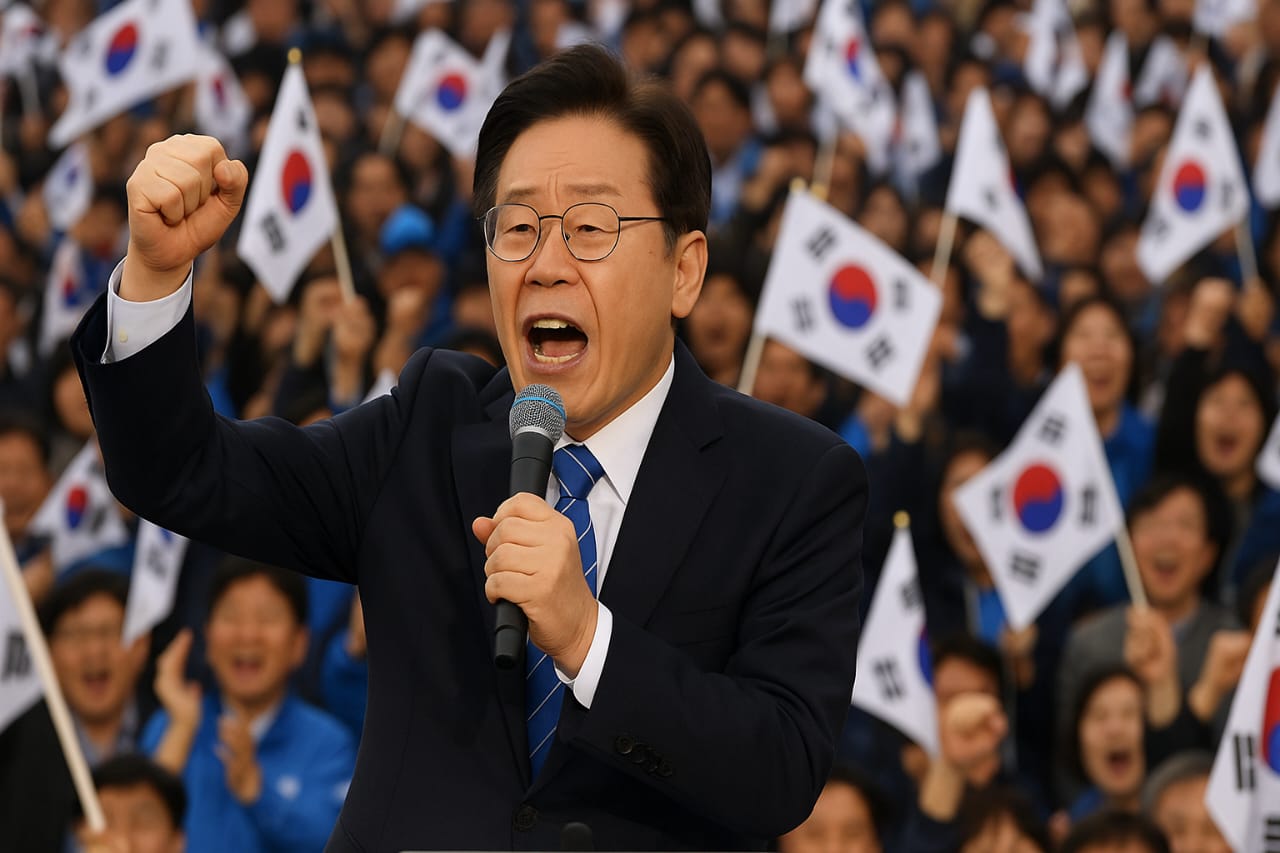
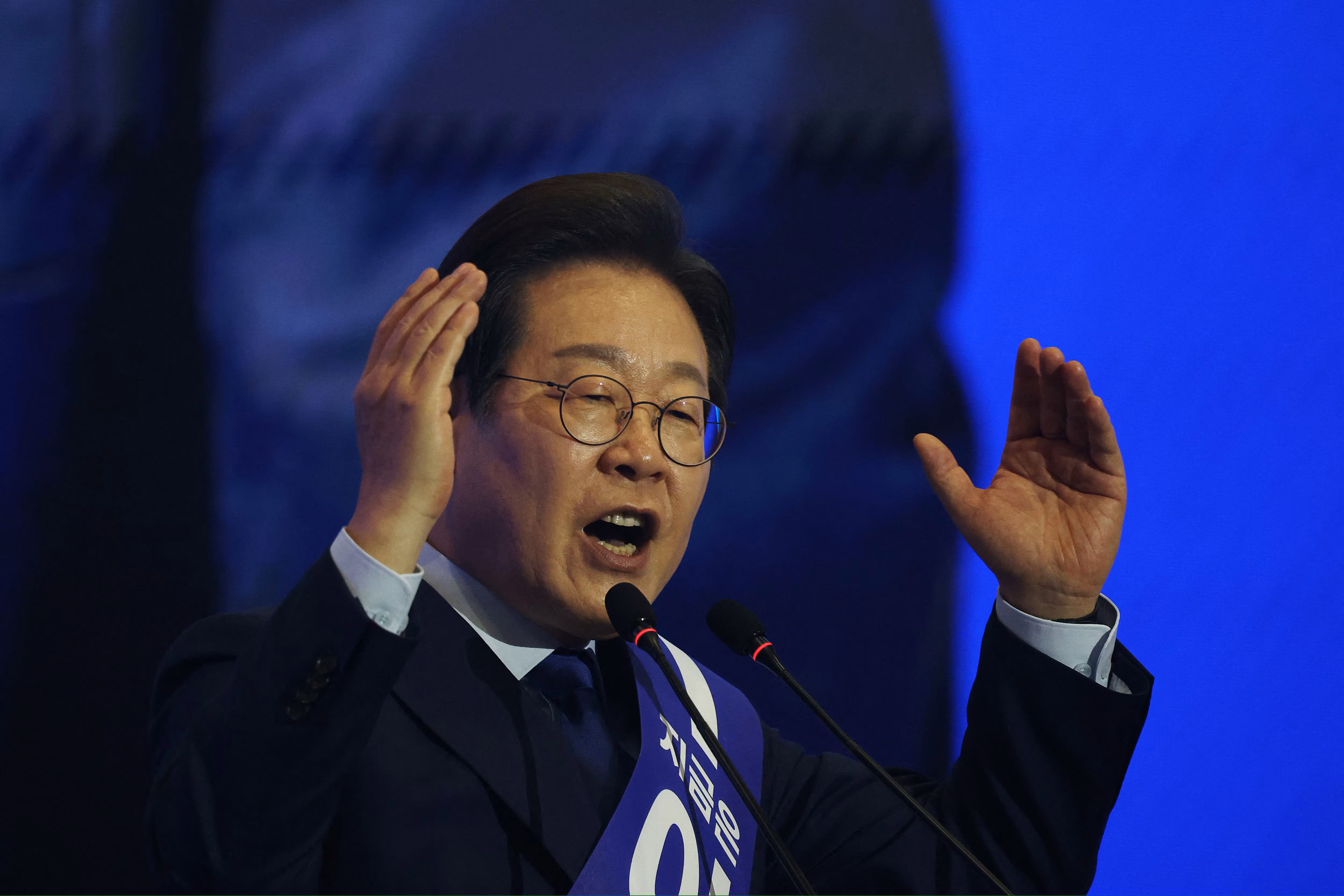
Lee Jae-myung is poised to become South Korea’s next president following a historic snap election that has triggered a dramatic political shift. With 70% of votes counted, Lee, the Democratic Party candidate, leads with 48.53%, ahead of his conservative rival Kim Moon-soo, who stands at 41.7%.
 The snap election was called after former President Yoon Suk Yeol was impeached and briefly declared martial law in December—an act that caused South Korea’s biggest political crisis in decades. His measures were soon reversed by the constitutional court, but not before they set off massive protests and his official removal in April.
Lee, aged 61 and a former human rights lawyer, had previously made two unsuccessful presidential bids. This time, he gained momentum from public anger over Yoon’s governance and economic dissatisfaction.
“This is judgment day,” Lee said before voting, calling the moment crucial to “save South Korea.” Speaking during the vote count, he added:
“I will do my utmost to fulfill the great responsibility and mission entrusted to me, so as not to disappoint the expectations of our people.”
Voter turnout was notably high. The National Election Commission reported that 77.8% of voters had turned out an hour before polls closed—exceeding the 2022 presidential election numbers. More than a third of the 44 million eligible voters had cast their ballots early.
For many South Koreans, this vote was a referendum on democracy and political stability. The impeachment and suspension of Yoon created a leadership vacuum, disrupting both the economy and foreign relations.
Public sentiment echoed these concerns. Kim Kwang-ma, 81, said:
“The economy has worsened since December. We’ve become so polarised … I hope we can reunite and let Korea move forward again.”
Lee’s campaign emphasized economic reform, reducing inequality, and national unity. In his final campaign rally, he warned that a Kim Moon-soo win would mean a return to authoritarianism and instability:
“If they win, it means the return of rebellion forces, destruction of democracy, and our downfall into a third-world nation.”
Kim Moon-soo, a former labor minister and staunch Yoon Suk Yeol ally, claimed Lee might abuse power due to his party’s control of the National Assembly. He controversially likened Lee’s ambitions to a “Hitler-like dictatorship,” drawing backlash for the inflammatory comparison.
Meanwhile, Lee still faces legal challenges, including bribery and corruption charges. Courts allowed him to delay trials for the campaign, but he maintains the allegations are politically motivated.
Despite his image as a fiery reformer, Lee has adopted a cautious tone on foreign policy. He vowed to uphold South Korea’s strategic alliances with the United States and Japan, while pursuing de-escalation with North Korea.
He acknowledged the difficulty of reviving direct talks with Kim Jong-un, but signaled a shift from the hardline stance of former President Yoon.
Lee’s five-year presidential term begins immediately, skipping the traditional two-month transition. He steps into power facing high expectations, amid deep domestic divisions, economic uncertainty, and growing security threats in the region.
As the final results near completion, one thing is clear: South Korea is embarking on a new political era under the leadership of President Lee Jae-myung.