
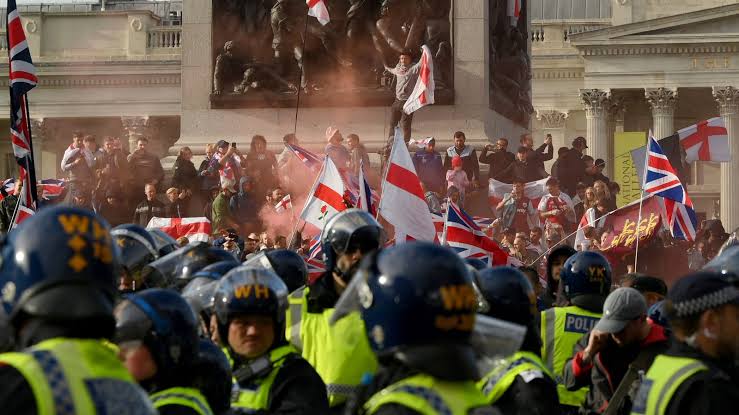

Authorities estimated the crowd between 110,000 and 150,000, far exceeding expectations. Over 1,000 police officers were deployed, with riot gear reinforcements stepping in as clashes broke out. Bottles were hurled, and several officers reported being punched and kicked. The turnout, though large, remained smaller than the 2023 pro-Palestinian march, which had drawn around 300,000 participants.
Anti-Migrant Messaging Dominates
Although branded as a free speech event, much of the rally’s rhetoric centered on immigration. Robinson, whose real name is Stephen Yaxley-Lennon, accused migrants of enjoying more rights in British courts than citizens. French far-right politician Éric Zemmour also spoke, repeating conspiracy theories about “the great replacement.”
Adding to the controversy, Tesla CEO Elon Musk joined virtually, warning of what he called “a rapid erosion of Britain through uncontrolled migration.”
Counter-Protests Push Back
Not everyone agreed with the rally’s message. Around 5,000 people joined the “March Against Fascism,” organized by Stand Up To Racism. They carried banners reading “Refugees Welcome” and chanted “Stand up, fight back.” Clashes between the two groups were mostly contained by police, but tensions flared throughout central London.
Flags, Placards, and Nationalism
Protesters waved Union Jack and St. George’s flags while chanting “We want our country back.” Placards carried slogans like “Stop the boats,” “Send them home,” and “Save our children.” The rise in flag-waving across the UK has been interpreted by some as a revival of national pride, while critics view it as a troubling sign of rising nationalism.
Political Context
The protests come as the UK debates migrant crossings across the English Channel. This summer saw repeated demonstrations outside hotels housing asylum-seekers, some of which turned violent after a high-profile assault case involving an asylum-seeker. Prime Minister Keir Starmer’s government faces mounting pressure to address border control, asylum policies, and growing far-right mobilization.
Looking Ahead
While the “Unite the Kingdom” march highlighted deep divisions, it also underscored Britain’s struggle to balance free speech, public order, and immigration policy. With counter-protests already gaining momentum, London is likely to remain a flashpoint in the broader debate over migration and nationalism in Europe.