

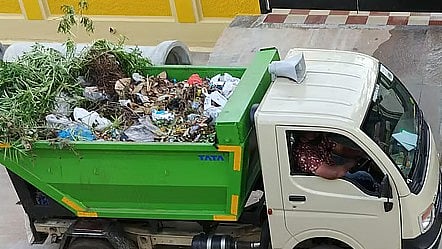

The newly commissioned Shivari plant has a daily processing capacity of 700 metric tonnes, complementing two existing facilities to handle over 2,100 metric tonnes of daily municipal waste. This ensures complete elimination of open dumping and enables the city to process its entire waste generation scientifically.
Waste in Lucknow is segregated at source into 55% organic and 45% inorganic fractions. Organic waste is converted into compost and biogas, while inorganic waste is either recycled or transformed into Refuse Derived Fuel (RDF) for cement and paper industries. Door-to-door collection efficiency has improved to 96.53%, with source segregation levels exceeding 70%.
Legacy Waste Management and Resource Recovery
From approximately 18.5 lakh metric tonnes of legacy waste, 12.86 lakh metric tonnes has been scientifically processed. By-products like RDF, bio-soil, and coarse fractions are repurposed for industrial use and infrastructure development. Over 2.27 lakh metric tonnes of RDF have been dispatched to industries across India, while inert materials are utilized for low-land filling and construction projects.
The Shivari site spans over 25 acres and has been developed into a comprehensive waste processing ecosystem, including windrow pads, sheds, weighbridges, and internal roads, ensuring efficient management and minimal environmental impact.
Future Plans: Waste-to-Energy Initiative
The Lucknow Municipal Corporation is planning a 15 MW Waste-to-Energy (WtE) plant at Shivari. This facility will convert 1,000–1,200 metric tonnes of RDF daily into electricity, reducing transportation costs and generating sustainable energy for the city.
Lucknow’s waste management model emphasizes circular economy principles, maximizing resource recovery, minimizing legacy waste, and promoting recycling. These initiatives position the city as a model of urban sustainability for other municipalities across India and internationally.