
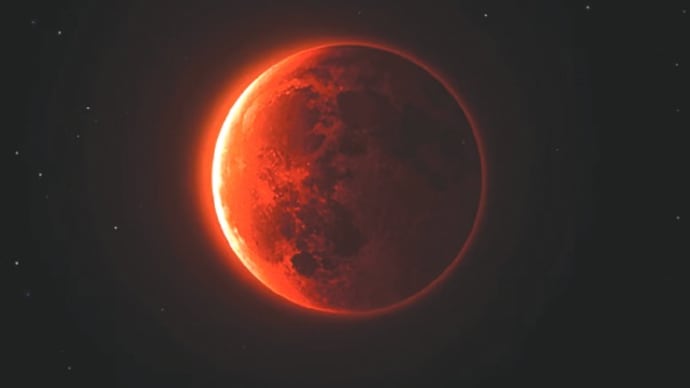
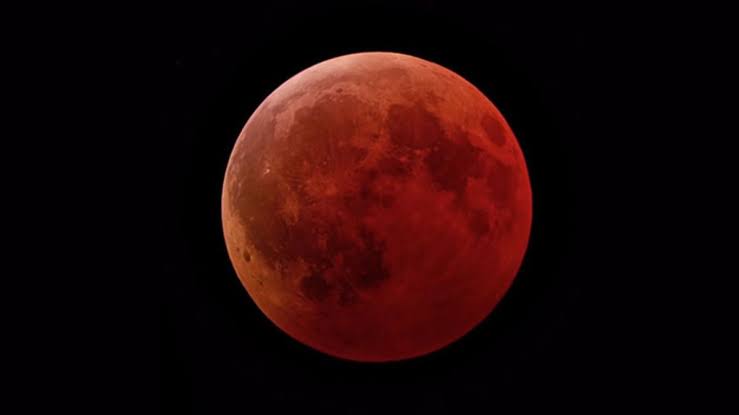

According to scientific explanations shared by space agencies including NASA, a lunar eclipse occurs when the Earth comes directly between the Sun and the Moon, casting its shadow on the lunar surface. During totality, sunlight passing through Earth’s atmosphere scatters shorter blue wavelengths and allows red and orange hues to reach the Moon, giving it the iconic “Blood Moon” appearance.
Unlike solar eclipses, lunar eclipses are safe to observe with the naked eye.
Lunar Eclipse 2026: Key Timings (IST)
• First Contact with Penumbra: 02:16 PM
• First Contact with Umbra: 03:21 PM
• Total Phase Begins: 04:35 PM
• Maximum Eclipse: 05:04 PM
• Total Phase Ends: 05:33 PM
• Last Umbra Contact: 06:46 PM
• Last Penumbra Contact: 07:52 PM
However, because the eclipse coincided with moonrise in India, only the later stages were visible in most regions.
City-Wise Moonrise Visibility
Residents in eastern India enjoyed better visibility due to earlier moonrise. Kolkata witnessed the eclipse around 5:43 PM, while Patna and Varanasi saw it around 5:55 PM. In Delhi, Noida, and Lucknow, the Moon became visible between 6:02 PM and 6:22 PM.
Southern cities such as Chennai and Bengaluru reported visibility around 6:21 PM to 6:32 PM. Hyderabad and Indore saw the Moon around 6:26 PM.
Sutak Kaal and Cultural Observances
In Hindu tradition, the Sutak period is observed several hours before the eclipse. Many devotees avoid cooking or eating during this time and prefer mantra chanting, meditation, and prayer.
Spiritual leaders advised chanting mantras such as “Om Namah Shivaye” and “Om Namo Bhagavate Vasudevaye” during the eclipse. Some households placed tulsi leaves in stored food as a traditional practice.
Pregnant women were advised in traditional belief systems to remain indoors and avoid strenuous activities. However, astronomers maintain that a lunar eclipse is a natural astronomical event without harmful radiation.
Scientific View vs Belief
Astronomers reiterate that lunar eclipses pose no health risks. There is no scientific evidence supporting claims that food becomes contaminated or that individuals are negatively affected by viewing the eclipse.
What Made This Eclipse Special?
This eclipse coincided with Phalguna Purnima, the full moon day associated with Holi festivities in many parts of India. The overlap added cultural and spiritual significance to the astronomical event.
Globally, the eclipse was visible across parts of Asia, Australia, the Americas, and the Pacific region.
As the reddish Moon rose over city skylines, it offered a striking reminder of the intricate cosmic alignments that continue to fascinate humanity. For many, Lunar Eclipse 2026 was both a scientific wonder and a moment of quiet reflection.