 Court Rejects ‘Res Judicata’ Argument
The bench clarified that the single judge’s order was not barred by the principle of res judicata, as earlier litigations had not conclusively decided the issue of lighting the lamp at the site. The appellants, including the State government, police authorities, and the Hazarath Sultan Sikkandar Badhusha Avuliya Dargah, failed to establish that the matter had already been settled.
The court also noted that no convincing material was produced to show that religious doctrines or agama shastras prohibited lighting of the lamp at the stone pillar.
‘Imaginary Ghost’ of Law and Order
In a sharply worded observation, the High Court described the state’s law and order apprehension as an “imaginary ghost.” The judges remarked that it was difficult to believe that permitting lamp lighting on a single day in a year could disturb public peace unless such disturbance was artificially created.
The bench went on to caution that no state should stoop to sponsoring unrest for political or administrative convenience, stating that such conduct would be deeply regrettable.
Failure of Mediation and Administrative Role
The court expressed disappointment with the district administration, observing that the issue should have been treated as an opportunity to build trust between communities through meaningful mediation. Instead, suspicion was allowed to grow, further complicating a matter that could have been resolved amicably.
The judges also noted that conflicting claims over the ownership of the pillar added to scepticism surrounding the mediation efforts.
ASI Norms to Govern Lamp Lighting
Recognising that Thiruparankundram Hills is a protected archaeological site, the court made it clear that any activity at the Deepathoon must comply with the Archaeological Survey of India (ASI) Act. The number of persons allowed and the manner of lighting the lamp are to be finalised in consultation with the ASI.
This safeguard, the bench said, ensures preservation of heritage while respecting religious practices.
Background of the Dispute
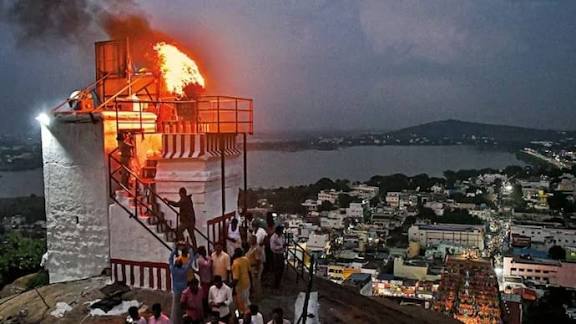
The case arose from a December 1 order directing the Arulmigu Subramania Swamy Temple administration to light the Karthigai Deepam at the hilltop pillar. When the order was not complied with, the single judge permitted devotees themselves to light the lamp. Even then, the deepam was not lit, leading to ongoing contempt proceedings.
Subsequently, the State government, police authorities, the Dargah, and the Tamil Nadu Waqf Board challenged the order before the division bench.
Arguments by State and Other Parties
The State argued that the petitioners had no enforceable legal right to seek lighting of the lamp and that Article 226 powers could not be used to alter long-standing customs. Temple authorities echoed this view, stating that decisions regarding rituals rested with the Devasthanam.
The Dargah contended that it was not given adequate opportunity before the single judge and claimed difficulties in enjoying land granted to it in 1920. Police authorities argued that access to the pillar through dargah steps posed practical challenges and could disturb peace.