

Unlike most Hindu festivals that follow the lunar calendar, Makar Sankranti is based on the solar cycle. It coincides with the Sun entering Capricorn, an astronomical event that occurs almost on the same date each year. Because of this solar alignment, the festival usually falls on January 14, with minor variations during leap years.
The day also marks the end of the winter solstice phase and the gradual lengthening of daylight hours, symbolising renewal, positivity, and forward movement. Ancient Indian astronomers recognised this shift centuries ago, integrating science seamlessly with spiritual observance.
Spiritual and Agricultural Importance
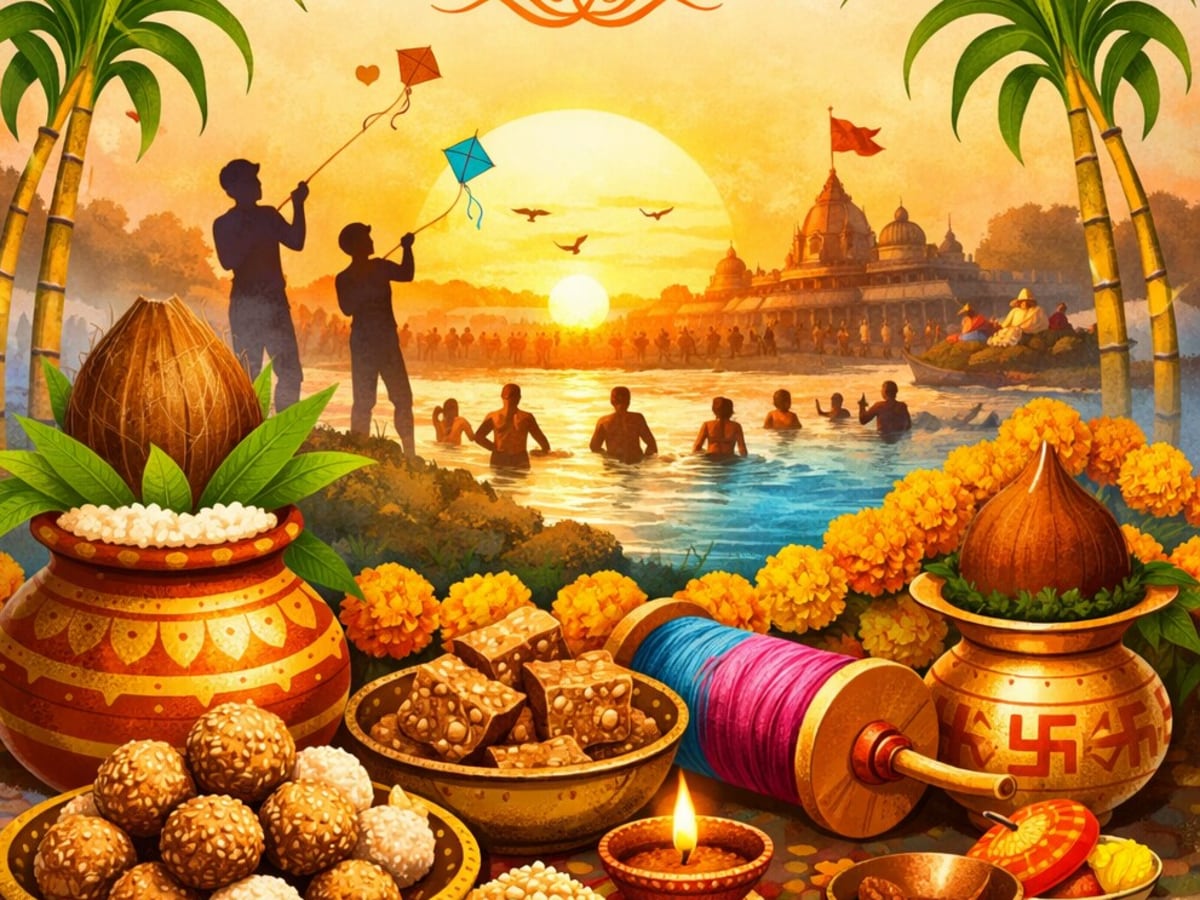
For India’s agrarian communities, Makar Sankranti celebrates the completion of the harvest of key crops such as rice, wheat, sugarcane, and pulses. Farmers offer gratitude to the Sun God, believed to be the sustainer of life and crops.
The festival is also considered highly auspicious. Ritual baths in sacred rivers like the Ganga, Yamuna, and Godavari are believed to cleanse sins and bring spiritual merit. Acts of charity, especially food donations, hold special significance on this day.
According to Hindu mythology, the period of Uttarayan is considered favourable for spiritual liberation. The Mahabharata narrates that Bhishma Pitamah chose to relinquish his body during this phase, believing it to be the most auspicious time to attain moksha.
How Makar Sankranti Is Celebrated Across India
The diversity of India is most vividly reflected in how Makar Sankranti is celebrated across states. In Tamil Nadu, the festival takes the form of the four-day Pongal celebration, honouring the Sun, cattle, and nature with elaborate rituals and traditional dishes.
Punjab and parts of northern India observe Lohri with bonfires, folk songs, and dances, especially celebrating the harvest of sugarcane and the birth of male children. In Assam, the festival is known as Magh Bihu or Bhogali Bihu, marked by community feasts, bonfires called meji, and traditional rice delicacies.
In Maharashtra and Karnataka, people exchange tilgul sweets made of sesame and jaggery, conveying the message of harmony and sweetness in relationships. Bihar celebrates the day as Khichdi, centred around the preparation of the nourishing rice and lentil dish.
In Bengal, Poush Sankranti is observed with jaggery-based sweets and pithas, while lakhs of devotees take a holy dip during the Ganga Sagar Mela. Gujarat and Rajasthan witness colourful skies filled with kites, with Ahmedabad hosting an internationally recognised kite festival.
Food, Health, and Social Values
Food plays a central role in Makar Sankranti celebrations. Dishes made from sesame seeds, jaggery, and rice dominate kitchens across India. These ingredients are not only symbolic of warmth and prosperity but are also scientifically suited for winter nutrition.
The festival carries a powerful social message of unity and sharing. Families visit neighbours, exchange sweets, and strengthen community bonds. In many regions, women and children go door-to-door spreading joy and goodwill.
Beyond religion, Makar Sankranti highlights humanity’s timeless relationship with nature and seasonal cycles. It reminds society of gratitude, environmental respect, and collective harmony.