
Overview
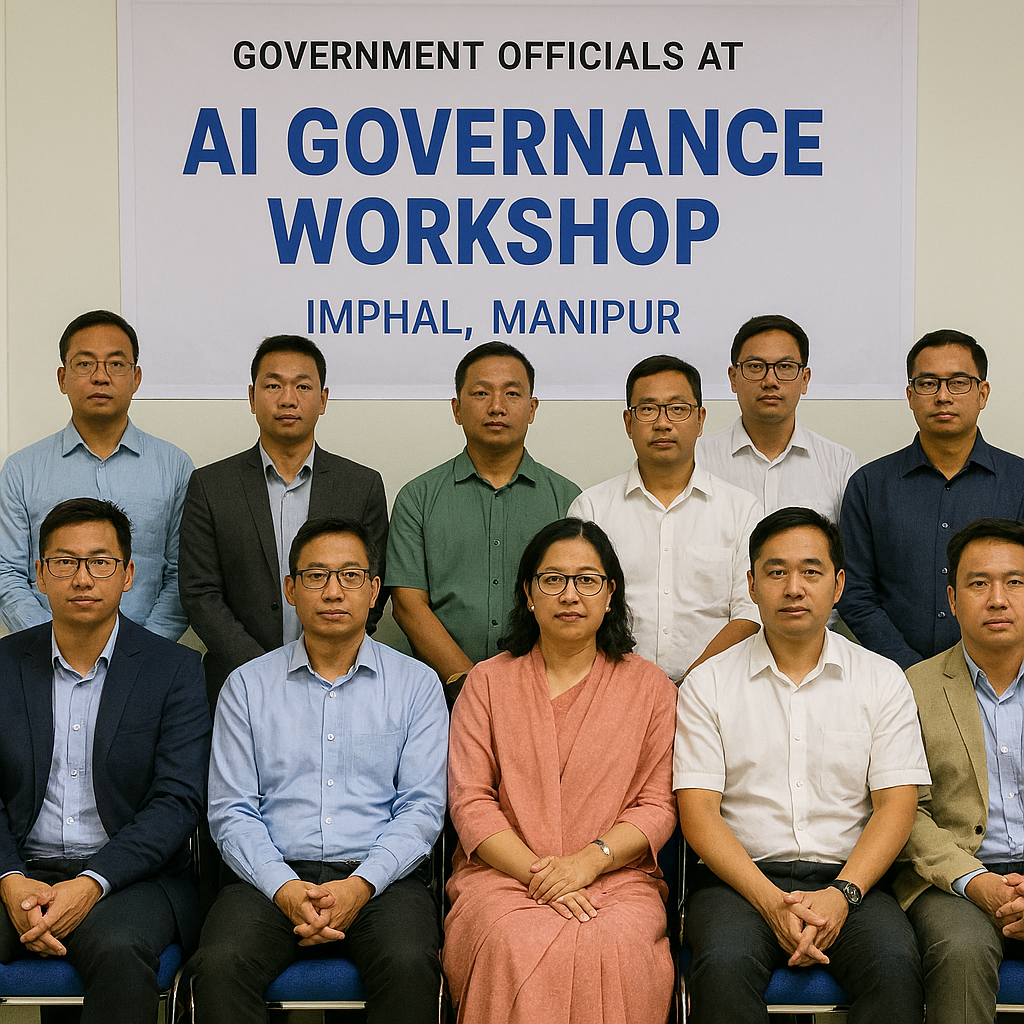
The Department of Information Technology (DIT), Manipur, in collaboration with the National e-Governance Division (NeGD) under the Ministry of Electronics and Information Technology (MeitY), conducted a two-day state-level workshop on “AI for Good Governance” at the State Academy of Training (SAT), Imphal, on 21–22 August 2025.
The program targeted senior government officials and focused on practical adoption of Artificial Intelligence (AI) in administration. Over 50 officers, including all Deputy Commissioners, attended. The turnout signals Manipur’s clear push toward AI-enabled, citizen-centric services.
Leaders Set the Tone
In his welcome address, Shri Nambam Deben, Director (IT), Manipur, greeted participants and NeGD dignitaries. He called for an open, hands-on learning mindset.
Delivering the keynote, Shri Thokchom Kiran Kumar, IAS, Secretary (IT), underscored why capacity building must come first. He highlighted two immediate focus areas: AI-assisted legal case management and GIS-based habitation mapping of villages. Both use cases aim to cut delays, add transparency, and improve last-mile delivery.
In the vote of thanks, Shri Potsangbam Henry, Head, State e-Mission Team (SeMT), emphasized the state’s resolve to move from pilots to scaled solutions, with NeGD’s continued guidance.
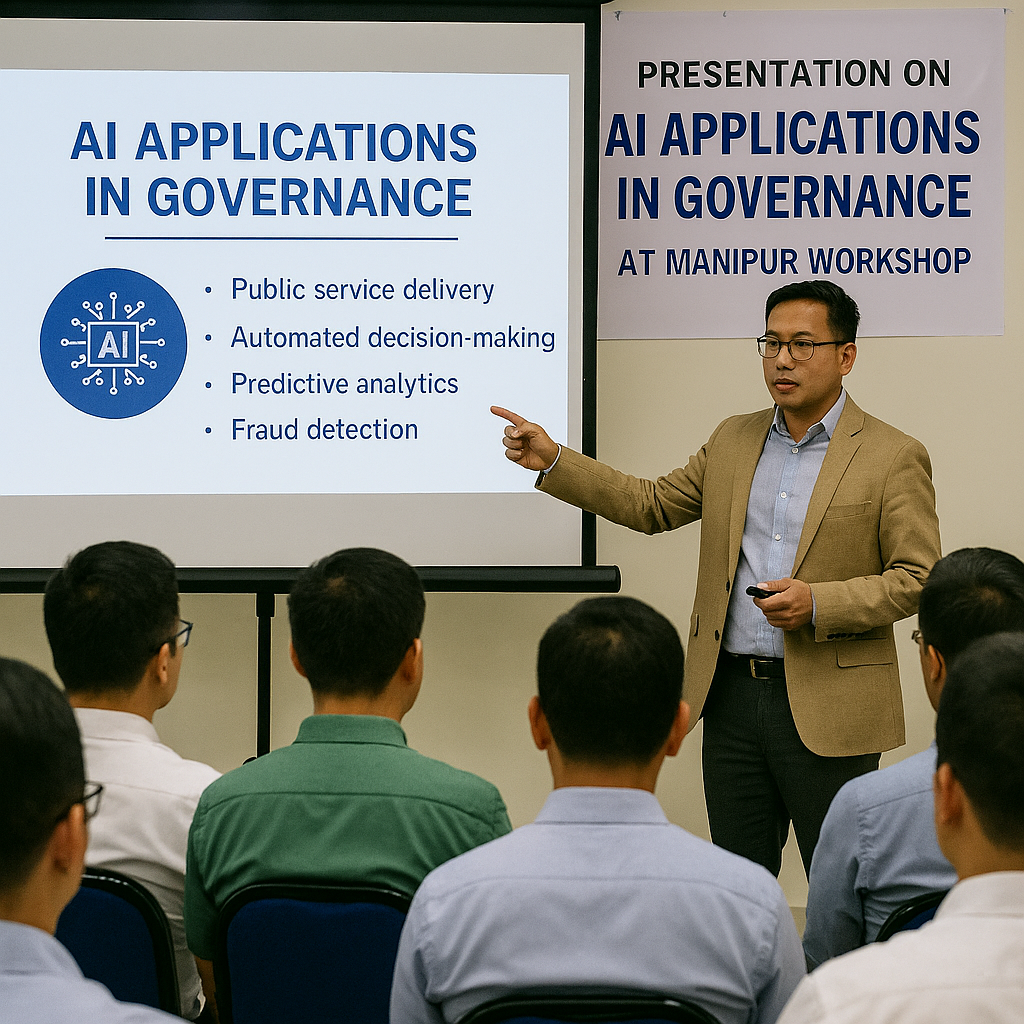

AI can help governments process data faster, spot patterns, and act early. It helps teams manage backlogs, map underserved areas, and prioritize resources. As a result, citizens get quicker, fairer, and more reliable services. Manipur is taking a step-by-step approach: train officials, test real use cases, measure outcomes, and then scale.
Early Use Cases in Focus
- Legal Case Management: AI tools can assist with document search, case triage, and scheduling. Teams can surface precedence faster. They can track pendency and improve productivity. Citizens benefit from shorter wait times and clear updates.
- GIS-Based Habitation Mapping: With AI-ready geospatial data, departments can identify service gaps by village. They can target schemes better. They can plan roads, water, health, and education with evidence, not guesswork.
These tracks keep the focus on measurable outcomes: reduced turnaround time, fewer errors, and consistent service quality across districts.
Capacity Building with Guardrails
The workshop is part of NeGD’s Capacity Building (CB) initiative. Sessions covered AI fundamentals, data readiness, model lifecycle, and change management. Trainers stressed privacy-by-design, fairness, auditability, and human-in-the-loop. These guardrails help teams use AI responsibly and ethically.
Next steps: identify pilot SOPs, define success metrics, set up small cross-functional squads, and publish learnings. Start small. Iterate fast. Scale what works.
What Officials Said
“Capacity building lays the foundation,” the IT Secretary noted. “We will use AI where it makes public service faster and more transparent.” The SeMT lead added, “We will convert training into action and outcomes.”