 National Language Translation Mission & Regional AI
The day opened with a session on “The Architecture of the National Language Translation Mission (NLTM)”, presented by Prof. Mitesh Khapre, IIT Madras, Head of AI4Bharat. He highlighted NLTM’s mission to build foundational AI and language technologies for India’s 22 constitutionally recognised languages, covering almost 99% of the population. Prof. Khapre emphasised the importance of integrating Indian languages into the global AI ecosystem.
Prof. Rohit Sinha from IIT Guwahati presented the work on North East Language Technology Development, focusing on low-resource languages such as Assamese and Mizo. The team highlighted their role in collecting native-language data, building machine translation tools, OCR, text-to-speech, and speech recognition systems to bridge critical gaps in digital education, governance, and services.
BHASHINI: Inclusive Language AI Platform
Ms. Jyotismita Devi, Engagement Manager – Northeast India, BHASHINI Division, MeitY, presented the platform’s vision. BHASHINI aims to deliver voice-first, inclusive language technologies allowing citizens to access digital services in their native languages. The platform provides APIs, datasets, and standards to support low-resource languages, facilitating digitisation of legacy records, real-time translation, and easier access to education and government services.
AI Education through Reverse Engineering
Prof. Amit Awekar, IIT Guwahati, addressed students on “The Reverse Engineering Approach to AI Education”. He advocated for embedding problem-solving, system-level thinking, and ethical AI deployment early in the education pipeline. The approach encourages students to understand AI architectures, modular design, debugging, and documentation rather than just using AI tools.
Key Takeaways & Concluding Remarks
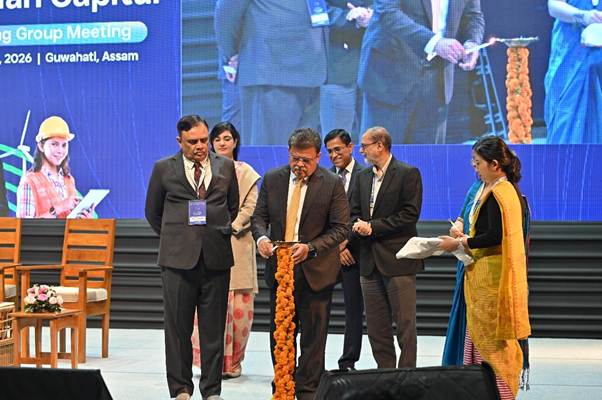
Dr. Sanasam Ranbir Singh, Head of the Centre for Linguistic Science and Technology, IIT Guwahati, concluded the meeting by thanking all participants. Discussions highlighted the importance of aligning AI education and skilling with real-world deployment, integrating interdisciplinary knowledge in data, algorithms, infrastructure, and ethics to build a socially grounded, globally competitive AI workforce.
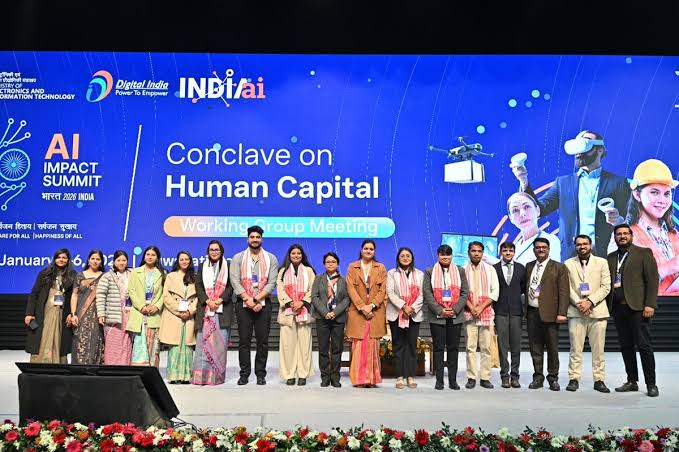
The Working Group Meeting serves as a precursor to the India AI Impact Summit 2026, scheduled in New Delhi from 15–20 February 2026. Recommendations from the meeting are expected to influence national and global AI discussions, promoting inclusive and future-ready human capital in India.