
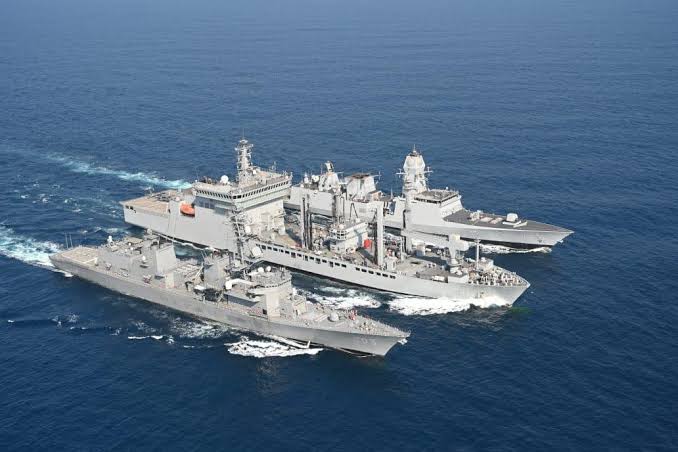

MILAN 2026 witnessed unprecedented participation, with 42 ships and submarines and 29 aircraft taking part in the exercise. Among these were 18 ships from Friendly Foreign Countries, reflecting the growing global engagement with the Indian Navy.
In addition to integral helicopters onboard participating ships, maritime patrol aircraft from France, Germany and the United States also joined the drills, underlining the multinational character of the exercise.
Leadership and Ceremony Aboard INS Vikrant
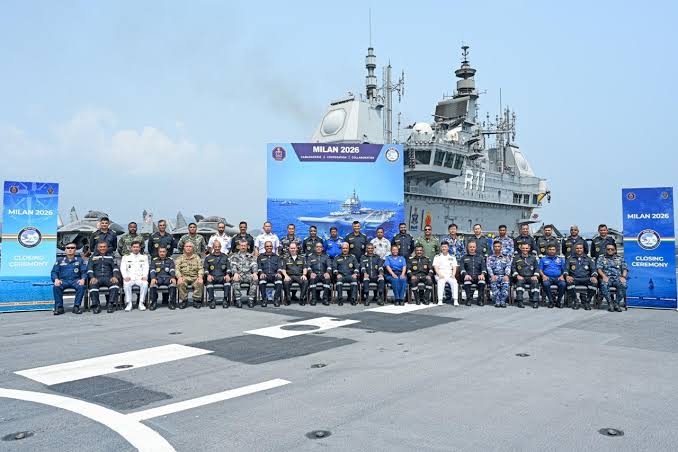
The closing ceremony was presided over by Rear Admiral Alok Ananda, Flag Officer Commanding Eastern Fleet. Commanding Officers and senior representatives from all participating units attended the event, celebrating the successful culmination of complex operational drills and professional exchanges.
INS Vikrant, India’s indigenously built aircraft carrier, served as a fitting venue for the ceremony, symbolising the nation’s expanding maritime capabilities and self-reliance in defence production.
Harbour Phase: Professional and Cultural Engagement
The exercise began with a Harbour Phase that focused on strengthening professional ties and knowledge sharing. Bilateral meetings, Subject Matter Expert Exchanges and the International Maritime Seminar facilitated in-depth discussions on contemporary maritime challenges.
Cross-deck visits, cultural programmes and outstation tours promoted camaraderie among participating personnel. The MILAN of Young Officers (MOYO) initiative and friendly sports fixtures further encouraged interaction at multiple levels.
Sea Phase: High-Intensity Operational Drills
The subsequent Sea Phase tested operational readiness through advanced warfare drills. These included integrated air defence exercises, anti-submarine warfare operations, maritime interdiction drills and coordinated surface strike missions.
Participating navies also conducted communication exercises and cross-deck flying operations, enhancing interoperability. Live firings, including surface gun shoots, anti-air engagements and other tactical drills, were carried out to validate joint operational capabilities.
Strengthening Maritime Interoperability
The exercise emphasised real-time coordination, joint mission planning and logistical support at sea. Friendly Foreign Countries operated alongside Indian Naval Ships in high-tempo manoeuvres, reflecting convergence of maritime interests toward ensuring safe and secure seas.
The drills aligned with India’s MAHASAGAR vision Mutual and Holistic Advancement for Security and Growth Across Regions highlighting a shared commitment to regional stability and collective maritime security.
Operational Goals Achieved
During the closing ceremony, Commanding Officers from participating navies expressed appreciation for the meticulous planning and professional execution of MILAN 2026. They affirmed that the exercise successfully met its training objectives and enhanced mutual understanding and operational synergy.
The seamless coordination demonstrated during the drills validated rapid response capabilities and strengthened trust among partner nations.
A Testament to Shared Commitment
The successful culmination of MILAN 2026 stands as a testament to the enduring partnerships built through cooperative maritime engagement. As regional and global maritime challenges evolve, exercises such as MILAN reinforce collective preparedness and shared responsibility.
With participation at an unprecedented scale and complex operational scenarios executed efficiently, MILAN 2026 has reaffirmed India’s role as a key maritime partner in the Indo-Pacific region.