
Selected deputationists from various government organisations will be deployed for nearly two and a half months in the Kingdom of Saudi Arabia under the supervision of the Consulate General of India (CGI) to provide administrative and medical assistance to Indian pilgrims.
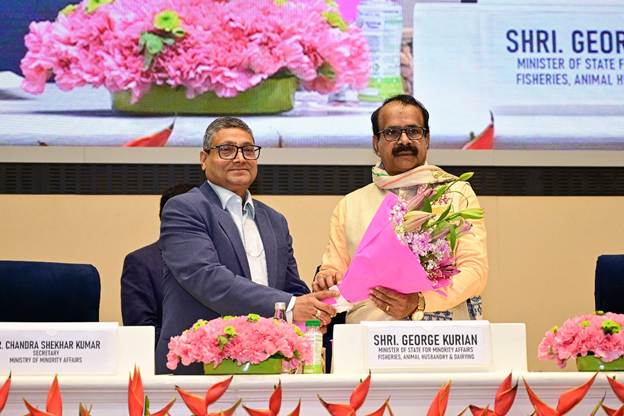

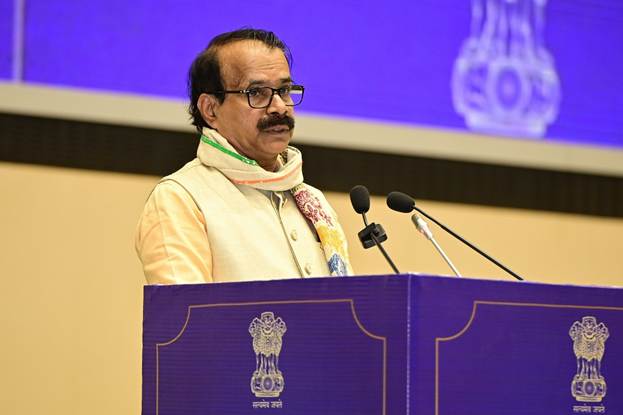
In his address, Kurian emphasized that deputationists will effectively represent India abroad and must serve pilgrims with dedication and compassion. He noted that managing services for around 1.75 lakh pilgrims requires precision, coordination and discipline.
The Minister highlighted welfare measures introduced in recent years, including improved facilities for elderly pilgrims, provisions for companions, and enhanced arrangements for women travelling without Mehram.
He also underscored the whole-of-government approach being adopted for Haj 2026, involving the Ministries of Home Affairs, External Affairs, Health and Family Welfare, and Civil Aviation, alongside the deployment of nearly 600 government officials.
Streamlined Preparations for Haj 2026
Secretary, Ministry of Minority Affairs, Dr. C.S. Kumar, welcomed the deputationists and noted that India remains one of the largest contributors of Haj pilgrims globally. He said preparations for Haj 2026 have been streamlined to ensure efficiency and improved service delivery.
Dr. Kumar acknowledged the support of the Ministry of External Affairs, Saudi authorities, and the Consulate General of India in Jeddah in coordinating arrangements.
He stressed the importance of structured, phase-wise training modules and the use of audio-visual tools to prepare officers for operational challenges on the ground.
Technology and Digital Monitoring
A key focus of the training programme was the integration of technology into Haj management. Officials highlighted the use of digital platforms, the HMIS portal, and AI-enabled systems to enhance transparency and responsiveness.
New technological interventions such as the Haj Suvidha App and smart wearable devices have been introduced to improve safety, tracking and real-time service delivery for pilgrims.
Joint Secretary Ram Singh informed participants that updated guidelines issued by Saudi authorities necessitated procedural reforms and enhanced coordination mechanisms.
Coordination with Saudi Arabia and GCC
Additional Secretary in the Ministry of External Affairs, Aseem Mahajan, underlined the importance accorded to Haj by the Government of India. He pointed to the critical role played by the Indian Embassy in Riyadh and the Consulate General in Jeddah in overseeing arrangements.
Mahajan also highlighted India’s strong relationship with Saudi Arabia and the Gulf Cooperation Council (GCC) nations, supported by a vibrant Indian diaspora of nearly 10 million in the region, including around 2.7 million in Saudi Arabia.
He advised deputationists to respect local laws and customs, maintain discipline and physical fitness, and adopt a proactive approach in resolving grievances.
Interactive Sessions and Operational Briefings
The orientation programme included detailed sessions on Haj management in Saudi Arabia, healthcare arrangements, international health concerns, pilgrim conduct guidelines, and defined roles and responsibilities of deputationists.
Participants were briefed on updated operational protocols and grievance redressal systems. An interactive question-and-answer session allowed deputationists to seek clarifications directly from Ministry officials and subject experts.
The event concluded with a vote of thanks by the Director (Haj), reaffirming the Ministry’s commitment to ensuring a seamless and dignified Haj experience for Indian pilgrims.
Commitment to Seamless Haj Experience
The Orientation-cum-Training Programme reflects the Ministry’s continued emphasis on preparedness, coordination and service excellence.
By combining administrative expertise, inter-ministerial cooperation and technology-driven solutions, the Government aims to ensure that Haj 2026 is conducted smoothly and safely for Indian pilgrims.