
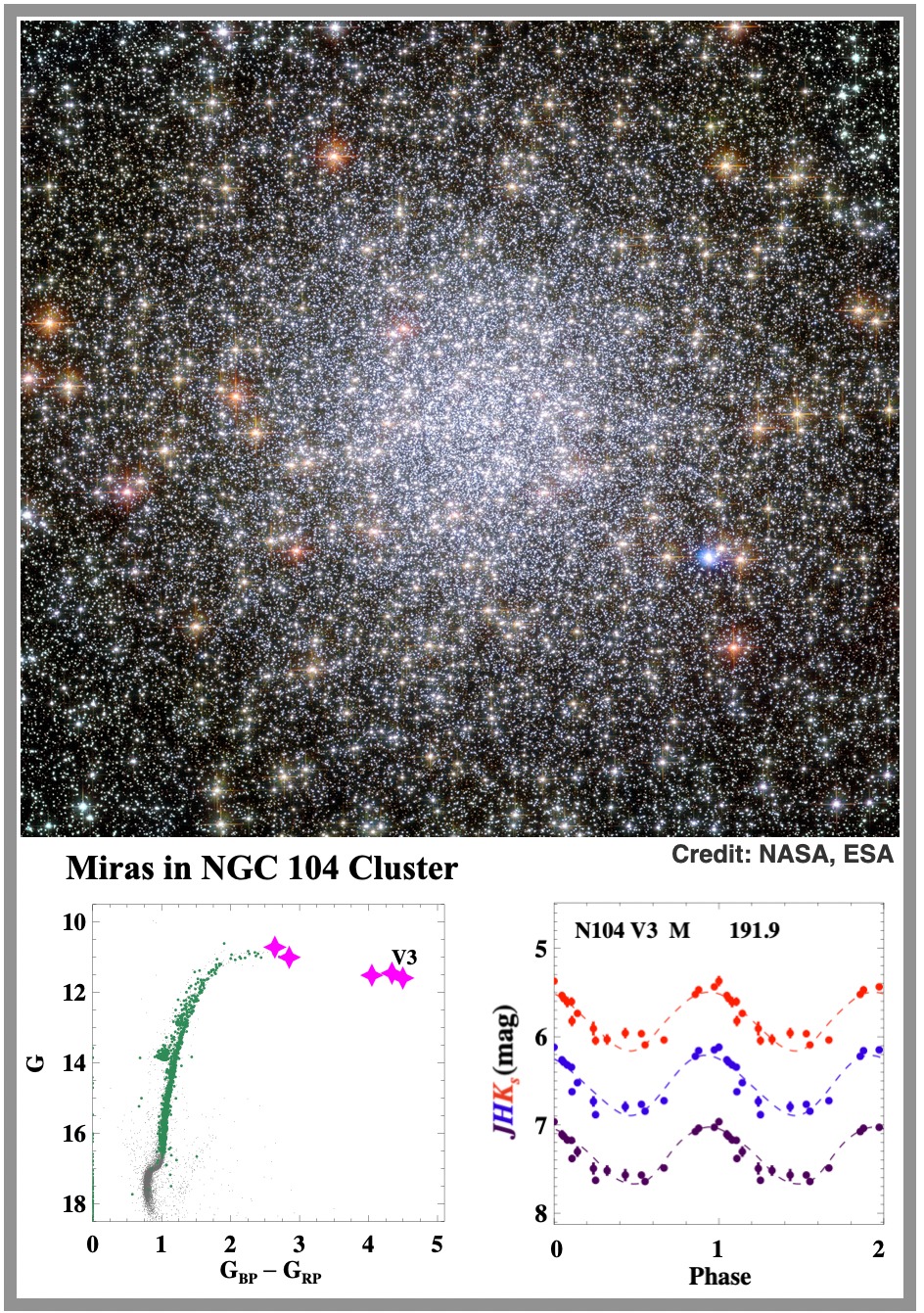
Unlike traditional methods using Cepheid variables, Mira stars offer a reliable alternative, as their luminosities are less affected by metal abundance, making them promising new anchors for the cosmic distance ladder. The team combined these galactic Miras with additional Mira variables from two external galaxies, achieving a Hubble constant measurement with 3.7% precision.

Expert Insights on Mira-Based Measurement
Prof. Bhardwaj explained, “Using Mira stars as anchors in our galaxy allowed us to establish a three-anchor baseline for extragalactic distances. This independent calibration strengthens our understanding of cosmic expansion.”
Nobel Laureate Adam Riess, co-author from Johns Hopkins University, highlighted the study’s importance in the ongoing “Hubble tension” debate: “The agreement between Cepheid and Mira-based Hubble constants suggests the discrepancy is unlikely due to measurement errors, pointing instead to possible new physics.”
Dr. Marina Rejkuba of the European Southern Observatory added, “This work bridges stellar astrophysics and cosmology, providing a long-term framework for using Mira stars as reliable cosmic distance markers.”
Understanding Mira Variable Stars
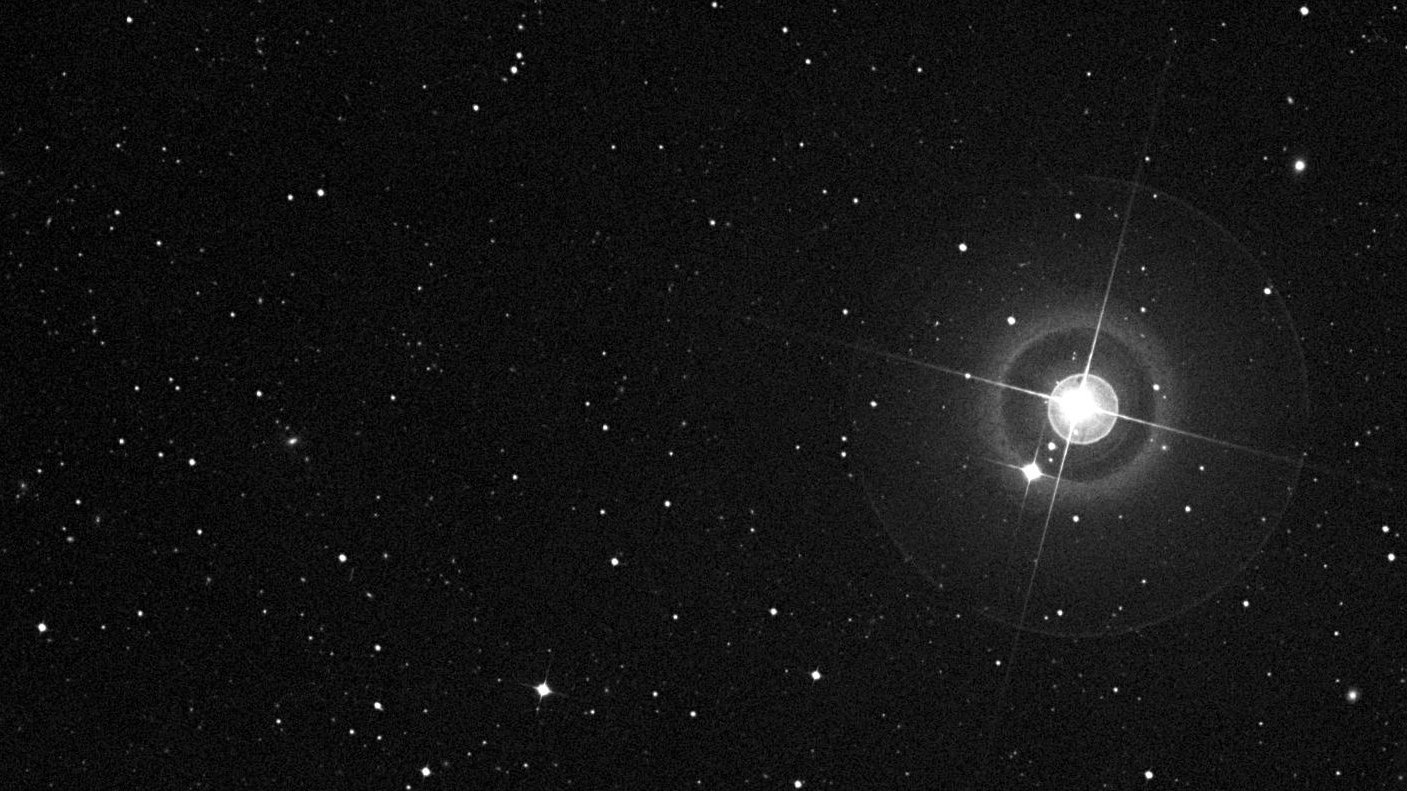
Mira, also called Omicron Ceti, was the first known variable star, displaying regular brightness changes over periods ranging from 100 to 1,000 days. These cool, late-stage giant stars have surface temperatures around 3,000 Kelvin and show a predictable relationship between brightness and pulsation period, making them standard candles for measuring cosmic distances.
Standard candles like Mira stars allow scientists to estimate distances by comparing intrinsic and observed brightness, forming part of the extragalactic distance ladder. Accurate calibration at each step enables precise measurement of the Hubble flow, or the universe’s expansion rate.
Implications for Cosmology
The study reinforces that the discrepancy in Hubble constant values—measured from nearby stars versus the early universe—is unlikely caused by observational errors. This persistent “Hubble tension” could hint at unknown physics or refinements needed in cosmological models.
With more Mira variables expected to be identified in supernova host galaxies by the Rubin Observatory, astronomers anticipate even greater precision in measuring the universe’s expansion, size, and age. This marks a significant step toward resolving fundamental questions in cosmology.