
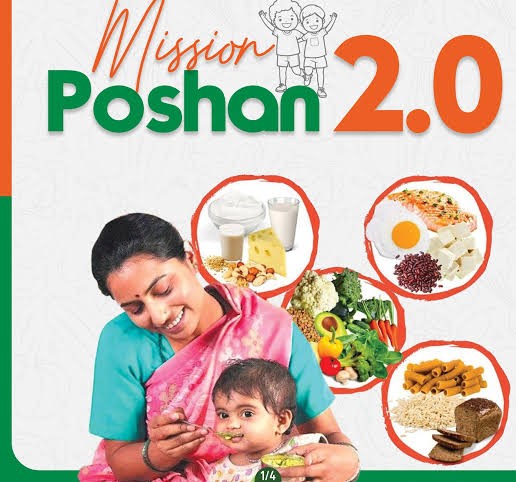

Under Mission Poshan 2.0, the government has adopted a renewed strategy that emphasises community engagement, outreach, behavioural change and advocacy. The focus areas include maternal nutrition, Infant and Young Child Feeding (IYCF) practices, and management of Severe Acute Malnutrition (SAM) and Moderate Acute Malnutrition (MAM).
The mission also integrates wellness practices, including AYUSH-based approaches, to address stunting, wasting, anaemia and underweight prevalence. By aligning nutrition awareness with local participation, the programme seeks long-term improvements in dietary habits.
Revised Nutrition Norms and Fortified Food
Supplementary nutrition is provided in accordance with Schedule II of the National Food Security Act, 2013. The nutrition norms were revised in January 2023 to move beyond calorie-centric standards and incorporate balanced diets rich in quality protein, healthy fats and essential micronutrients such as Iron, Calcium, Zinc and Vitamins A and B-complex.
Children identified as Severely Acutely Malnourished receive additional nutritional support as mandated under the Act. Fortified rice is being supplied to Anganwadi Centres to address micronutrient deficiencies and combat anaemia among women and children.
Millets are being promoted at least once a week in Hot Cooked Meals and Take-Home Rations to encourage dietary diversity. The Integrated Nutrition Support Programme Rules, 2022 regulate entitlements under the scheme.
Community-Based Care and Screening
The Ministry of Women and Child Development, in collaboration with the Ministry of Health and Family Welfare, has issued a joint protocol for community-level management of malnutrition. The approach focuses on early detection, home-based care using local nutritious foods, and referral services for medically complicated cases.
Children aged six months to six years are screened for SAM and severe underweight conditions. Those with medical complications are referred to Nutrition Rehabilitation Centres or hospitals, ensuring timely treatment and reduced mortality risks.
Poshan Vatikas Promote Local Nutrition
To strengthen access to fresh and affordable produce, Poshan Vatikas or Nutri-gardens are being developed at Anganwadi Centres nationwide. These gardens cultivate fruits, vegetables and medicinal plants, promoting diet diversity and local food consumption.
The initiative aligns with the broader objective of encouraging wholesome eating habits while empowering communities to sustain nutritional improvements.
Technology-Driven Monitoring Through Poshan Tracker
The Poshan Tracker application has emerged as a key governance tool for real-time monitoring of Anganwadi Centres and beneficiaries. The platform records attendance, growth monitoring data, meal distribution and early childhood care activities.
Technology-enabled tracking helps identify cases of stunting, wasting and underweight prevalence. Data for the past three years is publicly accessible at the official Poshan Tracker portal (www.poshantracker.in), showing consistent improvements across major nutrition indicators.
Independent Evaluations Show Positive Impact
A World Bank survey conducted in 11 priority states assessed the effectiveness of Poshan Abhiyaan. The study found that over 80 percent of women received nutrition messages, and 81 percent practiced exclusive breastfeeding for six months.
Third-party evaluations by NITI Aayog in 2020 and 2025 rated the programme’s relevance and impact as satisfactory in addressing malnutrition challenges. Community-based events held during Poshan Maah and Poshan Pakhwada have played a significant role in behavioural change.
With integrated implementation, fortified nutrition, digital tracking and grassroots engagement, Mission Poshan 2.0 aims to build healthier mothers and children while strengthening India’s human capital foundation.