
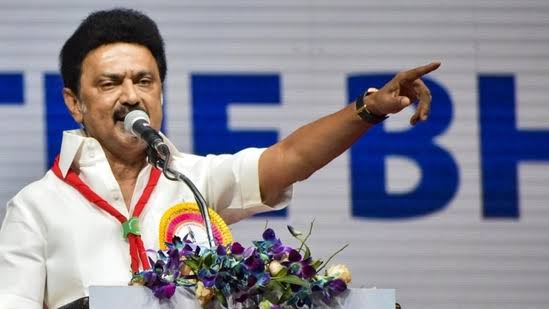
Tamil Nadu Chief Minister MK Stalin has once again voiced strong opposition to the National Education Policy (NEP) 2020, particularly its three-language formula, questioning whether the same policy is implemented in northern states. His remarks, shared on social media, come amid ongoing debates over language imposition in southern states.
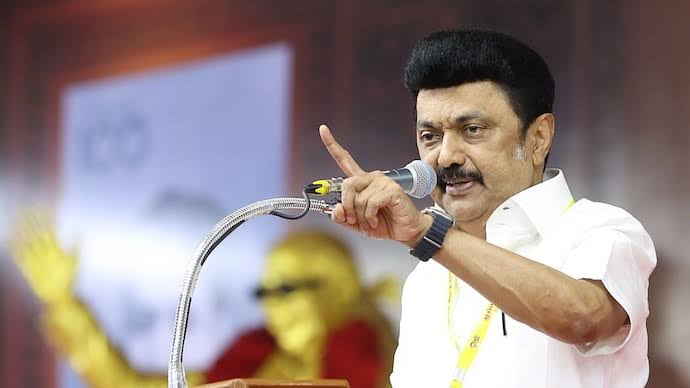

The controversy escalated further when Stalin’s son and Deputy Chief Minister Udhayanidhi Stalin strongly opposed the NEP, declaring that Tamil Nadu would never accept the policy. He accused the central government of pushing Hindi “sideways” through educational reforms, despite the state’s long-standing opposition to such moves.
The Tamil Nadu government has consistently rejected the NEP, arguing that the three-language formula is a veiled attempt to impose Hindi on non-Hindi-speaking states. The state has historically adhered to a two-language system, promoting Tamil and English while resisting efforts to introduce Hindi as a compulsory subject.
On the other side of the debate, Union Education Minister Dharmendra Pradhan has defended the NEP, stating that its goal is to promote all Indian languages rather than prioritize Hindi. He emphasized that the policy grants equal importance to every language and accused critics in Tamil Nadu of politicizing the issue. Pradhan reiterated that nowhere in the NEP is it mandated that Hindi alone must be taught, asserting that the policy is designed to strengthen linguistic diversity across India.
This linguistic debate has long been a sensitive issue in Tamil Nadu, where anti-Hindi movements date back decades. The state’s opposition to Hindi imposition is deeply rooted in its cultural and political history, making the NEP’s three-language formula a point of contention. With strong political statements from both sides, the language debate remains a significant flashpoint in the relationship between the Centre and Tamil Nadu, underscoring the broader challenge of balancing national education policies with regional linguistic identities.