Key charge: ‘Katta’, ‘donali’ and ‘rangdari’
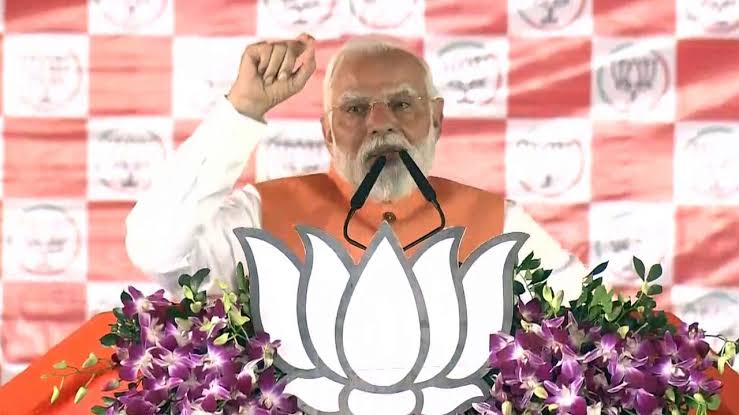
During his speech, Modi warned that the Opposition’s alleged plans would revive guns (“katta”), double-barrel rifles (“donali”), extortion (“firauti”) and ransom (“rangdari”). He accused certain elements of “teaching kids to become rangdaar” and argued that such a culture would deter investment and destroy jobs in the state.
“Bihar doesn’t want a government of guns. Bihar doesn’t want a government of misrule,” he said, urging voters to reject the Opposition’s candidates.
 Seat-sharing and political barbs
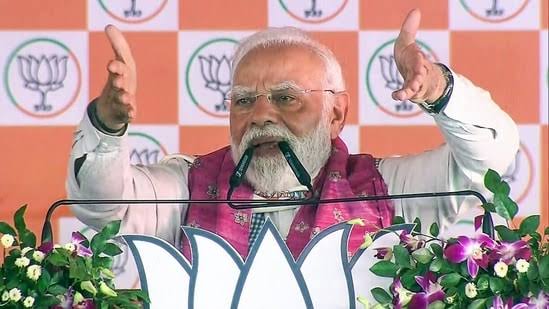
Modi also criticised the Opposition’s seat-sharing arrangement, claiming the Congress received seats in areas where RJD had not won in decades. He renewed personal attacks on RJD leader Tejashwi Yadav, alleging that the INDIA bloc’s chief ministerial face had been “stolen” by RJD at gunpoint a line repeated to underscore his charge of coercion and lawlessness within rival ranks.
Turnout and political message
Pointing to the high voter turnout in phase one of Bihar’s assembly elections, Modi said the near-record 64.66% turnout reflected public confidence in the leadership of Narendra Modi and Nitish Kumar. He credited women voters, saying mothers and sisters had played a decisive role in the turnout and signalling that the electorate supported the NDA’s development agenda.
Modi cites past achievements
In his address, the Prime Minister listed national achievements to buttress his argument that the NDA delivers results. He cited the construction of the Ayodhya Ram Temple, the abrogation of Article 370, and security operations such as Operation Sindoor arguing that these actions demonstrated the government’s resolve and ability to keep promises.
Opposition response and context
Opposition leaders have dismissed the prime minister’s rhetoric as electioneering. RJD and INDIA bloc spokespeople argued that such statements were aimed at polarising voters ahead of close contests across Bihar’s constituencies. Independent analysts say the language used invoking guns and lawlessness is intended to foreground law-and-order as a key issue for undecided voters.
Why it matters
Bihar’s assembly elections remain tightly contested, and narratives about governance, job creation and safety shape voter choices. Modi’s emphasis on alleged criminality aims to contrast the NDA’s claims of stability with what he calls the Opposition’s “jungle raj” alternative.
Voters across Bihar will cast further rounds of ballots in the coming phases, making campaign rhetoric and local ground realities decisive in a race where margins can be narrow.