
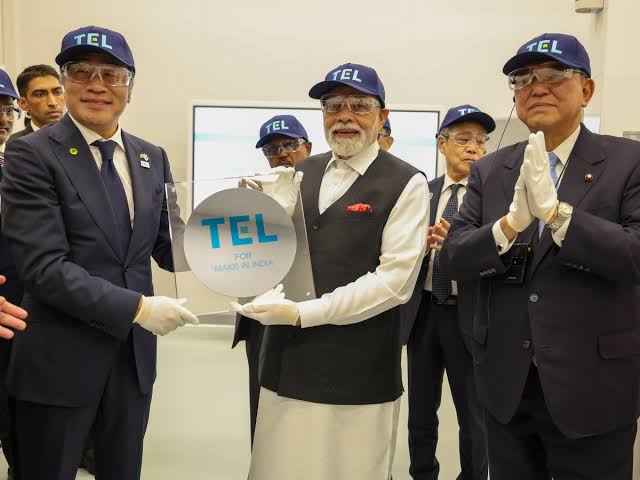
Strengthening Strategic Ties
The visit comes at a time when both nations are prioritising economic security and supply chain resilience. India and Japan have already signed a Memorandum of Cooperation on the Semiconductor Supply Chain Partnership, aimed at fostering joint research, technology exchange, and industrial collaboration.
Prime Minister Modi stressed the importance of India–Japan cooperation in this strategic sector. “India is committed to working with Japan to ensure a trusted and robust semiconductor ecosystem,” he conveyed. Prime Minister Ishiba reciprocated by reaffirming Japan’s readiness to partner with India in boosting global semiconductor resilience.


The Sendai visit also reinforced the ongoing India–Japan Industrial Competitiveness Partnership, which seeks to advance joint industrial projects and technological development. Semiconductor collaboration is seen as central to this partnership, considering its significance for electronics, telecommunications, automotive, and defence industries.
Experts note that India’s production-linked incentive (PLI) schemes and growing digital economy complement Japan’s strengths in precision engineering and semiconductor equipment. The synergy could accelerate India’s ambition of becoming a global semiconductor hub while enabling Japanese companies to diversify production and partnerships.
Diplomatic Engagement in Sendai
Following the factory tour, Prime Minister Ishiba hosted a lunch in honour of Prime Minister Modi. The Governor of Miyagi Prefecture and several senior dignitaries attended, underscoring the importance both governments attach to regional engagement alongside national-level cooperation.
The leaders reiterated their shared vision for a resilient semiconductor supply chain that not only benefits their respective countries but also strengthens global technology security. This vision aligns with broader Indo-Pacific cooperation strategies, where both nations aim to counter supply chain vulnerabilities and dependence on limited sources.
Looking Ahead
The Sendai engagement signals a new phase in India–Japan economic ties, particularly in the technology sector. By combining India’s market potential and manufacturing push with Japan’s technological edge, both sides aim to secure leadership in next-generation semiconductor innovation.
Analysts believe the partnership could also draw investments from other global players who are seeking trusted partners amid shifting geopolitical dynamics. For India, closer semiconductor ties with Japan could prove pivotal in reducing import dependence and boosting its “Atmanirbhar Bharat” (self-reliant India) mission.