
Introduction
The Ministry of Housing and Urban Affairs (MoHUA) has introduced a new Model Contracting Framework. This aims to ensure the safety and dignity of sanitation workers. It also seeks to improve urban sanitation services across India. The initiative is part of the Swachh Bharat Mission-Urban (SBM-U).

Why Sanitation Services Matter
India’s urban population is around 42 crore. Nearly half of these households use septic tanks. These tanks need regular cleaning or desludging to safely remove waste. About 35% of urban households use sewer systems that also require maintenance. Both sewer systems and septic tanks need frequent cleaning for effective wastewater management.
Without proper maintenance, cities face health hazards. Therefore, timely desludging and sewer cleaning are critical for safe sanitation.
Risks Faced by Sanitation Workers
Sanitation workers often clean sewers and septic tanks manually. This work is dangerous and sometimes leads to accidents and fatalities. Safety protocols are not always followed strictly. Many workers risk their lives due to hazardous working conditions.
To change this, MoHUA has developed a new framework to professionalize and mechanize these services. It focuses on safety, accountability, and mechanized cleaning.
The New Model Contracting Framework
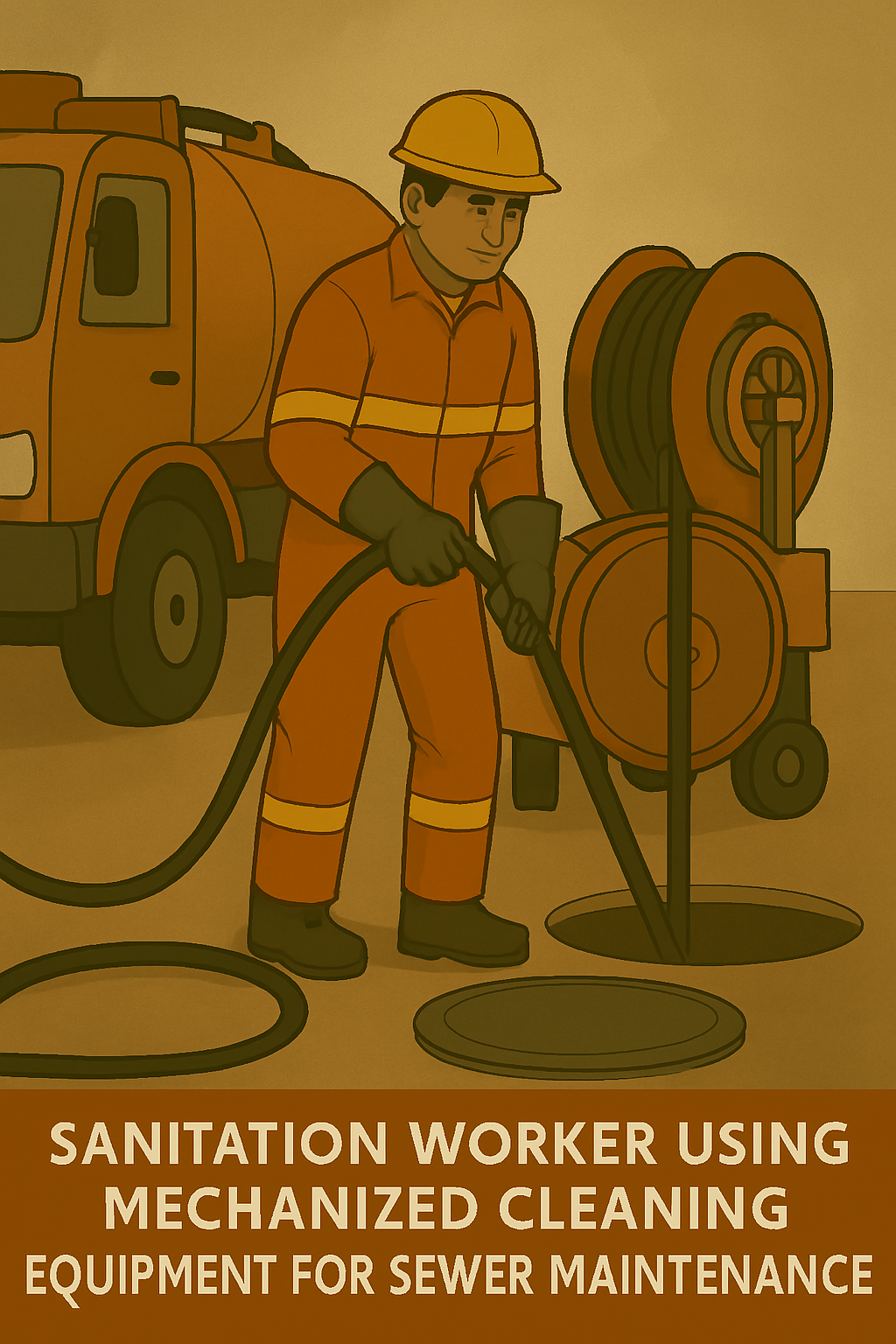
The framework provides clear guidelines for Urban Local Bodies (ULBs) to hire Private Sanitation Service Operators (PSSOs). These private operators will use machines instead of manual labor for cleaning. The model contract ensures compliance with the Prohibition of Employment as Manual Scavengers and their Rehabilitation (PEMSR) Act, 2013.
It sets rules on service delivery, safety standards, and accountability. PSSOs must follow mechanized cleaning and safety rules strictly. If they fail, they may face penalties, contract termination, or blacklisting.
Supporting Local Entrepreneurs and Communities
The empanelment document encourages local businesses to register as PSSOs. This includes companies, cooperatives, self-help groups (SHGs), and micro-entrepreneurs. The framework supports Sani-entrepreneurs and SHGs backed by the National Safai Karamcharis Development Corporation (NSKFDC).
This helps small local businesses grow while providing safe, professional sanitation services. It also boosts employment and entrepreneurship among sanitation workers.
Roles and Responsibilities Defined
The contract clarifies roles for both cities and private operators. It details how citizens can request services through helplines like ‘14420’. It also covers proper disposal of waste at treatment plants.
Service level benchmarks ensure quality and timely services. The contract also covers costs, penalties, and mechanisms for dispute resolution.
Financial Support and Mechanization Push
To promote mechanized cleaning, the government provides financial aid to cities and entrepreneurs. Cities get funds to buy equipment and safety gear. NSKFDC offers loans and packages for SHGs and Sani-entrepreneurs to buy machinery.
These efforts aim to shift from risky manual cleaning to safer, machine-driven services. It supports the National Action for Mechanized Sanitation Ecosystem (NAMASTE).
Benefits for Citizens and Workers
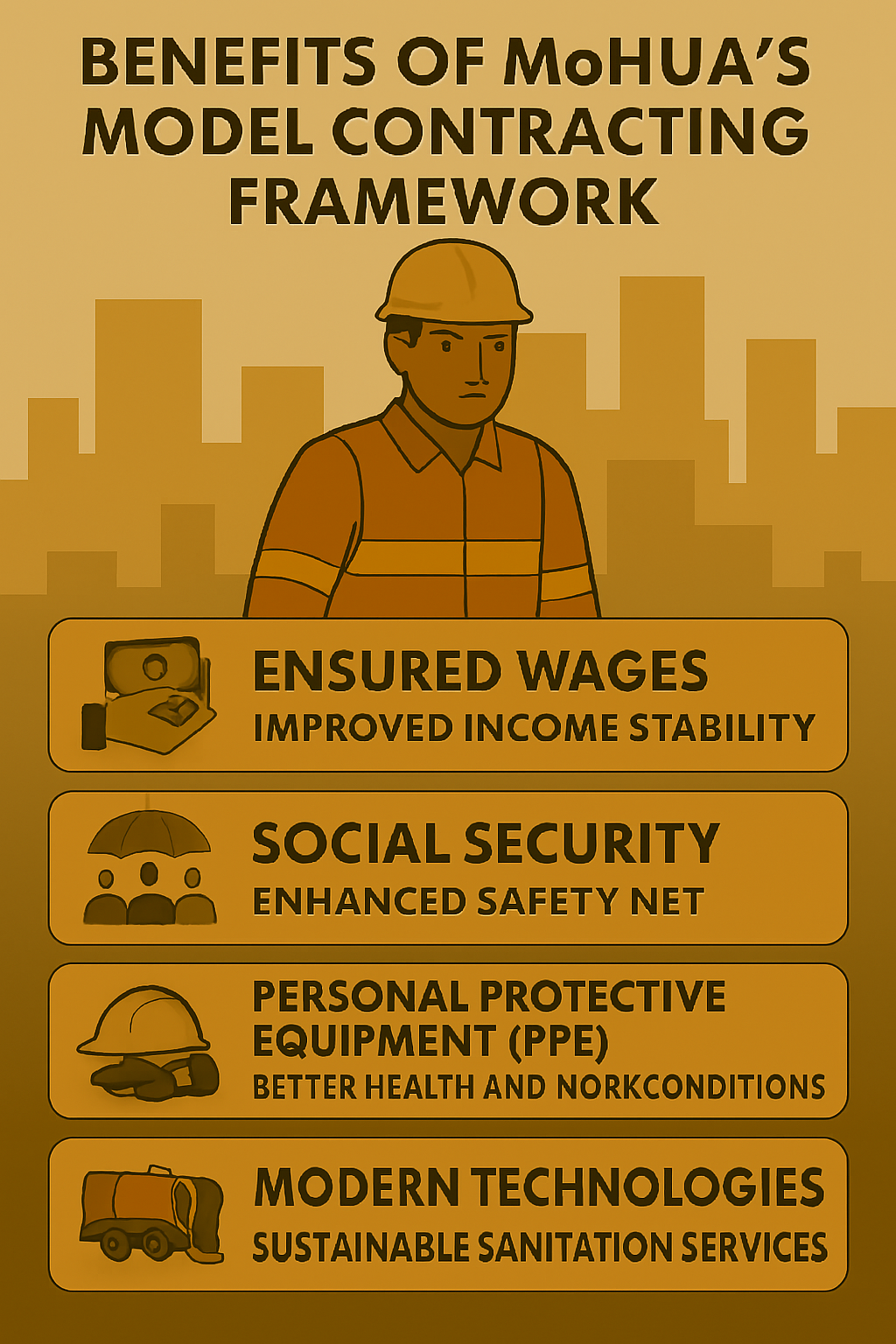
This framework will improve sanitation quality in cities. Citizens will receive professional, timely, and safe cleaning services. It will reduce health risks and environmental hazards caused by poor sanitation.
Sanitation workers will benefit from safer working conditions. They will no longer need to clean sewers manually. The initiative will help uphold their dignity and rights.
Conclusion
MoHUA’s new Model Contracting Framework is a vital step toward safer sanitation. It promotes mechanization, protects workers, and strengthens urban sanitation. This initiative aligns with the government’s vision of a cleaner and healthier India.