
Morbi is a small town in Gujarat that most people in India have never heard of.
It covers less than 1% of India’s land. But when it comes to making certain products, Morbi is a giant. This tiny town makes more than 90% of all the wall and floor tiles sold in India. It also produces 80% of the clocks and 70% of the toys and calculators used in the country. How did such a small place become so important?
The story of Morbi’s rise starts in the 1980s with something simple—a broken pipe. Local potters, who had been making traditional pottery for years, began experimenting with ceramic bathroom fittings to fix the problem. This small change opened the door to a whole new industry. Soon, the town began making ceramic tiles. Then clocks. Then toys and calculators. Over time, Morbi became the ceramic capital of India.
What makes Morbi’s success even more impressive is that it happened without any government support or foreign investors. It grew because of the hard work and smart thinking of local families. The businesses here are mostly family-run, without any big corporate bosses or fancy offices. They focus on making good products quickly and cheaply.
Morbi’s factories work nonstop—24 hours a day, all year round. If a new tile design is needed, it can be copied and produced in just 24 hours. The town does not spend money on big brand names or advertising. Instead, it sells products fast and at low prices, shipping them all over India and abroad.
The numbers show just how powerful Morbi’s industry is. India exports tiles worth over ₹15,000 crore every year, and more than 125 countries buy these tiles from Morbi. Some famous tile brands from Italy and Spain even get their tiles made in Morbi. It’s hard to believe that some “Italian” tiles are actually made in this small town in Gujarat!
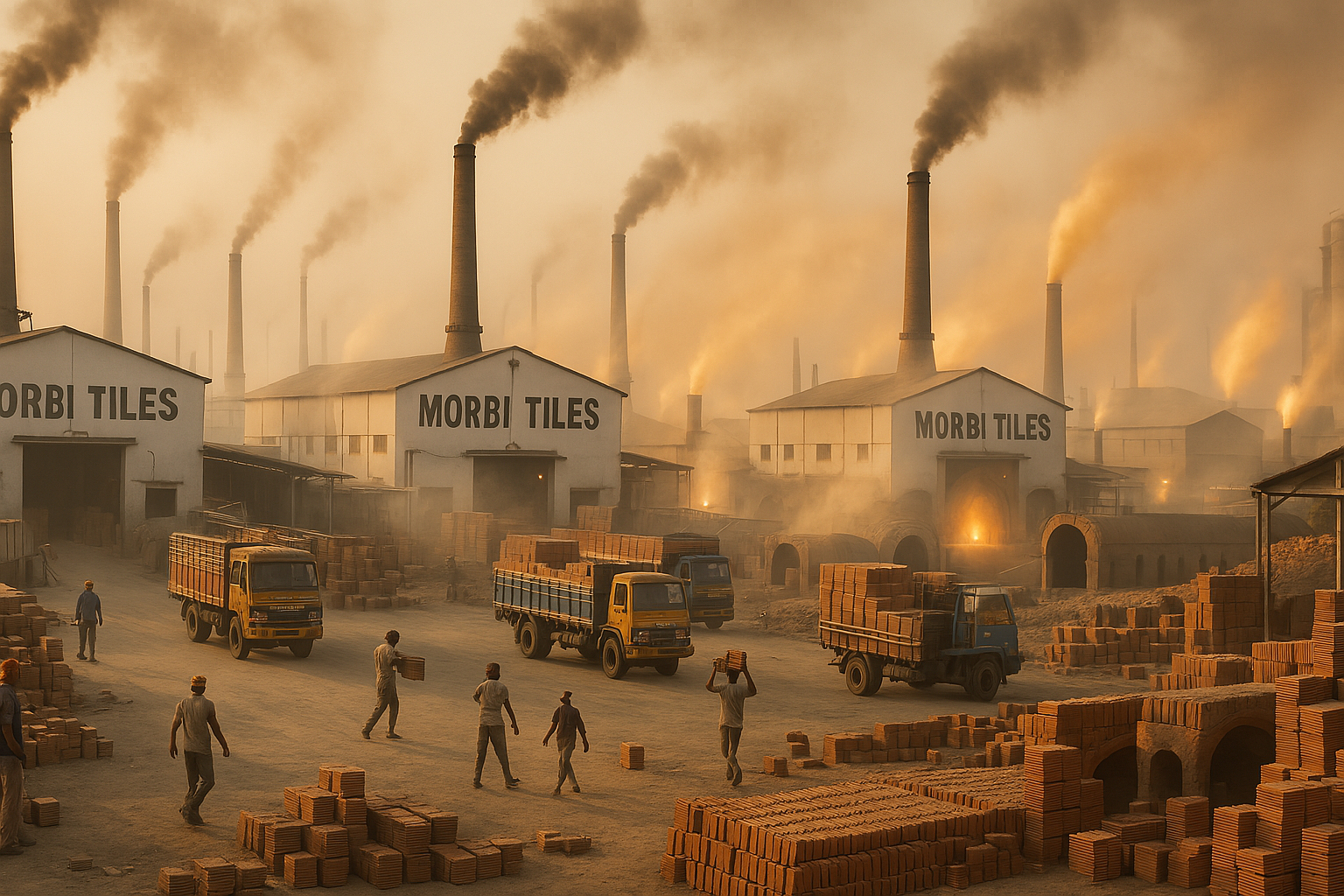
If you ever visit Morbi, you can drive past 200 factories in less than 30 minutes. It looks like one giant open-air factory, with no gates or fancy offices—just busy workers, roaring furnaces, and clouds of ceramic dust everywhere.
The secret behind Morbi’s success is three simple things:
-
Cluster Advantage: All the suppliers, workers, and transport services are located very close to each other—within 20 kilometers. This saves time and money.
-
Speed: Morbi can design a product and ship it in just 72 hours. This quick turnaround keeps customers happy.
-
Cost Control: Many businesses share the same infrastructure, which helps keep prices low—often cheaper than products made in China.
Morbi didn’t stop with tiles. The toy industry also grew here, starting by copying Chinese calculators and toys. Over time, manufacturers began improving their products and innovating. Today, Morbi exports toys and learning devices worth ₹1,500 crore each year.
But the town still faces challenges. Power shortages, pollution, and government rules can slow things down. Yet, Morbi’s businesses adapt quickly. They are switching to cleaner gas-based kilns, installing solar panels, and investing in machines to automate work. The industry keeps moving forward, no matter what.
The bigger lesson from Morbi is that you don’t need a big city or fancy offices to build a strong business. What you need is a local community working together, big ambition, and a focus on fast, efficient production.
If Morbi were a company, its annual output would be worth more than ₹50,000 crore. That’s more than many well-known companies in India. Yet, most people have never heard of it.
Morbi is more than just a town. It is a powerful example of what small towns in India’s Tier 2 and Tier 3 cities can achieve. It shows that with hard work, smart planning, and a focus on speed and cost, even the smallest places can compete with the world’s biggest industries.
Morbi quietly changed the way India trades with the world. It proves that great success can come from unexpected places—and sometimes, from a broken pipe.