
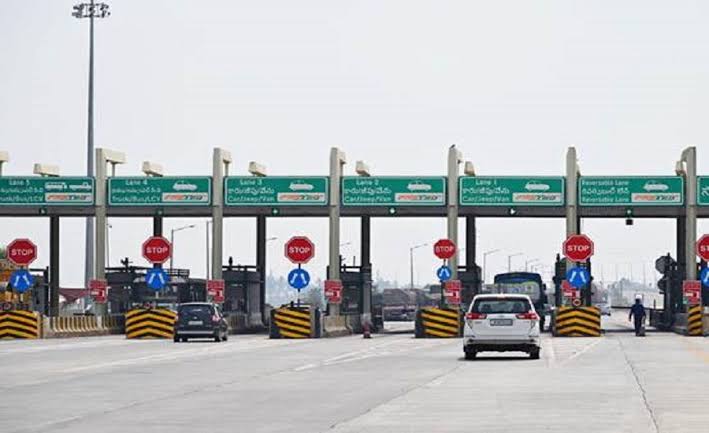
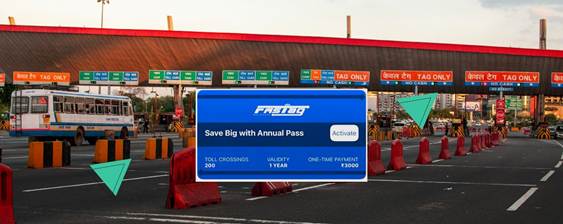

One of the most impactful reforms of 2025 has been the introduction of the FASTag Annual Pass. Launched on August 15, 2025, the pass allows private vehicle owners to pay a one-time fee of ₹3,000 for either 200 toll trips or one full year of travel, whichever comes first, across 1,159 toll plazas nationwide.
For daily commuters, the savings are significant. Regular travellers who once spent ₹80–₹150 per day on tolls are now reporting costs reduced to nearly one-third. Beyond savings, the pass has removed the mental burden of frequent recharges and fluctuating monthly expenses, offering financial certainty for families and professionals alike.
The response has been strong. Within a few months, over 40 lakh FASTag Annual Passes have been sold, with adoption nearing 20 percent of eligible car users. This uptake underlines how affordability and convenience can successfully drive voluntary compliance.
Encouraging Digital Payments at Toll Plazas
Cash transactions at toll plazas were once a major cause of congestion, disputes, and delays. To push digital adoption, MoRTH had earlier imposed a double toll charge on non-FASTag payments. In 2025, this policy was refined to encourage UPI usage by reducing the penalty to 1.25 times the toll rate for UPI-based payments.
The results were immediate. Between November 15 and December 10, 2025, toll plazas recorded over 15 lakh UPI transactions amounting to ₹19.44 crore. During the same period, cash collection dropped by 25 percent, easing congestion and improving transparency.
With nearly 98 percent of vehicles already using FASTag, the remaining gap is being closed not through harsh penalties, but through user-friendly digital alternatives.
Barrier-Free Tolling: The Future Takes Shape
For commercial drivers, especially truck operators, stopping and restarting at toll plazas leads to fuel loss, fatigue, and delays. Addressing this long-standing concern, India is preparing to introduce its first barrier-free Multi-Lane Free Flow (MLFF) tolling system.
The first such system has been awarded for implementation at the Choryasi Fee Plaza on National Highway 48 in Gujarat and is expected to become operational in 2026. Five additional barrier-free toll projects have also been awarded, signalling a major shift towards modern, high-speed tolling.
Once operational, vehicles will pass through toll points at highway speeds, with tolls deducted automatically, eliminating queues altogether.
Relief During Highway Construction
Recognising the inconvenience caused by road widening and upgrades, MoRTH has updated toll rules to ensure fairness during construction. When a highway is being expanded from two lanes to four, six, or more lanes, commuters are required to pay only 50 percent of the earlier toll rate until construction is completed.
This measure ensures that users are not overcharged during periods of reduced comfort and reflects a transparent, commuter-first policy approach.
Strengthening the FASTag Ecosystem
Beyond pricing reforms, MoRTH has reinforced the FASTag system itself. Measures such as “One Vehicle, One FASTag,” linking FASTag issuance with the VAHAN database, and imposing double fees for loose FASTags have reduced misuse and improved operational efficiency.
Multiple grievance redressal channels including the 1033 helpline, bank support, email assistance, and the RajmargYatra App ensure that commuters have timely support when issues arise.
A People-Centric Highway Experience
The toll reforms of 2025 may not dominate headlines, but they are felt daily by millions of Indians through shorter queues, smoother journeys, and predictable expenses. Together, these changes demonstrate that infrastructure growth and public convenience can move forward hand in hand.
As India continues to modernise its highway network, MoRTH’s approach over the past year stands as an example of how thoughtful policy, digital tools, and empathy for road users can significantly improve ease of living.