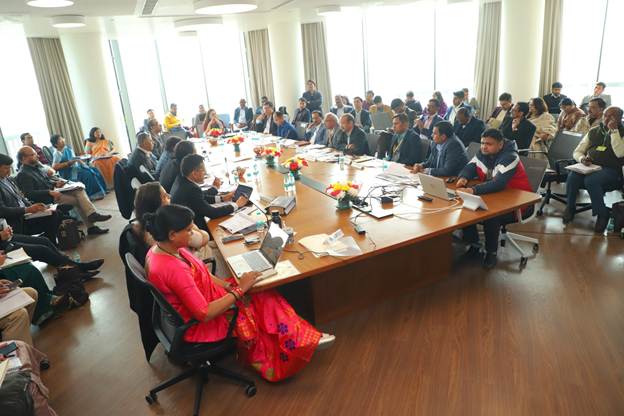
New Delhi: The Ministry of Tribal Affairs (MoTA) on Tuesday convened a high-level national review meeting aimed at reshaping India’s tribal development strategy through community-led, evidence-based and integrated interventions.
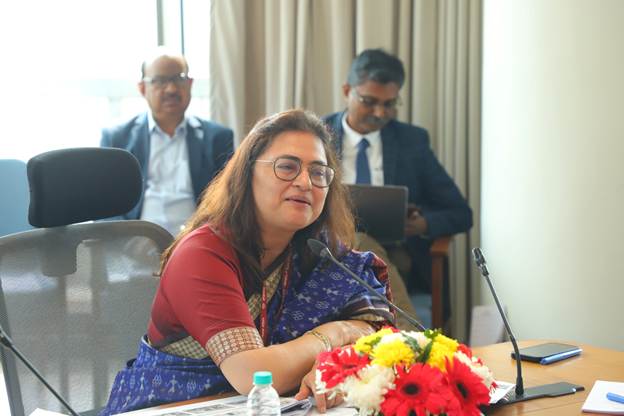 Focus on Integrated and Community-Centred Development
The meeting reviewed the progress of flagship initiatives such as PM-JANMAN and the Dharti Aaba Janjatiya Gram Utkarsh Abhiyan (DAJGUA). Discussions centred on strengthening delivery mechanisms and improving outcomes in remote and hard-to-reach tribal regions.
Officials emphasised that while notable progress has been achieved, focused efforts are still required to ensure saturation and quality implementation. District-level ownership, Gram Sabha participation and cultural sensitivity were highlighted as critical pillars of future interventions.
Path-Breaking Pilot Interventions Discussed
The conference deliberated on a series of innovative pilot initiatives anchored by MoTA. These included district-led efforts to eliminate tuberculosis, malaria and leprosy in tribal areas, and the establishment of India’s first National Tribal Health Observatory.
Other proposed interventions included community-managed creche models for children from Particularly Vulnerable Tribal Groups (PVTGs), culturally rooted housing designs, protection of sacred groves, and restoration of socio-cultural heritage sites.
The ministry also explored community-owned eco-tourism and homestay models, Tribal Freedom Fighter Model Villages, working youth hostels for tribal migrants, and revised frameworks for Tribal Multi-Purpose Marketing Centres.
Strengthening Institutions and Data-Driven Governance
A key takeaway from the dialogue was the need to strengthen Programme Management Units and Forest Rights Act (FRA) Cells at State and district levels. Participants agreed that disaggregated data, analytics and real-time monitoring must guide planning and execution.
The Ministry positioned itself as a national convener and systems integrator, bringing together health, nutrition, livelihoods, housing, youth development and cultural preservation under a unified tribal development framework.
Centre–State Collaboration and Way Forward
States and line Ministries reaffirmed their commitment to translating the conference deliberations into time-bound action plans. Emphasis was laid on scaling successful pilots, improving institutional capacity and strengthening convergence mechanisms.
The meeting concluded with a shared resolve to ensure that tribal development initiatives deliver tangible, household-level improvements while safeguarding the cultural identity and ecological heritage of tribal communities.