
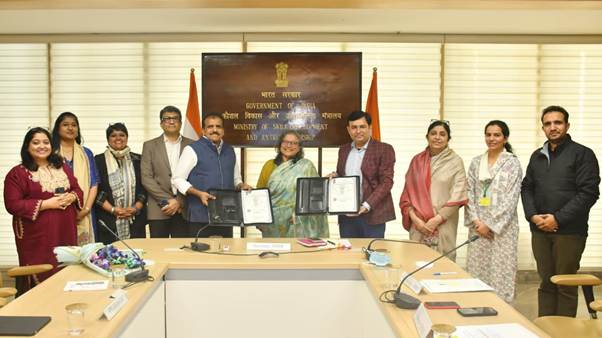

Speaking on the occasion, Ms. Debashree Mukherjee, Secretary, MSDE, emphasized that empowering women through skills is critical to India’s long-term economic transformation. She noted that the partnership reflects the government’s commitment to building an ecosystem where young women can access aspirational career pathways supported by robust institutional frameworks.
According to the Ministry, women’s workforce participation remains a priority area, particularly as India moves towards becoming a $5 trillion economy. Addressing structural barriers such as limited access to training, lack of industry exposure, and weak placement pathways is essential for unlocking women’s full economic potential.
Evidence-Based and Gender-Responsive Interventions
The MSDE–IPE Global collaboration will focus on designing evidence-based interventions that respond to the specific challenges faced by women in skill development programmes. These include aligning training curricula with industry demand, promoting gender-inclusive hiring practices, and strengthening private sector engagement to improve placement outcomes.
A key component of the partnership is the use of data-driven governance tools to monitor participation, retention, and employment outcomes of women trainees. Enhanced monitoring systems will support informed policymaking and ensure accountability across implementation levels.
National Awareness Campaign and Employer Engagement
As part of the agreement, a multilingual national awareness campaign will be launched to encourage greater participation of women in skilling initiatives and formal employment. The campaign aims to challenge societal perceptions, raise awareness about emerging job opportunities, and promote the benefits of skill certification.
In parallel, the partnership will strengthen employer engagement by encouraging gender-inclusive recruitment commitments from industry players. By fostering stronger linkages between training institutions and employers, the initiative seeks to bridge the gap between skilling and sustainable employment.
Focus on Adolescent Girls and Underserved Regions
The collaboration will also reinforce MSDE’s targeted skilling initiatives for adolescent girls, ensuring early exposure to skills, career guidance, and employability pathways. Special emphasis will be placed on reaching women from rural, tribal, and economically weaker sections, where access to quality skilling remains limited.
By integrating gender-sensitive approaches into programme design and delivery, the initiative aims to create more inclusive and outcome-oriented skilling models that are resilient to future workforce disruptions.
Advancing Women-Led Development
The MoU aligns with the Government of India’s broader vision of women-led development, which places women at the centre of economic growth, innovation, and entrepreneurship. By strengthening institutional collaboration and leveraging private sector expertise, MSDE aims to accelerate progress towards equitable workforce participation.
Officials noted that such partnerships are essential for achieving the goals of Skill India and for building a future-ready workforce capable of meeting global competitiveness standards.