
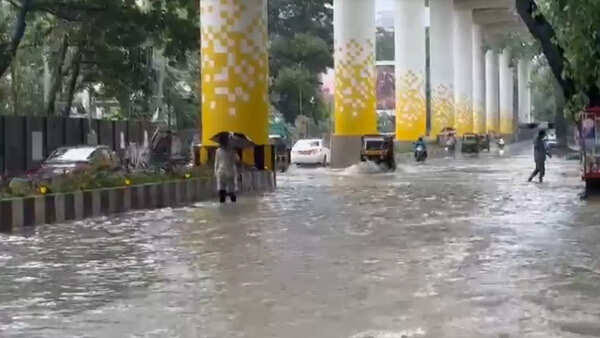
Mumbai is once again at the mercy of the monsoon as unrelenting rainfall continues to batter the city, throwing daily life into chaos. Over the past few days, heavy downpours have caused widespread waterlogging and brought traffic to a standstill in several areas. The India Meteorological Department (IMD) has forecast more rain today, warning of a generally cloudy sky and continued heavy showers. A yellow alert remains in place, urging citizens to stay vigilant and take necessary precautions.
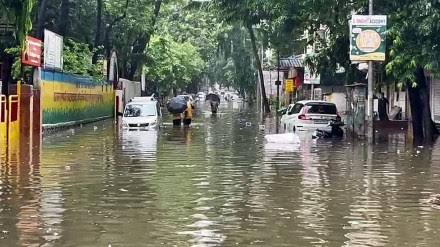

For Mumbaikars, monsoon is more than just a season — it’s a test of patience, resilience, and endurance. From struggling to reach offices on time to navigating knee-deep water near schools and railway stations, residents have been facing severe disruptions. Several low-lying areas, including Sion Circle, Hindmata, King’s Circle, and Kurla, have reported severe waterlogging, highlighting the city’s long-standing infrastructure woes. Key roads like SV Road and LBS Marg have witnessed significant traffic snarls, making daily commutes a nightmare.
The situation turned worse when authorities had to temporarily shut down Acharya Atre Chowk Metro Station due to flooding. Commuters were left stranded, and services were suspended to ensure safety. Although the Mumbai Metro Rail Corporation (MMRC) clarified that the seepage was a sudden, isolated incident and posed no safety threat to the underground corridor, it brought back concerns about the city’s preparedness for such recurring challenges.
Adding to the frustration of residents, the Mumbai civic body has imposed a fine of ₹10 lakh each on four mini pumping station operators for failing to adequately clear accumulated rainwater. This failure, according to officials, aggravated the waterlogging problem at major junctions. Meanwhile, parts of South Mumbai recorded exceptionally high rainfall, with Nariman Point alone receiving 252 mm in just 13 hours — one of the heaviest spells this season.
In nearby districts, the situation is equally intense. Pune has been placed under an orange alert, with the monsoon arriving nearly two weeks ahead of schedule. The IMD predicts that central and southern India may witness an above-normal monsoon this year, a forecast that, while agriculturally hopeful, raises concerns for urban centers like Mumbai that struggle to cope with intense downpours.
In some heartening news amidst the chaos, the Indian Army stepped in to rescue marooned residents of Khadki Village in Ahmednagar district. Their swift response highlighted the need for coordinated disaster management efforts in vulnerable areas during such extreme weather events.
Deputy Chief Minister Eknath Shinde acknowledged that the early onset of the monsoon and concentrated rainfall in short intervals were largely to blame for the inundation. While the statement may explain the situation, for many residents stuck in traffic jams or wading through waterlogged lanes, the reasoning offers little comfort.
With forecasts indicating more rain in the coming days — and temperatures ranging between 24°C and 33°C — the city is bracing for continued disruptions. Authorities are urging residents to stay indoors unless absolutely necessary, keep emergency kits handy, and report any civic issues promptly.
As Mumbai continues to endure nature’s fury, the spirit of its people remains unbroken. From emergency responders to everyday citizens helping one another, the city once again leans on its collective resilience to navigate through yet another monsoon crisis.