
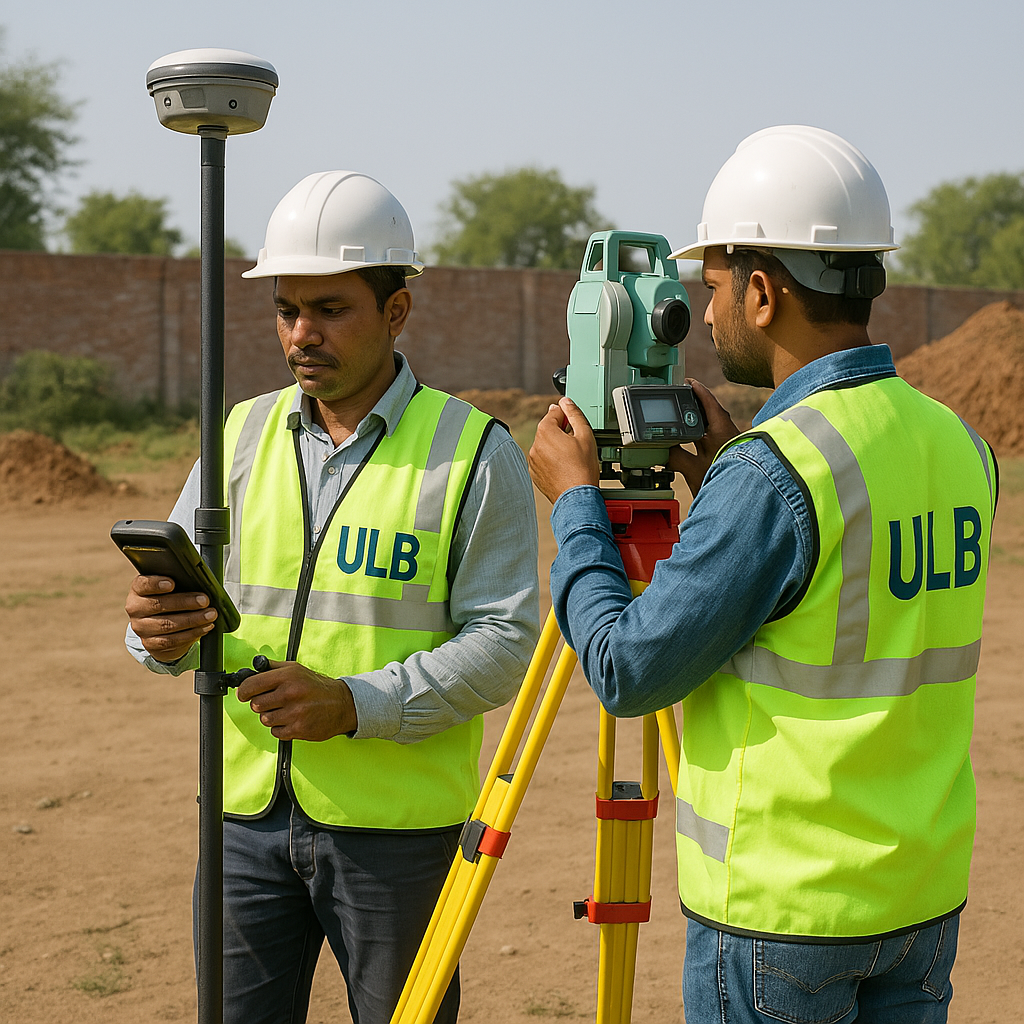
NAKSHA Phase 2 Training Expands Across Four Centres from June 16
The Department of Land Resources (DoLR) under the Ministry of Rural Development is set to launch the second batch of Phase 2 of the NAKSHA Capacity Building Programme on June 16, 2025. This initiative will train Urban Local Body (ULB) officers in advanced geospatial technologies to modernize urban land surveys.


Shri Manoj Joshi, Secretary of DoLR, will inaugurate the programme virtually at 10:00 A.M. Over 128 officers from 74 Urban Local Bodies (ULBs) will join the one-week training session.
These officers will attend hands-on training at four top-tier Centres of Excellence:
-
YASHADA, Pune, Maharashtra
-
Northeast Region CoE, Guwahati, Assam
-
MGSIPA, Chandigarh, Punjab
-
ATI, Mysuru, Karnataka
This expansion clearly shows the government’s commitment to building skilled manpower in urban governance.
Key Focus Areas in Training
The programme delivers a balanced mix of technical knowledge and practical application. Officers will learn:
-
The framework of the NAKSHA programme
-
Use of GNSS (Global Navigation Satellite System) and ETS (Electronic Total Station) tools
-
Web-GIS applications
-
Techniques for accurate land parcel mapping
-
The legal and administrative processes that underpin land surveys
Unlike previous theory-heavy modules, this batch emphasizes field practice, enabling officers to apply their learning effectively.
Achievements from Earlier Phases
DoLR has already achieved significant progress under NAKSHA:
-
In May 2025, 160 Master Trainers completed training at NIGST, Hyderabad
-
From June 2–7, 151 ULB officers received instruction at five Centres of Excellence
This consistent rollout has created a strong foundation for implementing modern land records management at the city level.
What Is the NAKSHA Programme?
NAKSHA (National Geospatial Knowledge-based Land Survey of Urban Habitations) aims to digitize and standardize urban land records through geospatial technology. The DoLR collaborates with:
-
Survey of India
-
NICSI (National Informatics Centre Services Inc.)
-
MPSeDC (Madhya Pradesh State Electronics Development Corporation)
-
Five Centres of Excellence (CoEs)
The programme now covers 157 ULBs across 27 States and 3 Union Territories. Clearly, this effort is a vital step toward transparent urban governance.
Why It Matters Now
India’s urban population is projected to exceed 600 million by 2031. With rapid urban growth, the demand for accessible, verifiable, and digitized land records has never been greater. NAKSHA is the government’s bold response to this challenge.
By combining technology with governance, NAKSHA enables better urban planning, property taxation, and dispute resolution.