
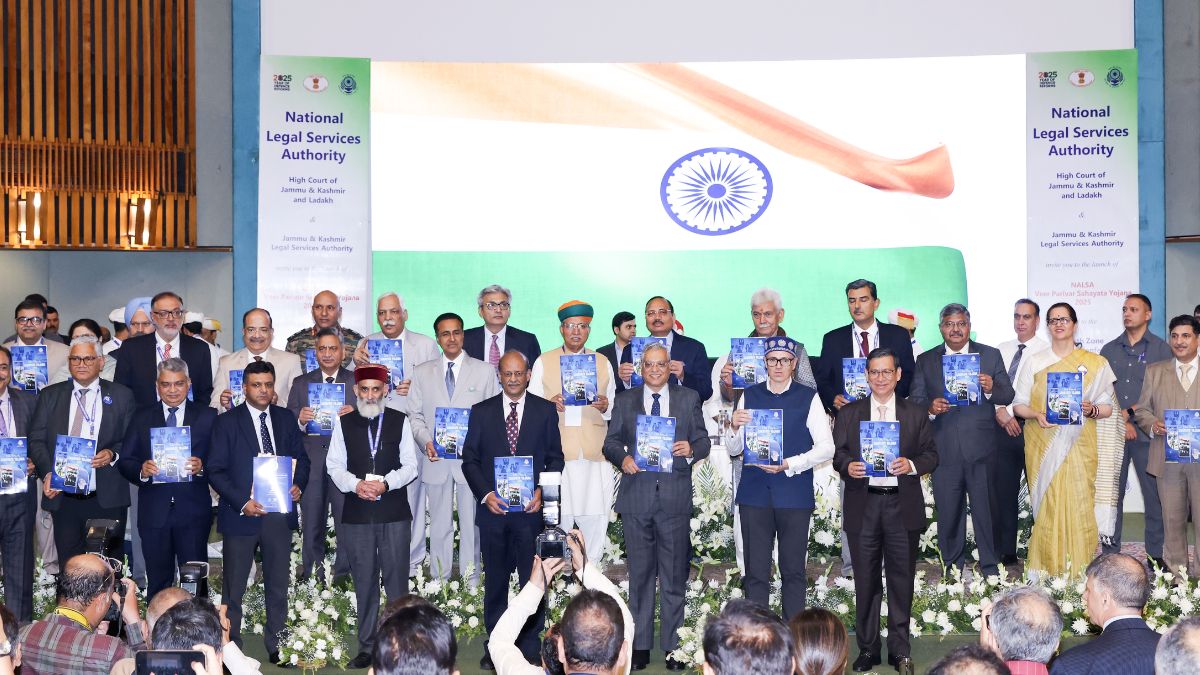
New Delhi, February 12: The NALSA SAMVAD Scheme 2025 is expanding legal outreach across India with the establishment of 690 district-level units aimed at improving access to justice for Scheduled Tribes (STs), Particularly Vulnerable Tribal Groups (PVTGs), and Denotified and Nomadic Tribes (DNTs).

Launched in April 2025 by the National Legal Services Authority (NALSA), the SAMVAD Scheme Strengthening Access to Justice for Marginalized, Vulnerable Adivasis and Denotified/Nomadic Tribes focuses on bridging systemic gaps that prevent tribal communities from accessing legal remedies and welfare entitlements.
The initiative adopts a community-based, outreach-driven model to ensure that legal services reach remote and geographically inaccessible areas. Dedicated SAMVAD Units have been set up at the district level to anchor the programme locally.
Minister of State (Independent Charge) for Law and Justice Shri Arjun Ram Meghwal informed the Rajya Sabha that the scheme is designed to ensure last-mile delivery of legal services in culturally sensitive regions.
Dedicated SAMVAD Units Across Districts
Under the scheme, 690 SAMVAD Units have been constituted at the district level, enabling nationwide institutional coverage through State and District Legal Services Authorities. Each unit identifies tribal communities within Taluks and prepares annual action plans tailored to local needs.
These units deploy trained panel lawyers and para-legal volunteers, preferably drawn from tribal communities, to provide legal assistance. The focus areas include land and forest rights, displacement, rehabilitation, access to documentation, welfare schemes, and social security entitlements.
The structured approach ensures that vulnerable populations are not left out due to lack of awareness or procedural hurdles.
Legal Literacy in Local Languages
The SAMVAD Units conduct legal awareness programmes in tribal habitations through door-to-door outreach, legal literacy sessions in local languages, and legal services camps. Coordination with Gram Sabhas and local institutions plays a central role in building trust and ensuring effective engagement.
The scheme also prioritizes early legal intervention. Assistance is provided in preparing documents, filing claims, and accessing government welfare schemes, thereby addressing both legal and administrative barriers faced by tribal communities.
Structured Monitoring and Accountability
The scheme incorporates a detailed monitoring and reporting framework to ensure transparency and uniform implementation. Quarterly reports are submitted by Taluk Legal Services Committees, District Legal Services Authorities, and State Legal Services Authorities in standardized formats.
These reports are consolidated and reviewed at the national level by NALSA. Additionally, a revised roadmap has been issued for the submission of consolidated biennial reports from all State Legal Services Authorities.
This multi-tier monitoring mechanism strengthens accountability and ensures that the objectives of the NALSA SAMVAD Scheme 2025 are implemented consistently across states.
Ensuring Justice for the Most Vulnerable
Scheduled Tribes, PVTGs, and Denotified and Nomadic Tribes often face structural disadvantages due to geographical isolation, limited documentation, and socio-economic marginalization. By institutionalising legal outreach at the grassroots level, the SAMVAD Scheme seeks to address these long-standing barriers.
With its emphasis on culturally sensitive engagement and community participation, the initiative marks a significant step toward inclusive justice delivery. The establishment of district-level SAMVAD Units demonstrates a concerted effort to integrate legal empowerment with welfare access.
As India advances toward strengthening social justice frameworks, the NALSA SAMVAD Scheme 2025 stands out as a structured and community-focused intervention aimed at ensuring that access to justice is not merely a constitutional promise but a lived reality for the country’s most vulnerable communities.