
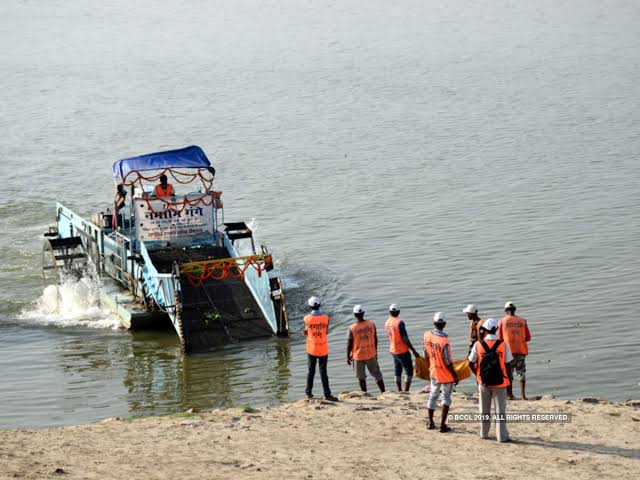

As of December 2025, a total sewage treatment capacity of 3,977 MLD has been created under the Namami Gange programme. Overall, 218 sewerage infrastructure projects worth ₹35,698 crore have been sanctioned to tackle urban pollution along the Ganga and its tributaries.
Out of these, 138 STPs are already operational, while the remaining projects are at various stages of implementation. These facilities are designed to intercept and treat untreated sewage before it enters the river, one of the biggest historical contributors to pollution.
Industrial Pollution and Environmental Flow
To curb industrial effluents, three Common Effluent Treatment Plants (CETPs) were sanctioned at Jajmau, Banther and Mathura. Two of these projects Jajmau (20 MLD) and Mathura (6.25 MLD) have already been completed, marking a significant step towards regulating industrial discharge.
At the same time, the Centre has enforced minimum environmental flow norms notified in October 2018. Compliance with these norms is being closely monitored by the Central Water Commission to ensure the river maintains ecological continuity throughout the year.
Water Quality Monitoring Shows Improvement
The Central Pollution Control Board (CPCB) currently monitors water quality at 112 locations across Uttarakhand, Uttar Pradesh, Bihar, Jharkhand and West Bengal. Comparative data between 2018 and 2025 shows that polluted river stretches have either reduced or improved across most Ganga main-stem states.
Uttarakhand has completely eliminated polluted stretches, while West Bengal has shown marked improvement. Uttar Pradesh and Bihar still have certain stressed stretches, but overall water quality indicators have improved.
For 2025, median water quality data confirms that pH and dissolved oxygen levels meet bathing criteria across all monitored locations. Biochemical Oxygen Demand (BOD) levels are also within acceptable limits in most stretches, except a few identified locations in Uttar Pradesh.
Biodiversity Conservation at the Core
Phase-II of the mission places biodiversity conservation at the heart of river rejuvenation. Scientific interventions are underway to protect species such as the Gangetic dolphin, gharial, freshwater turtles, otters and native fish.
A landmark nationwide dolphin survey by the Wildlife Institute of India has estimated around 6,324 Gangetic dolphins in Indian rivers, with the Ganga basin supporting the largest share.
Fish biodiversity is being strengthened through large-scale ranching of indigenous species. Since 2017, nearly 160 lakh Indian Major Carp fingerlings have been released to restore the aquatic food chain and support fisher livelihoods.
Afforestation and Wetland Protection
To improve riverbank stability and habitat quality, forestry interventions covering about 33,024 hectares have been carried out along the Ganga at a cost of ₹414 crore. In addition, seven biodiversity parks and five priority wetlands have been sanctioned in Uttar Pradesh, Bihar and Jharkhand.
Biomonitoring studies conducted during 2024–25 show that biological water quality across most locations ranges from “good” to “moderate,” indicating improved ecological resilience.
A Long-Term Commitment
The government has reiterated that cleaning the Ganga is a continuous process requiring sustained financial, technical and institutional support. The Centre continues to assist state governments under the Namami Gange programme to address remaining challenges.