
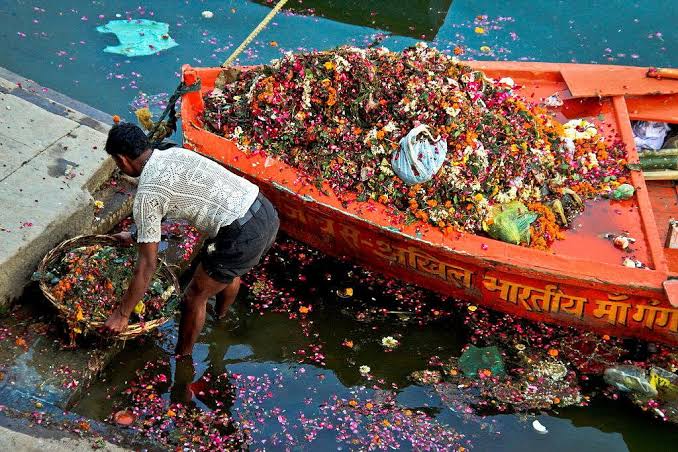
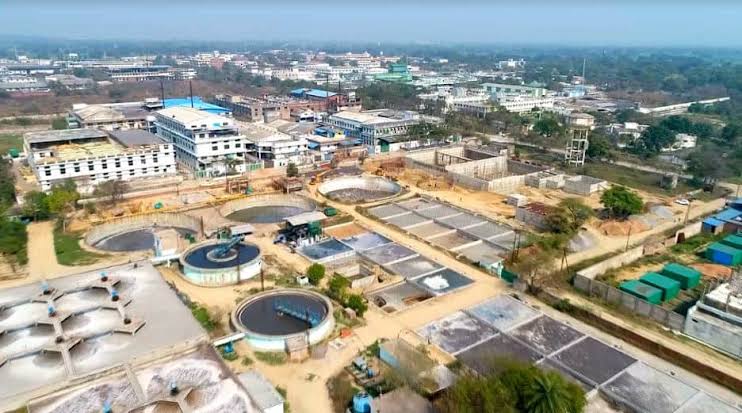

The programme has prioritised sewerage remediation in polluted zones: 216 sewerage projects costing about ₹34,809 crore are underway, delivering a combined treatment capacity of 6,561 MLD (Million Litres per Day). Of these, 138 sewage treatment plant (STP) projects with a capacity of 3,806 MLD have already been completed and made operational, reducing raw effluent inflows in key urban stretches.
Monitoring network and state coverage
The Central Pollution Control Board (CPCB) now manually monitors water quality at 112 locations along the main stem of the Ganga across five states: Uttarakhand (19), Uttar Pradesh (41), Bihar (33), Jharkhand (4) and West Bengal (15). This expansive network provides the empirical basis for assessing progress and prioritising interventions.
Polluted river stretches: trends and improvements
CPCB’s Polluted River Stretch (PRS) 2025 review shows mixed but encouraging trends. Uttarakhand’s earlier PRS (Haridwar→Sultanpur) has been removed from the list, reflecting clear improvement. Uttar Pradesh and West Bengal show partial improvements with some stretches still flagged while Bihar and Jharkhand record marginal pollution or no PRS in 2025.
Water quality indicators: bathing standards largely met
Based on 2025 median values (January–August), pH and Dissolved Oxygen (DO) central markers of river health meet bathing criteria at all monitored locations. Biological Oxygen Demand (BOD) conforms to bathing standards across Uttarakhand, Jharkhand, Bihar and West Bengal, with localized BOD concerns remaining at a few Uttar Pradesh stretches including parts of Farrukhabad–Kanpur and downstream of Mirzapur to Tarighat.
Ecological signals: biomonitoring and dolphins
Biomonitoring in 2024–25 at 50 locations on the Ganga and its tributaries, and 26 sites on the Yamuna, recorded biological water quality ranging from Good to Moderate. The presence of diverse benthic macro-invertebrates points to improving ecological potential.
Notably, river dolphin populations have more than doubled since 2009. Estimates rose from 2,500–3,000 individuals in 2009 to about 3,500 in 2015, and further to approximately 6,327 dolphins in the nationwide 2021–2023 survey. The assessment also confirmed dolphins in 17 tributaries, including rivers where they were previously unrecorded (e.g., Ken, Betwa, Mahananda).
Funding, disbursement and state-level support
The revised budgetary allocation (RE) for Namami Gange across FY 2020–21 to FY 2024–25 totals ₹11,100 crore. While the programme does not allocate funds state-wise up front, the government has disbursed state-specific amounts over the last five years and up to 30 November 2025. Major disbursements include Uttar Pradesh (₹4,370 crore), Bihar (₹2,691 crore), West Bengal (₹1,197 crore) and Uttarakhand (₹735 crore). Delhi received ₹916 crore for interventions linked to the Ganga basin; Jharkhand, Madhya Pradesh, Rajasthan and Himachal Pradesh received smaller allocations.
What remains: targeted action and maintenance
Officials stress that cleaning a river is a long-term endeavour. Remaining priorities include commissioning pending STPs, strengthening sewer networks, reducing industrial effluent, and sustaining operation & maintenance to ensure newly built infrastructure continues to deliver. Local governance, timely fund flows and state–centre coordination will determine how quickly the remaining polluted stretches are restored.
Where to read the official data
Full details and the state-wise disbursement annexure were provided in a written reply to Rajya Sabha on 8 December 2025 by the Minister of State for Jal Shakti. For official reports and water quality data see the Press Information Bureau and the Department of Water Resources, RD & GR.