
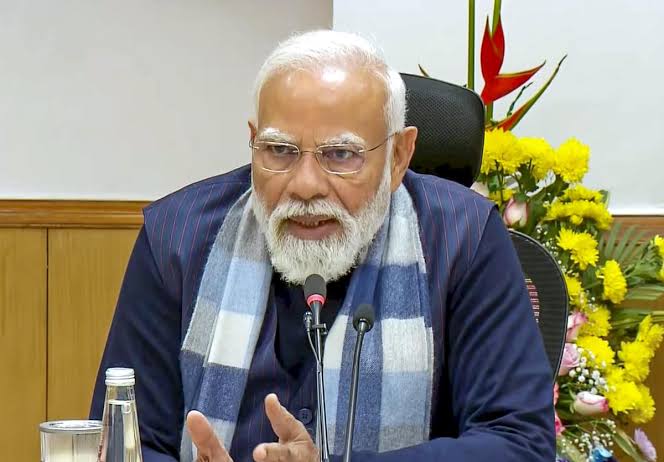

Speaking on the summit’s theme, “A Decade of Disruption, A Century of Change,” the Prime Minister said the world has faced major crises, including the COVID-19 pandemic, geopolitical tensions, and supply chain disruptions. He noted that while many economies struggled, India demonstrated resilience and maintained strong growth momentum.
He highlighted that India has moved from being the world’s 11th largest economy a decade ago to rapidly emerging as one of the largest economies today. According to him, India now contributes over 16 percent to global growth and is poised to become a major pillar of the evolving global economic order.
He stressed that the old global economic systems built on uniform development models are no longer sufficient, and countries must build their own economic strength and resilience. India’s decision to pursue its own development path has helped it navigate uncertain global conditions effectively.
Reforms Driven by Conviction, Not Crisis
The Prime Minister described India’s transformation as riding the “Reform Express,” emphasizing that reforms are now driven by conviction rather than compulsion. He contrasted this approach with earlier decades when major reforms were introduced only during crises.
He explained that structural changes in governance and decision-making have accelerated development. Processes that once took months have been streamlined through digital tools, ensuring faster approvals and improved efficiency. Infrastructure approvals, including railway bridges and border projects, have been expedited through decentralized decision-making.
These reforms, he said, have not been limited to policies alone but have also transformed administrative processes and governance mindset, leading to faster delivery and better outcomes.
Technology and Innovation Powering Economic Expansion
The Prime Minister highlighted technology and innovation as key pillars of India’s growth. Initiatives such as Digital India and digital payments have expanded financial inclusion and improved efficiency. India’s Unified Payments Interface (UPI) has emerged as a global example of how technology can transform financial systems.
He said India now has more than 200,000 registered startups working across sectors such as artificial intelligence, biotechnology, and semiconductors. Government policies have encouraged innovation and risk-taking, creating a vibrant startup ecosystem.
The government’s continued focus on emerging technologies is expected to strengthen India’s position in future industries. He also announced that India will host a major global AI summit soon, highlighting the country’s leadership in technological advancement.
Capital Expenditure and Infrastructure Boost
The Prime Minister underscored the importance of capital expenditure in driving economic growth. He noted that infrastructure spending has increased significantly, reaching nearly ₹17 lakh crore in the latest budget.
Major infrastructure initiatives include new high-speed rail corridors, university townships, and economic development zones in smaller cities. These investments are expected to generate employment, enhance productivity, and improve connectivity across the country.
He also emphasized the government’s focus on outcome-based budgeting, ensuring that public spending delivers measurable results rather than merely allocating funds.
India Expands Global Trade Partnerships
The Prime Minister highlighted India’s growing engagement in global trade, noting that India has signed multiple free trade agreements in recent years. He said India’s improved manufacturing strength and economic stability have boosted international confidence.
These agreements now cover dozens of countries, opening new markets for Indian businesses and strengthening India’s position in global supply chains. He said India’s economic reforms have transformed the country into a reliable and competitive global partner.
Empowering States and Ensuring Inclusive Growth
The Prime Minister said the government has significantly increased financial support to states through higher tax devolution, enabling them to accelerate development projects. This has strengthened cooperative federalism and enabled states to contribute more effectively to national growth.
He also highlighted social initiatives aimed at empowering women, marginalized communities, and economically weaker sections. These programs have helped millions move out of poverty while ensuring economic stability for vulnerable populations.
Vision for India’s Future as a Global Economic Leader
Concluding his address, the Prime Minister said India’s vision extends beyond immediate growth, focusing on long-term development goals leading up to 2047, when the country will mark 100 years of independence.
He emphasized that continued reforms, technological advancement, and global partnerships will ensure India remains a major contributor to global economic progress. He expressed confidence that India will emerge as a key engine of global growth in the coming decades.
The Prime Minister also stressed that India is prepared for future disruptions driven by technological change and evolving global systems. With strong policy foundations and innovation-driven growth, India is positioned to play a leading role in shaping the global economic future.