 Mission Shakti: systems that promise dignity and protection
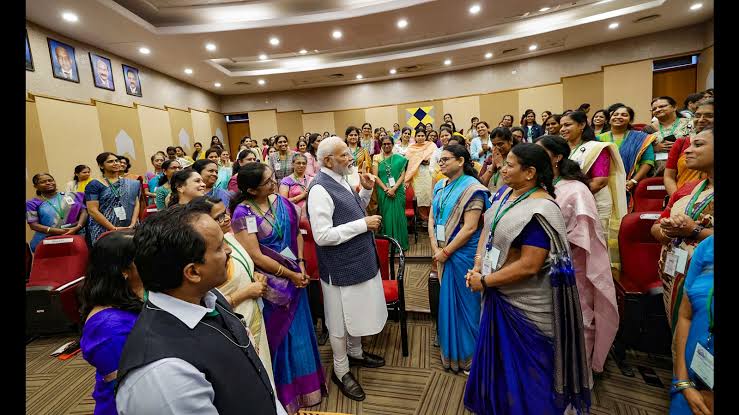
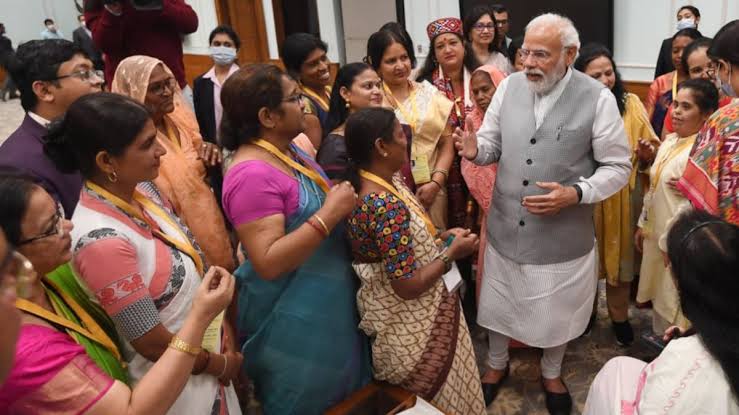
In his endorsement of Annapurna Devi’s article, PM Modi referenced a string of practical interventions under Mission Shakti from One-Stop Centres and helplines to fast-track courts and social-security hubs. These mechanisms are designed to provide immediate support to survivors of violence, accelerate legal redressal and integrate welfare delivery for women in vulnerable situations. The government frames these measures as structural pillars that translate policy into on-ground protection and economic opportunities.
Amrit Kaal and the national mission for women
The term “Amrit Kaal” represents a long-term development horizon promoted by the government; within this framework, women’s empowerment is positioned as an economic and social priority. Annapurna Devi’s piece, which PM Modi shared, argues that women’s advancement will be measured not only by rhetoric but by institutional delivery more One-Stop Centres, broader access to helplines, and specialised courts to speed up justice. The article calls for policy coherence across ministries to ensure that reforms reach women in urban and rural India alike.
From protection to opportunity: the employment and social security angle
The shared post stresses that dignity must be accompanied by opportunity. Social-security hubs, skill development programmes and women-focused entrepreneurship schemes are mentioned as pathways to economic participation. By linking safety and access to livelihoods, the article and PM Modi’s endorsement underscore a two-pronged approach: protect first, then enable sustainable economic empowerment. This approach echoes recent government efforts to mainstream gender concerns into economic planning.
Why political advocacy matters
When the Prime Minister amplifies a cabinet minister’s essay, it signals policy priority and invites public debate. PM Modi’s public share on X raises the visibility of Mission Shakti and related reforms encouraging state governments, civil society and private sector partners to align actions with the national mission for women. The cross-cutting nature of these reforms requires administrative coordination and monitoring to ensure delivery in far-flung districts.
What to watch next
Key indicators to assess progress include the expansion of One-Stop Centres, the number and reach of helplines, the operationalisation of fast-track courts, and measurable gains in women’s participation in labour markets. Civil society and media will now watch for budgetary allocations, state-level implementation plans and results from newly launched campaigns. Annapurna Devi’s article and PM Modi’s endorsement set the agenda; implementation remains the test.