
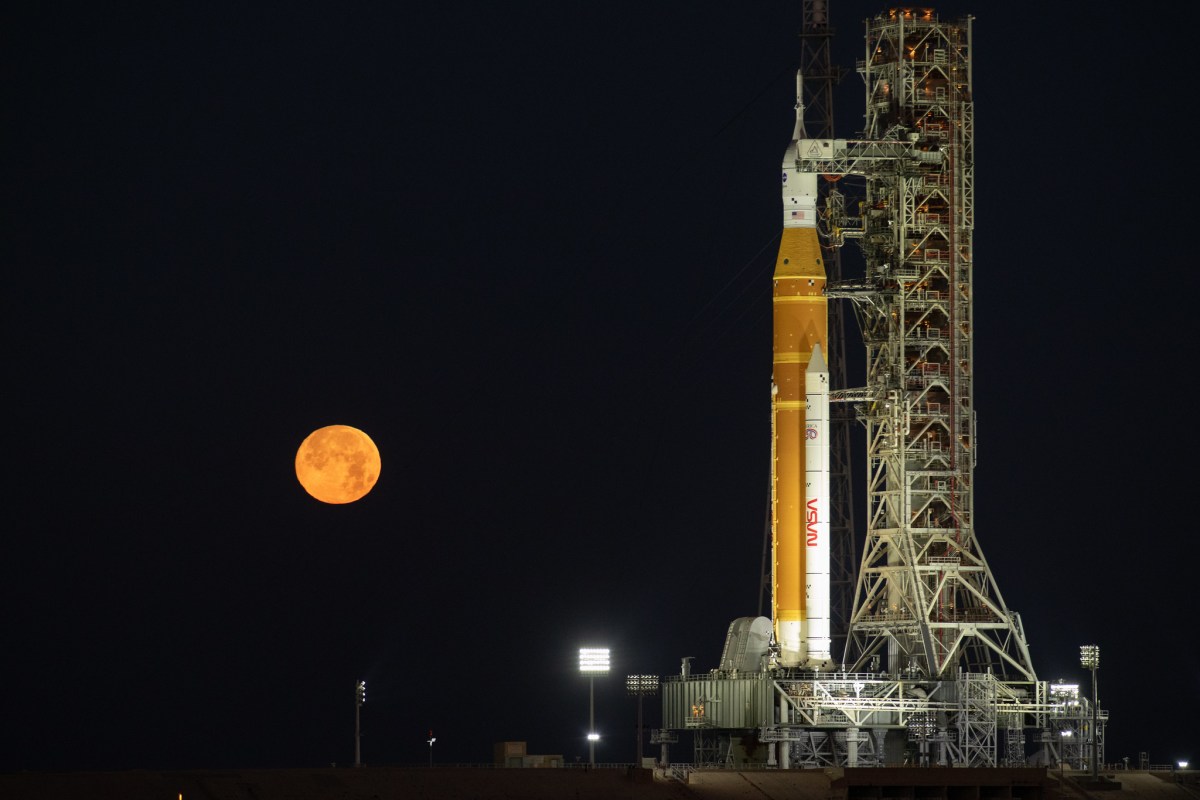

The Artemis program is NASA’s flagship initiative to return humans to the Moon and prepare for future crewed missions to Mars. With renewed strategic focus, the agency plans to standardise the configuration of the SLS rocket and Orion spacecraft to streamline operations and increase mission frequency.
NASA officials say these updates will allow the agency to gradually transition toward launching one lunar mission every year. The long-term vision includes scientific exploration of the Moon’s South Pole and the construction of a sustainable lunar base.
According to NASA, these missions are not only designed for exploration but also for scientific research, economic opportunities, and technology development needed for human missions to Mars.
Key Artemis Missions Explained
The Artemis program consists of multiple missions that gradually build toward long-term lunar exploration. Each mission tests different technologies required for human spaceflight beyond Earth orbit.
Artemis I
The first mission in the series, Artemis I, was successfully completed in November 2022. This uncrewed test flight launched the SLS rocket and Orion spacecraft together for the first time.
The mission validated critical launch systems and evaluated the performance of Orion during its journey around the Moon and back to Earth. However, the spacecraft did not carry astronauts or full life-support systems.
Artemis II
Artemis II will be the first crewed mission of the Artemis program. The mission will carry four astronauts on a roughly ten-day journey around the Moon before returning safely to Earth.
The crew includes NASA astronauts Reid Wiseman, Victor Glover, and Christina Koch, along with Canadian astronaut Jeremy Hansen from the Canadian Space Agency. The mission experienced a technical setback after engineers detected a helium flow issue during testing, prompting NASA to move the rocket back into the Vehicle Assembly Building for repairs.
Once technical adjustments are completed, the next launch window for Artemis II is expected to open in April.
New Demonstration Mission in 2027
One of the most significant changes to the Artemis architecture is the addition of a new mission scheduled for mid-2027. This mission will focus on testing docking and rendezvous capabilities between Orion and commercial lunar landers.
NASA is currently working with private aerospace companies, including SpaceX and Blue Origin, to develop lunar landing systems. The 2027 demonstration mission will test these systems in low Earth orbit before astronauts attempt an actual lunar landing.
Artemis III and IV: Toward Lunar Landing
Following the demonstration mission, NASA plans to proceed with Artemis III and Artemis IV missions that will lead directly to the first human landing on the Moon since the Apollo era.
NASA currently aims to conduct the first Artemis lunar landing in early 2028. Astronauts will launch aboard the Orion spacecraft using the SLS rocket and later transfer to a commercial lunar lander that will take them to the Moon’s surface.
The landing site is expected to be near the lunar South Pole, a region believed to contain water ice deposits that could support future long-term human presence.
Standardised Rocket Configuration
To improve efficiency and reliability, NASA also plans to standardise the configuration of the SLS rocket. Future missions will use a redesigned second stage that replaces the interim cryogenic propulsion stage currently planned for the first three Artemis missions.
Due to development delays, NASA has decided not to use the Exploration Upper Stage or the Mobile Launcher 2 infrastructure. Instead, the agency is exploring alternative solutions that can support more frequent launches.
Artemis V and the Future Moon Base
Looking ahead, NASA expects Artemis V to launch by late 2028. This mission could mark the beginning of constructing a permanent infrastructure on the Moon, paving the way for a sustained human presence.
These developments align with NASA’s broader vision of a “Golden Age of exploration,” where astronauts undertake increasingly complex missions that expand scientific knowledge and technological capabilities.
Further details about upcoming missions and crew assignments are expected to be announced as NASA continues to refine its lunar exploration architecture.