
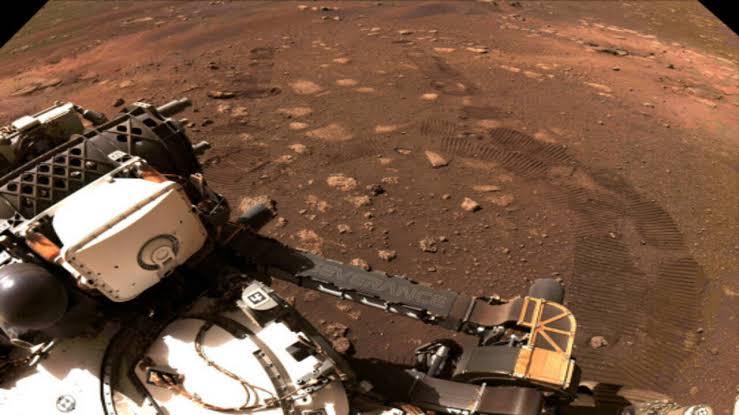

Traditionally, Perseverance’s daily routes are meticulously planned by human rover drivers and scientists at NASA’s Jet Propulsion Laboratory (JPL) in California. These experts analyse images and terrain data before uploading instructions to the rover, a process that can take days.
For this demonstration, however, NASA allowed a generative artificial intelligence system to take over route planning. The AI analysed the same surface images and mission datasets that human planners use, identifying safe paths and generating navigation waypoints for the rover.
Waypoints are fixed locations where the rover pauses to receive new instructions. By autonomously selecting these points, the AI enabled Perseverance to safely manoeuvre across complex and uneven Martian terrain without direct human input.
Successful AI-Driven Drives
On December 8, 2025, Perseverance travelled approximately 689 feet (210 metres) using AI-generated waypoints stored in its onboard memory. Two days later, the rover completed another autonomous drive covering 807 feet (246 metres).
NASA scientists emphasised that these distances are significant in the context of Mars exploration, where safety, terrain unpredictability, and communication delays pose constant challenges.
Role of Generative AI and Industry Collaboration
The initiative was led from JPL’s Rover Operations Center in collaboration with artificial intelligence company Anthropic. The team employed vision-language models capable of interpreting images and contextual data to make navigation decisions.
These AI models can “see” the Martian landscape, understand textual mission constraints, and determine safe routes a capability that could transform how robotic missions operate on distant worlds.
NASA’s Vision for Autonomous Space Exploration
NASA Administrator Jared Isaacman described the demonstration as a reflection of how rapidly space technology is evolving. He said autonomous systems will be crucial as missions venture farther from Earth, where communication delays make real-time control impossible.
According to NASA, AI-powered autonomy can increase mission efficiency, help spacecraft respond instantly to hazards, and significantly boost scientific output.
Perseverance’s Ongoing Mission
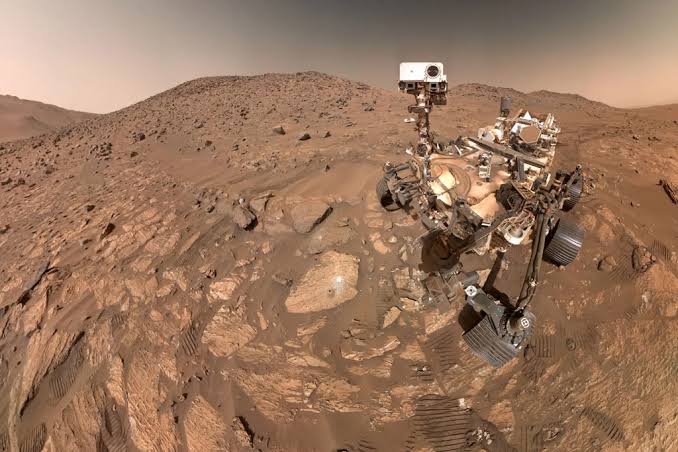
About the size of a car, Perseverance has been operating on Mars since 2021. Equipped with seven scientific instruments, the rover is studying the planet’s geology and atmosphere while collecting rock samples that could eventually be returned to Earth.
The success of AI-assisted driving does not replace human oversight but complements it, offering mission planners powerful new tools to explore Mars more effectively.
India, too, is increasingly focusing on artificial intelligence and space technology, with ISRO exploring autonomous systems for future missions.