
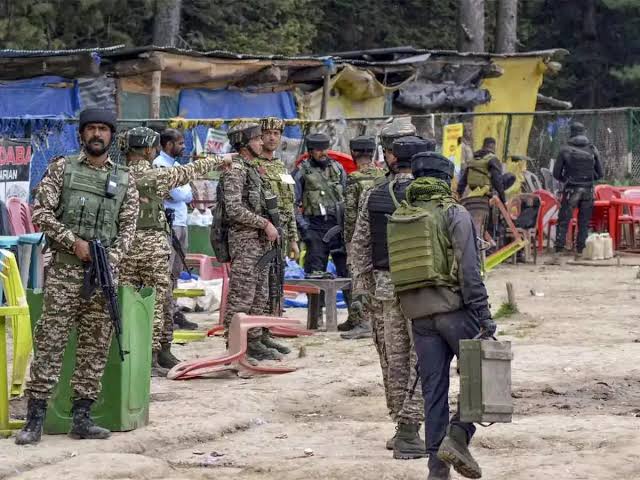
India is reeling in grief and anger following the brutal terror attack in Pahalgam, Jammu and Kashmir, which claimed the lives of 26 innocent people, many of them tourists. The shock of the tragedy has resonated across the country, triggering an outpouring of condolences and calls for justice. Prime Minister Narendra Modi, addressing a gathering in Bihar on National Panchayati Raj Day, vowed that those responsible for the attack would be punished “beyond their imagination.” His voice, echoing the nation’s collective sorrow, also carried a stern warning to the perpetrators and their supporters.


The Centre has called for an all-party meeting in Delhi, underlining the seriousness of the situation. Union Home Minister Amit Shah and Defence Minister Rajnath Singh have reached out to political leaders, urging unity at this critical juncture. While many welcomed the move, some voices like AIMIM’s Asaduddin Owaisi urged the government to include even smaller parties in such national deliberations, emphasizing that terrorism is not a political issue, but a national tragedy that demands inclusive dialogue.
The grief is personal and deeply human. The mortal remains of the victims have been reaching their hometowns across India. In Surat, an entire airport stayed open late into the night to receive one such victim and his grieving family, with officials coordinating across airlines and government agencies in a poignant show of solidarity and respect. In Guwahati, the body of IAF Corporal Tage Hailyang was received with solemn honours, his sacrifice weighing heavily on the shoulders of the community.
Chief Ministers, leaders across party lines, and even celebrities have condemned the attack in no uncertain terms. Bihar Chief Minister Nitish Kumar called the attack “heinous” and reaffirmed that the nation is united in its fight against terrorism. Uttar Pradesh CM Yogi Adityanath described the assault as “grotesque,” promising that terrorism is nearing its end under a zero-tolerance policy. Rahul Gandhi and Mallikarjun Kharge have cut short prior engagements to attend emergency meetings in Delhi. Shiv Sena (UBT) called it a massive intelligence failure and questioned the effectiveness of scrapping Article 370, reflecting a broader conversation around security in the region.
Across the border, Pakistan’s top civil and military leadership convened to discuss India’s retaliatory measures, which include downgrading diplomatic ties and suspending key bilateral agreements like the Indus Water Treaty. Meanwhile, the U.S. has issued a “Do Not Travel” advisory for Jammu and Kashmir, citing risks of further violence.
Amidst this, the human stories remain the most heart-wrenching. Tourists stranded in the Valley have begun returning home, thanks to coordinated evacuation efforts. Local communities, like the shikara owners in Srinagar, held peaceful protests on Dal Lake, expressing their anguish and fear. And in Delhi, hundreds gathered near the Pakistan High Commission, demanding accountability and justice.
At a time when the nation grieves and stands united, voices of compassion are rising too. PDP leader Mehbooba Mufti urged Home Minister Amit Shah to ensure the safety of Kashmiris living in other parts of India, echoing a message that hatred must not be allowed to spread further in the wake of this violence.
This is a moment of immense sorrow, but also of resilience. The pain is real, the anger justified, and the unity palpable. India mourns its dead, stands with the bereaved, and vows that such a horror will not go unanswered.