
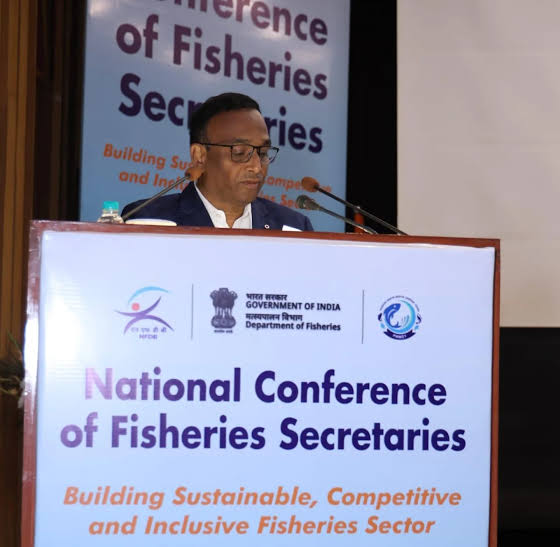

Dr. Abhilaksh Likhi emphasised that “timely action, strong execution, and scientific planning will define India’s fisheries growth trajectory in the coming years.” He called for efficient fund utilisation, prompt disbursal to States/UTs, and acceleration of projects like Integrated Aquaparks, Seaweed Farming, Climate-Resilient Coastal Fishermen Villages (CRCFVs), artificial reefs, and cluster development.
Digitalisation was highlighted as a critical factor. Dr. Likhi urged States/UTs to increase registrations on the National Fisheries Digital Portal and strengthen monitoring of aquaculture insurance and PM Dhan Dhanya Yojana components to secure fisher livelihoods.
Inland and Coastal Fisheries: Opportunities & Challenges
Shri Sagar Mehra, Joint Secretary (Inland), reviewed inland fisheries, noting that reservoirs and inland clusters require diversification beyond Indian Major Carps. Emphasis was placed on market-linked high-value species and export preparedness. Coastal States updates by Ms. Neetu Kumari Prasad highlighted underutilised brackishwater resources, operationalisation of SOP for Mariculture Development (2025), adoption of climate-friendly technologies, and promotion of finfish, shellfish, IMTA, and seaweed farming.
Shri Dodda Venkata Swamy, MPEDA Chairman, stressed value-added seafood exports and sustainability, while Dr. J.K. Jena of ICAR outlined uniform technology adoption, robust stock-assessment, and Multiplier Units for technology dissemination.
States’ Progress and Action Points
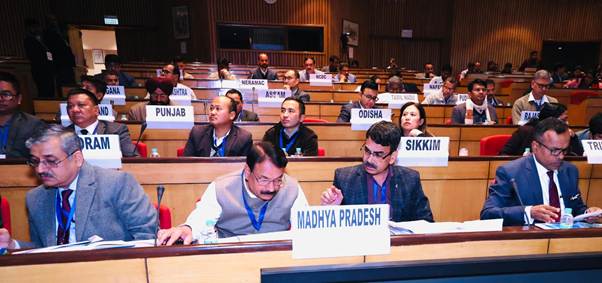
States and Union Territories presented progress reports and operational challenges. Tamil Nadu reported completion of Seaweed Park Hub-1, Puducherry requested deep-sea fishing vessels approval for women groups, and Odisha highlighted delays due to cooperative guideline finalisation. Maharashtra was advised to discontinue lottery-based vessel allotment, Kerala to initiate seaweed farming, and Jharkhand to accelerate Matsya Sewa Kendras. Across all States, focus was on digital integration, cluster development, and fund utilisation under PMMSY and FIDF.
Value-Added Exports and Innovation
Industry experts shared best practices, with Shri Arjun Gadre highlighting surimi production success and global demand for value-added seafood. The conference emphasised quality assurance, sustainability, biosecurity, and traceability to strengthen India’s global position.
Dr. Bijay Kumar Behra, NFDB Chief Executive, outlined the strategic framework for public investment, bottleneck resolution, and time-bound action plans to ensure effective fisheries development nationwide.
Marine Fisheries Census 2025 Updates
Dr. Grinson George, ICAR-CMFRI, updated attendees on the Marine Fisheries Census 2025, including portal synchronisation, integration of FSI data, and conversion of raw data into a national database to guide policy and investment decisions.
Way Forward for India’s Blue Economy
The conference concluded with a consensus on strengthening collaboration between States and central agencies, ensuring time-bound execution of fisheries programs, and promoting the Blue Economy vision of India. Emphasis was placed on sustainability, climate resilience, technology adoption, and skill development to boost inland and marine fisheries, aquaculture, and seafood exports.