
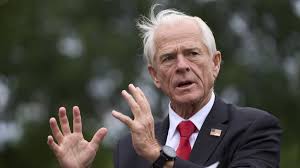

Before the Ukraine war, Russian oil accounted for less than 1% of India’s crude imports. Today, that share has surged to over 30%, translating to more than 1.5 million barrels a day. Navarro alleged that much of this oil was not intended for India’s domestic use but was being refined and exported abroad, turning India into what he controversially called a “laundromat for the Kremlin.”
According to estimates, India now exports over a million barrels a day of refined petroleum products, including fuels derived from Russian crude. Navarro accused Indian corporations of profiteering at the expense of Ukraine’s suffering.
Trump’s Tariffs and Washington’s Hardline
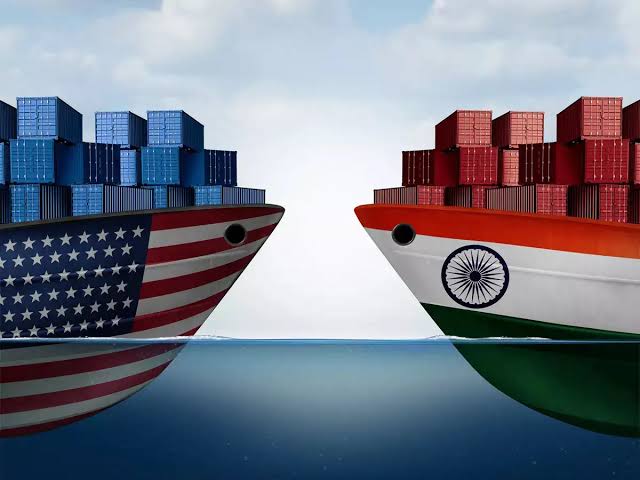
The renewed criticism comes after Trump doubled tariffs on Indian goods earlier this week. Navarro defended the move, saying it was “a 50% tariff—25% for unfair trade and 25% for national security.” He warned that India could avoid these penalties by halting Russian oil purchases, but accused New Delhi of “arrogance” for insisting it was their sovereign right to diversify energy supplies.
“India, you’re the biggest democracy in the world. Act like one. Side with the democracies instead of getting in bed with authoritarians,” Navarro said, adding that Russia and China could not be trusted allies given India’s border tensions with Beijing.
“Modi’s War” Remark Sparks Controversy
In one of his most provocative statements, Navarro controversially described the Ukraine conflict as “Modi’s war,” arguing that Indian oil purchases were directly fueling Russia’s aggression. When corrected by an anchor that it was “Putin’s war,” Navarro doubled down, insisting India’s role made it “Modi’s war” too. At the same time, he called Prime Minister Narendra Modi “a great leader” and praised India as “a mature democracy.”
Mixed Reactions in Washington
Navarro’s sharp words have stirred debate in US policy circles. Some analysts note that Washington has not penalised China or the European Union, both of which continue importing Russian energy in significant volumes. Others point out that the US itself still buys Russian nuclear fuel and certain metals. Critics argue that targeting India alone risks damaging strategic ties at a time when Washington wants New Delhi as a counterweight to China.
The controversy also underscores the growing strain in US-India relations as trade frictions intersect with geopolitics. While India has defended its energy strategy as driven by national interest and affordability, Washington under Trump appears determined to tighten the screws unless New Delhi cuts its Russian oil dependence.
For now, Navarro insists that the “road to peace in Ukraine runs through New Delhi,” making India’s energy decisions a new flashpoint in global diplomacy.