
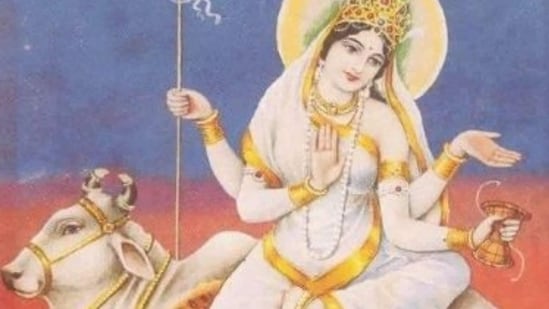
Significance of Maa Mahagauri
The name ‘Mahagauri’ translates to ‘extremely white,’ representing peace, calmness, and spiritual purity. Devotees believe she has a fair complexion like the moon or conch and blesses her followers with wisdom and relief from sins. She is often depicted wearing white attire and riding a bull, Nandi.
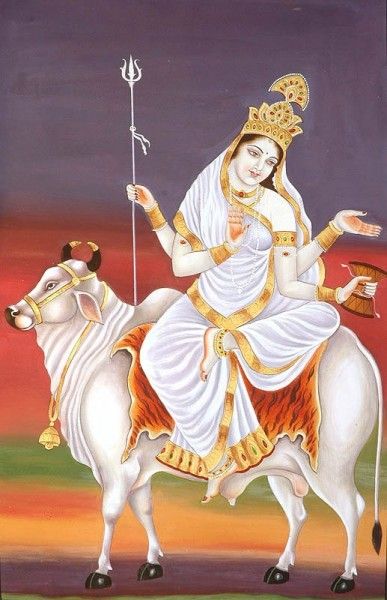

Maa Mahagauri is considered a reincarnation of Goddess Parvati, the embodiment of Adi Shakti. She undertook intense penance to win the love of Lord Shiva, the supreme ascetic dwelling in the Himalayas. Through devotion and determination, she eventually attained her divine union with Shiva, symbolizing the triumph of purity and devotion over worldly challenges. [Read more about Navadurga here](https://www.pib.gov.in/).
Puja Timings and Rituals
Devotees perform special rituals and observe fasting to honor Maa Mahagauri. The auspicious color of the day is white, signifying peace and spiritual purity. Traditional puja rituals include offering flowers, sweets, and lighting lamps, along with chanting mantras dedicated to Maa Mahagauri.
Devotee Practices
On Day 8, devotees visit temples or home altars to perform puja, meditate, and seek blessings for health, prosperity, and wisdom. Many also engage in community prayers and charitable acts to align with the goddess’s benevolent spirit.
Conclusion
Navratri Day 8 celebrates the essence of purity, devotion, and serenity through Maa Mahagauri. By following the rituals, dressing in white, and embracing the spiritual teachings of the goddess, devotees experience inner peace and divine blessings.