
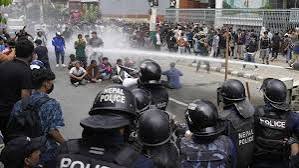

The protests gained momentum through social media pages like Next Generation Nepal, which highlighted corruption and authoritarianism under Oli’s regime. Most demonstrators were born between 1996 and 2012, making them part of the “Gen Z” cohort. Their anger spilled into the streets after years of political instability, economic hardship, and lack of trust in Nepal’s traditional parties.
Violence in Kathmandu
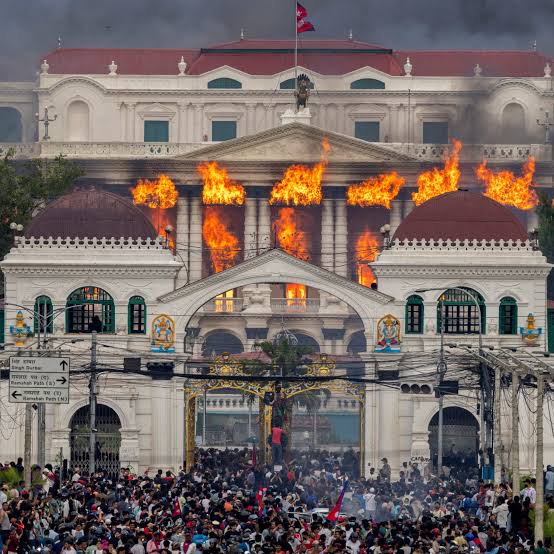
On September 9, protesters set fire to Nepal’s Federal Parliament building, offices of major parties, and residences of top leaders, including several former Prime Ministers. Ministers were airlifted by military helicopters as mobs targeted political figures. The scale of destruction left the capital in chaos, with curfews defied and law enforcement overstretched.
Leadership Vacuum
Prime Minister Oli’s resignation has plunged Nepal into uncertainty. President Ram Chandra Poudel is reportedly under military protection at an undisclosed location. With the cabinet scattered and parliament in ruins, the country currently has no clear functioning government. Analysts warn that this power vacuum may deepen instability unless a transitional authority is quickly established.
Grievances of Gen Z Protesters
The young demonstrators accuse political elites of siphoning public wealth and failing to deliver on promises of democracy made after Nepal’s transition from monarchy in 2008. They demand accountability, a crackdown on corruption, and fresh elections to pave the way for leaders untainted by decades of political scandals. Many protesters also criticized rampant unemployment and lack of opportunities for youth.
Regional and Global Concern
The violent escalation has alarmed Nepal’s neighbors, India and China, both of which share strategic interests in the Himalayan nation. New Delhi has urged restraint and called for democratic dialogue, while Beijing has tightened border security. The United Nations also expressed concern about excessive use of force by Nepalese security forces and called for an independent investigation into the killings.
What Lies Ahead
The immediate challenge is restoring law and order in Kathmandu and other cities where protests have spread. Political analysts say that unless the grievances of Gen Z are addressed, unrest could spiral into a larger movement demanding systemic change. With parliament burned and the government dissolved, Nepal’s fragile democracy faces its toughest test in decades.