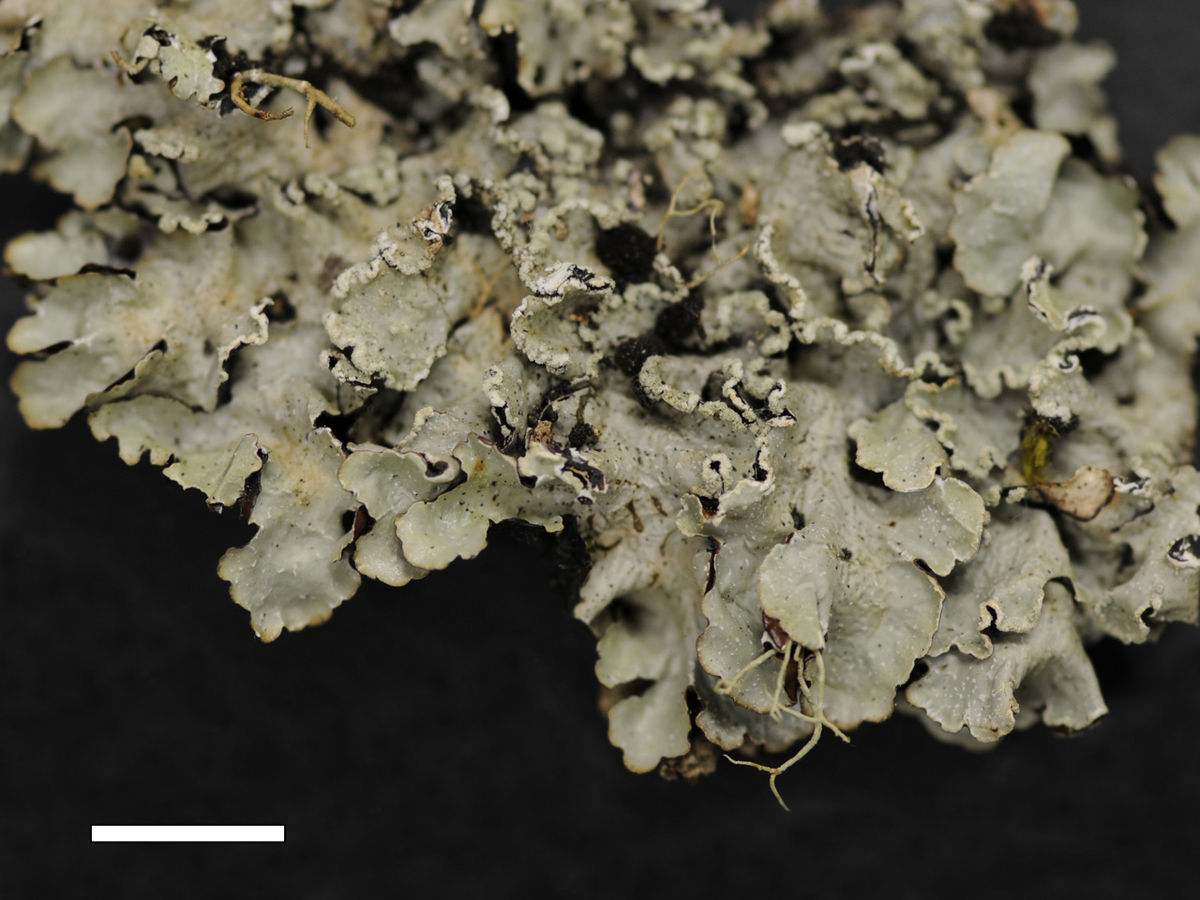
A Tiny Organism with a Big Story
In the heart of the lush Western Ghats, Indian scientists have uncovered a remarkable new species of lichen — Allographa effusosoredica. This discovery goes far beyond naming a new species. It reveals an ancient partnership between two life forms: a fungus and an alga, living together in perfect symbiosis.
This rare crustose lichen, first reported on July 18, 2025, by the Ministry of Science and Technology, was discovered by researchers from the MACS-Agharkar Research Institute, Pune. The team used a combination of classical taxonomy and modern molecular tools to confirm and classify the species.
 What Makes Lichens Special?
Lichens are not just one organism. They are two — a fungus and a photobiont (a green alga or cyanobacterium). The fungus provides structure and protection. The photobiont uses sunlight to produce food through photosynthesis.
They survive in the harshest conditions. From deserts to frozen peaks, lichens adapt. They are essential to ecosystems — forming soil, feeding insects, and acting as natural bioindicators of pollution and climate change.
A Scientific First for India
Allographa effusosoredica is the first Indian species of Allographa ever sequenced using molecular data. According to the researchers, this discovery not only confirms the species’ uniqueness but also raises questions about how similar species evolve and adapt.
“This discovery strengthens the idea of locally adapted symbiotic partnerships between fungi and algae,” the study team said.
Unveiling the Hidden Partners
Using advanced DNA sequencing tools, including mtSSU, LSU, RPB2 (for the fungal partner) and ITS (for the algal symbiont), scientists placed the species near Allographa xanthospora. Interestingly, its outward appearance is similar to Graphis glaucescens, sparking debates about classification within the Graphidaceae family.
Chemistry and Rarity
The lichen contains a rare chemical compound called norstictic acid. This is uncommon among similar species and gives the lichen unique chemical traits. These findings help distinguish it from others in its genus and may have future implications in environmental or pharmaceutical research.
A Boost for India’s Lichen Inventory
This is the 53rd Allographa species reported from India, and the 22nd from the Western Ghats alone. With this discovery, India takes a step forward in documenting and preserving its rich natural heritage.
The research project was supported by the Anusandhan National Research Foundation (ANRF), formerly known as SERB. It focuses on exploring symbiotic relationships in the Graphidaceae and Parmeliaceae lichen families across the Western Ghats.
Why It Matters
India’s biodiversity hotspots like the Western Ghats are under constant threat due to climate change, deforestation, and pollution. Each new discovery reminds us of what’s at stake. By understanding species like Allographa effusosoredica, we not only expand scientific knowledge but also emphasize the need for conservation.
“Lichens are nature’s silent survivors,” said a researcher from the study. “Their existence tells us about the air, the soil, and even the climate. Discovering a new species is like finding a new page in Earth’s storybook.”
What Lies Ahead?
The study calls for more molecular research on Indian lichens. Despite their ecological importance, lichens remain under-studied in India. Advances in molecular biology now allow scientists to uncover symbiotic relationships, adaptations, and even evolutionary histories hidden for centuries.
Efforts like this can help build a comprehensive database of India’s fungal and algal biodiversity — a step crucial for climate resilience, sustainable development, and conservation planning.
Key Takeaways
- New lichen species discovered: Allographa effusosoredica in the Western Ghats.
- Symbiotic life: Fungal and algal partnership highlights local adaptation.
- Molecular breakthrough: First Indian Allographa species with DNA sequencing data.
- Rare chemistry: Contains norstictic acid, not common in similar species.
- Conservation urgency: Emphasizes biodiversity research in ecological hotspots.
Conclusion
This new lichen species isn’t just a scientific name. It’s a testament to the ancient, silent relationships that form the backbone of our ecosystems. As we rush toward modernization, discoveries like these remind us of nature’s quiet complexity — and our role in preserving it.