Incident That Shook the Community
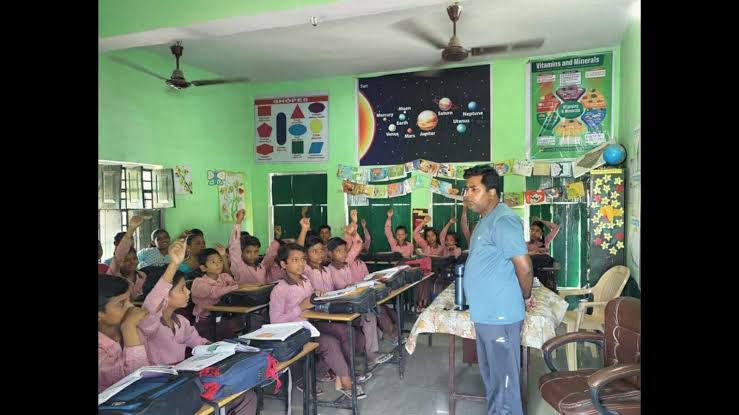
According to reports, the young boy endured severe pain after being beaten with a stick by his teacher. The incident reportedly took place on August 7, 2025. The child initially stayed silent about the assault. However, when he refused to attend school for several days, his younger brother revealed the truth to their parents. Shocked, the parents rushed him to a hospital. Doctors confirmed that his shoulder was fractured, and surgery was scheduled.
NHRC Takes Suo Motu Cognizance
The NHRC took suo motu cognizance of the media report. The Commission noted that the allegations, if true, represent a serious violation of the child’s human rights. To ensure accountability, NHRC issued notices to the Uttar Pradesh Principal Secretary, Department of Basic Education, and the District Police Commissioner. Both have been directed to submit a detailed report within two weeks.
 Legal and Human Rights Concerns
Corporal punishment is banned in Indian schools under the Right to Education Act, 2009. Section 17 of the Act clearly prohibits physical punishment and mental harassment of children. Despite this, incidents continue to surface. The Gautam Budh Nagar case highlights a deep gap between law and enforcement. The NHRC’s intervention signals the seriousness of the matter and could push for stricter compliance in schools.
Voices Against Corporal Punishment
Child rights groups have long warned that corporal punishment leaves lasting scars. Not just physical, but emotional trauma also damages young minds. According to UNICEF, such practices undermine a child’s self-esteem and confidence. Experts argue that discipline in schools should focus on positive reinforcement and counseling, not violence.
Government’s Role and Accountability
With the NHRC stepping in, the spotlight is now on the Uttar Pradesh government. Officials must ensure strict action against the accused teacher. The Education Department also needs to review monitoring mechanisms in government schools. Parents, activists, and civil society expect a transparent inquiry and strong deterrent measures. The upcoming NHRC report will be a crucial test of accountability.
Why This Case Matters
This incident is not an isolated one. Across India, many children face corporal punishment in schools. Some cases go unreported due to fear or social stigma. By taking suo motu action, NHRC has sent a strong message. Child safety is not negotiable. Every school must create a secure and nurturing environment. Every teacher must be held accountable for violations.
Key Points
- NHRC took suo motu cognizance of media reports on August 18, 2025.
- A Class 3 student’s shoulder was fractured due to alleged beating by a teacher.
- Notices were issued to Uttar Pradesh Education Department and Police Commissioner.
- Detailed report expected within two weeks.
- Corporal punishment remains illegal under the Right to Education Act.
Way Forward
This case must serve as a turning point. Schools should adopt child-friendly discipline practices. Teachers should be trained in non-violent methods. Authorities must enforce laws with zero tolerance. Parents, too, need awareness about their children’s rights. Together, society must ensure that classrooms are safe spaces for learning, not places of fear.
Conclusion
The NHRC’s swift action shows its commitment to protecting children’s rights. The final report and subsequent action will decide whether justice is served. More importantly, it will decide whether such incidents will finally stop. A society that values education must first protect its students. Violence in schools cannot and should not be tolerated.