

The National Human Rights Commission (NHRC), India, has raised serious concerns over the blanket re-verification and re-assessment of disability certificates of government employees with disabilities, warning that such practices may lead to human rights violations. The issue was deliberated in detail during a core group meeting held in New Delhi, where the Commission underscored the need to balance administrative vigilance with dignity, legality and compassion.
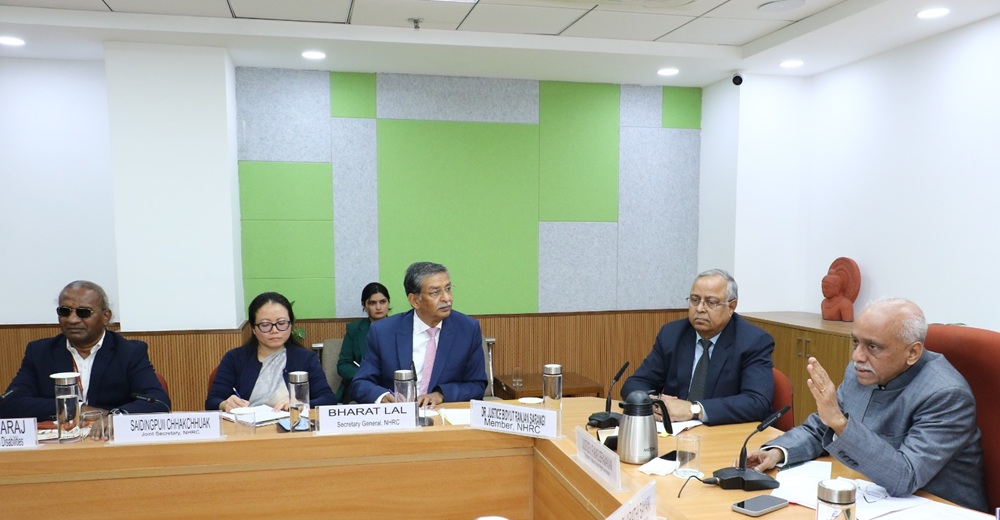

Justice Ramasubramanian cautioned that the revised advisory and Standard Operating Procedure (SOP) issued by the Centre on October 15, 2025, for handling disability verification in government jobs and education is prospective in nature. He observed that applying the SOP retrospectively to all existing beneficiaries could have serious legal implications.
Instead of mass re-verification, the NHRC Chairperson suggested that scrutiny should be limited only to cases where there is specific and evidence-based suspicion. He emphasised that while preventing misuse of welfare legislation is important, indiscriminate reassessment undermines the rights and dignity of persons with disabilities (PwDs).
Justice Ramasubramanian also highlighted systemic barriers faced by PwDs, noting that access to authorities and grievance redressal mechanisms often remains limited to well-connected or educated families. He urged stakeholders to recommend reforms that protect rights while addressing gaps in implementation.
Concerns over dignity and access
NHRC Member Justice (Dr) Bidyut Ranjan Sarangi stressed the importance of accurate disability certification, particularly for children born with disabilities. He expressed concern that under-assessment or incorrect certification often deprives individuals of lawful entitlements and called for stricter yet fair verification by medical boards.
Justice Sarangi also underlined the need for rehabilitation and livelihood support through the Social Justice Department, advocating a coordinated and compassionate approach to ensure that PwDs live with dignity.
Another NHRC Member, Smt Vijaya Bharathi Sayani, said disability should not be something that individuals are repeatedly forced to prove. She pointed out that repeated re-verification causes anxiety and insecurity, especially among government employees who fear for their job continuity.
She argued that irreversible disabilities should be exempt from repeated checks and called for functional, accommodation-based assessments, doorstep services, online accessibility, time-bound procedures and disability rights training for officials.
Government clarifications and legal framework
Setting the context, NHRC Secretary General Shri Bharat Lal acknowledged that while safeguards against misuse are necessary, re-assessment processes can be intrusive and compromise personal dignity. He stressed strict implementation of the October 2025 SOP, which provides for digital verification, assessment of disability type and percentage, and an appellate mechanism.
Shri Rajeev Sharma, Joint Secretary in the Department of Empowerment of Persons with Disabilities, clarified that the government’s intent is to ensure due diligence at the entry stage of higher education admissions and government recruitment. Referring to Section 91 of the Rights of Persons with Disabilities (RPwD) Act, 2016, he said fraudulent claims attract penalties including imprisonment and fines.
However, he acknowledged that genuine cases should not be harassed and reiterated that the focus remains on high-resolution scrutiny rather than indiscriminate reassessment.
Key recommendations and way forward
Participants, including disability commissioners, medical experts and civil society representatives, broadly agreed that verification mechanisms must remain targeted and proportionate. The discussions resulted in several key suggestions, including prohibition of blanket medical reassessment of all government employees with disabilities.
Among the recommendations were adoption of UDID-based digital verification as the default system, with medical reassessment only in exceptional cases; dignity-centred protocols with reasonable accommodation; written reasons and appeal mechanisms; and protection from adverse service action during verification.
The Commission also called for eliminating the need to re-issue certificates for employees with irreversible disabilities and strengthening accountability to ensure deviations from SOPs are corrected promptly.
The NHRC will now further deliberate on these inputs to finalise its recommendations to the government. The aim, it said, is to safeguard the rights of persons with disabilities while ensuring that verification processes remain lawful, humane and just.